Avian Flu Spreads Beyond Año Nuevo, Infecting Seals, Sea Lion and Otter
A sea otter and sea lion are dead from bird flu as Año Nuevo's H5N1 outbreak expands beyond elephant seals to nearby San Mateo County beaches.
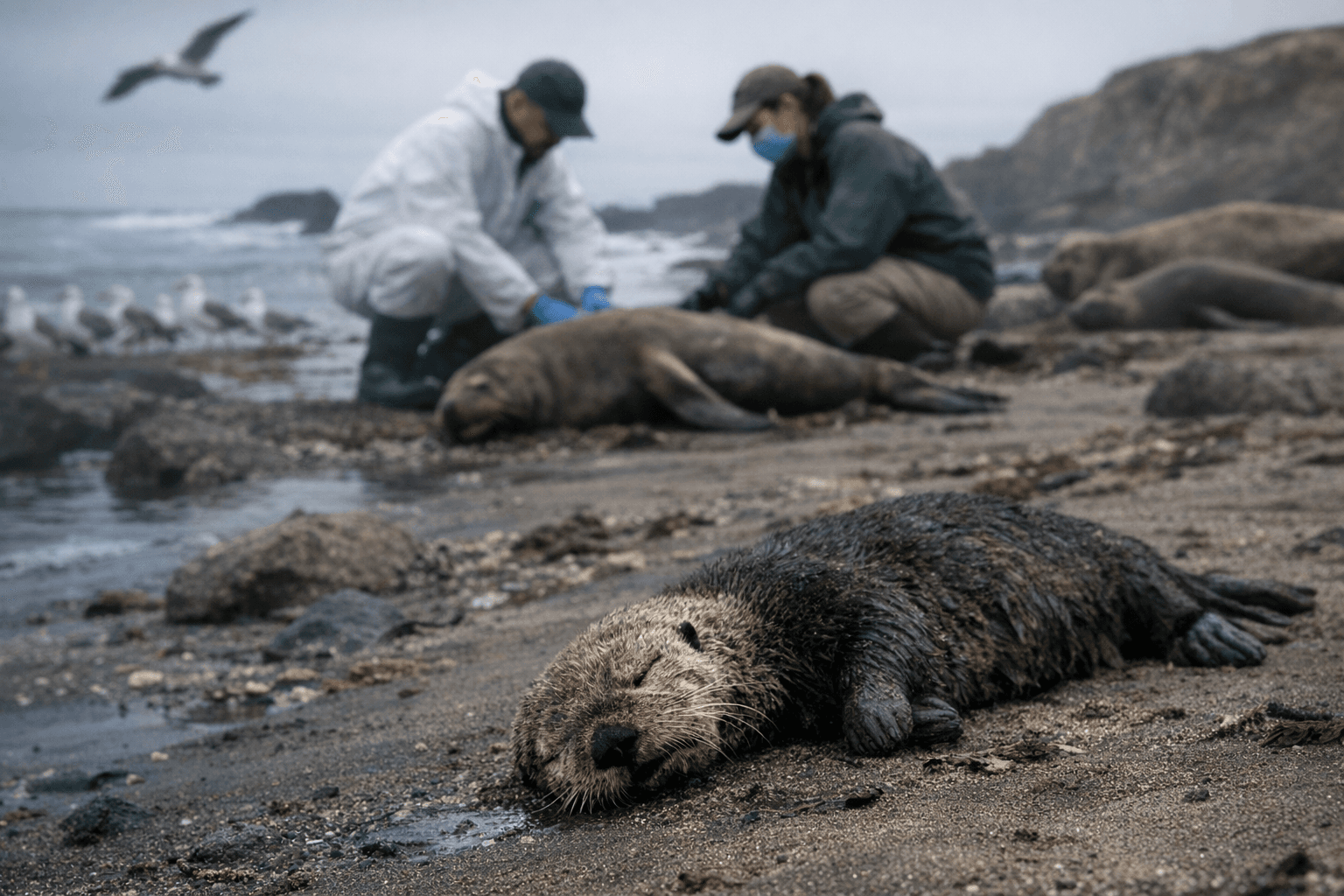
An H5N1 avian flu outbreak that began among elephant seals at Año Nuevo State Park has crossed into at least two other marine mammal species and is spreading to nearby public beaches along the San Mateo County coast, wildlife experts confirmed at a Thursday press briefing.
Scientists have confirmed positive tests in 16 northern elephant seals, one southern sea otter and one California sea lion, with 16 of the affected animals dead, according to the Press Democrat. ABC7 reported the total confirmed killed at 18, with nine more elephant seals, a sea lion and an otter dying in the most recent round of confirmed cases. KCRA reported a higher figure of 30 elephant seals killed last month, a number that differs from other outlets; all figures are being attributed to individual agencies as testing and necropsies continue.
The outbreak marks the first confirmed detection of HPAI H5N1 in any marine mammal in California. The U.S. Department of Agriculture's National Veterinary Services Laboratory confirmed the initial seven positive cases on February 24, identifying seven weaned northern elephant seal pups at Año Nuevo. UC Santa Cruz researchers then found a dead southern sea otter in the same park on February 26.
The Sausalito-based Marine Mammal Center, which confirmed the initial cases alongside UC Davis and the U.S. Fish and Wildlife Service, is now coordinating testing with partners as surveillance expands. Swabs from dead or ailing coastal animals are being sent to the UC Davis lab, and observers have extended that watch from San Luis Obispo to Humboldt County.
Patrick Robinson, Año Nuevo's reserve director, urged perspective on the colony's overall health. "Just to assure everyone, there's still thousands of apparently healthy animals in the Año Nuevo elephant seal population, and we're only observing a small number of potentially impacted animals everyday, so important context there," Robinson told KTVU. The park's colony holds approximately 5,000 seals during winter breeding season; about 1,350 were present on the beach when the outbreak began.
Researchers are watching the otter population closely, given that the extent of spread among that species remains unknown. "For example, in other outbreaks, dolphins have even been found with infection," said a wildlife expert identified only as Johnson in ABC7's coverage. "So these occasional sort of one-offs of other species that get infected in a big outbreak is pretty typical, and we're just going to hope that it stays that way for sea otters."
The specific H5N1 variant is believed to have emerged in 2022 in bird populations migrating through the Pacific Flyway, causing a mass mortality event in northern fur seals on an island in eastern Russia. A related strain decimated southern elephant seal populations in Argentina in 2023. Since the 2021-22 global outbreak, the pathogen has killed more than 200 million birds in the United States and more than 300 million worldwide, and has crossed into dairy cattle and infected dozens of dairy workers.
The seal viewing area at Año Nuevo remains closed and guided elephant seal tours have been canceled for the remainder of the season. Other areas of the park are still open to visitors. UC Santa Cruz researchers, who have monitored the Año Nuevo colony for six decades, are working with California State Parks and partner agencies to assess long-term population impacts from the outbreak.
This article was produced by Prism’s automated news system from verified source data, official records, and press releases, then run through automated quality and moderation checks before publishing. The system is built and supervised by the people who set the standards it runs under. Read our full AI policy.
Did this article answer your question?