BART and Muni Face Historic Budget Shortfalls, Ballot Measures Offer Possible Relief
Muni could cut 20 routes and end service at 9 p.m. as BART faces a $376M deficit and 15 possible station closures; two November ballot measures are the last line of defense.

At the corner of Hayes and Divisadero, the 6 Hayes Parnassus bus connects Haight-Ashbury commuters and UCSF medical workers to the rest of the city. Under a worst-case scenario sharpening into focus this spring, that line could disappear by September alongside up to 19 other Muni routes, the cable cars, and every bus running after 9 p.m.
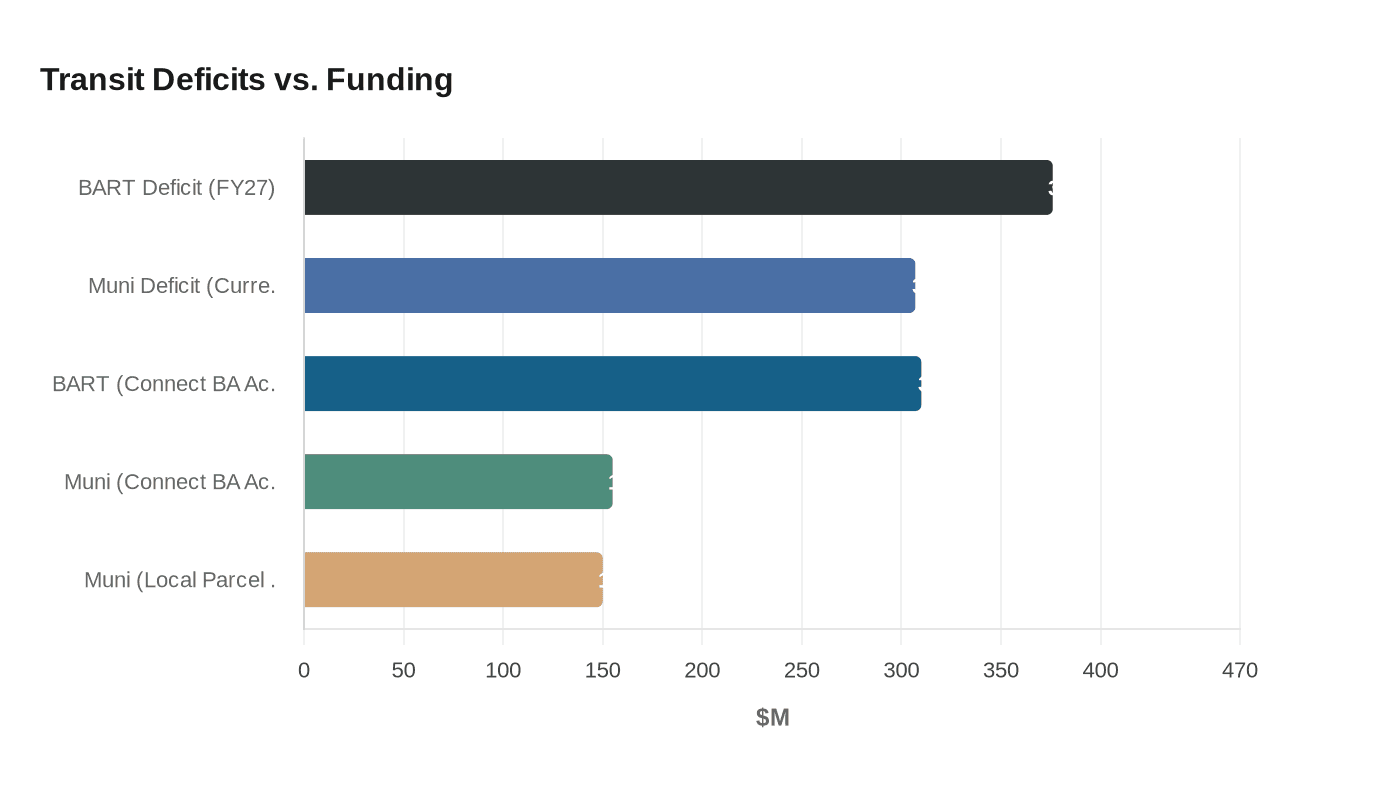
San Francisco's two major transit systems are staring down the most severe financial crisis in their histories. The San Francisco Municipal Transportation Agency reported a $307 million deficit for the fiscal year beginning July 1, a figure that was already pared down from a projected $440 million shortfall after the agency absorbed deep internal cuts, reduced hiring, and implemented targeted service reductions. SFMTA Director of Transportation Julie Kirschbaum told the agency's board that the scenarios without new funding would eliminate one-third of Muni service and trigger up to 2,100 layoffs. Regular Muni service would end at 9 p.m. nightly, severing late routes through the Tenderloin, Bayview, and Excelsior for swing-shift workers, restaurant employees, and seniors whose Lifeline fare subsidies would also be eliminated.
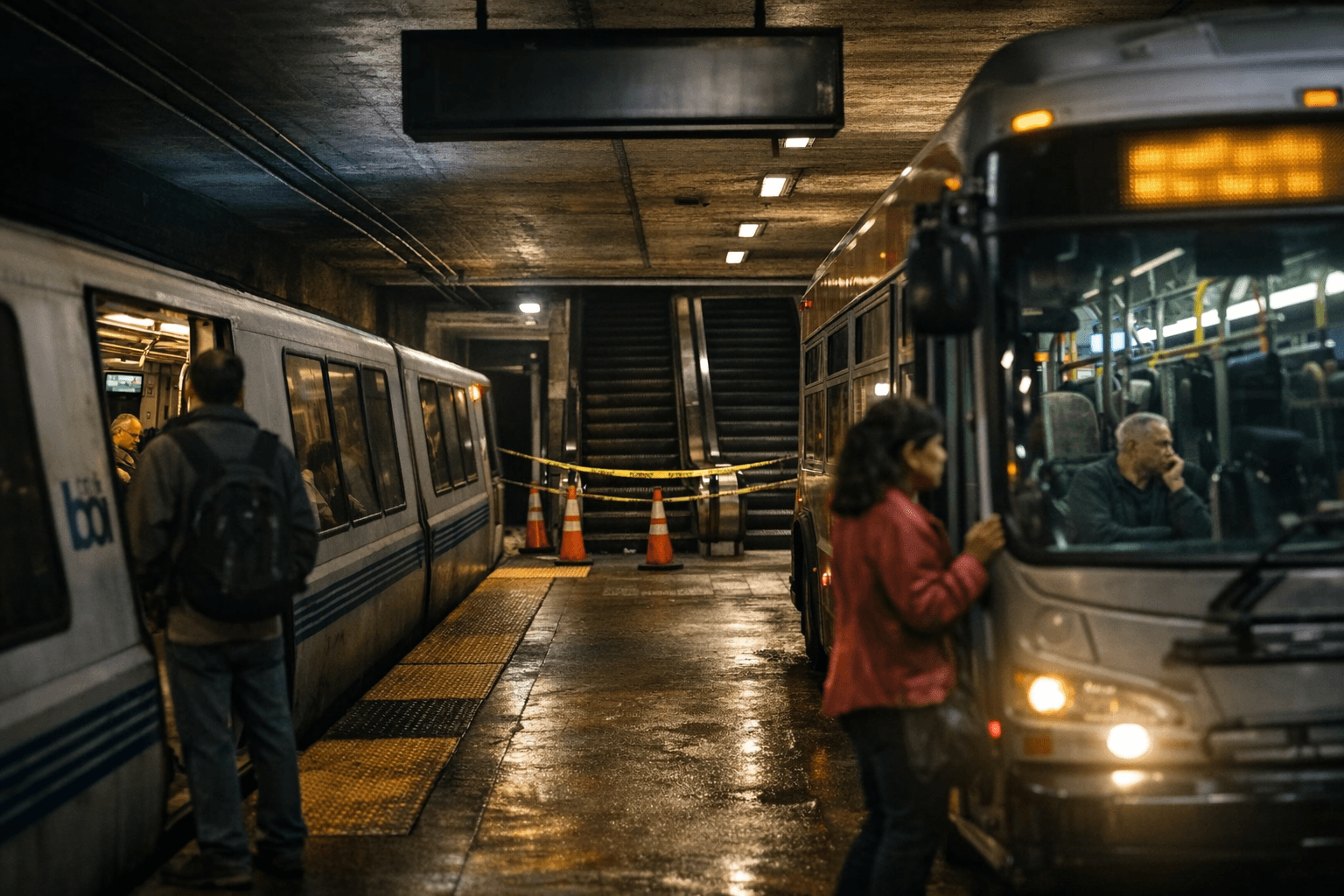
BART's financial hole runs even deeper. The agency is projecting a $376 million deficit for fiscal year 2026-27, with ridership still more than 50 percent below 2019 pre-pandemic levels. The BART board voted 8-1 in February to adopt a contingency cuts plan that would close between 10 and 15 stations and slash train service by more than 60 percent if voters reject a November sales tax measure — what agency officials called the "largest financial crisis in history." Under Phase 1, starting in January 2027, stations including South San Francisco, San Bruno, Castro Valley, Oakland International Airport, Pleasanton, and Orinda would close, with service hours compressed to 8 a.m. through 9 p.m. A second wave in July 2027 would shutter Colma, Millbrae, Dublin/Pleasanton, Pittsburg/Bay Point, and Antioch, erasing the Blue Line entirely and cutting the only physical BART-to-Caltrain transfer at Millbrae. SPUR policy analyst Laura Tolkoff has estimated the BART cuts could strand 15,000 daily riders.
Two November ballot measures represent the primary path out of the crisis. The Connect Bay Area Act, signed by Gov. Gavin Newsom in October 2025 as Senate Bill 63 and authored by Senators Scott Wiener and Jesse Arreguín, places a regional sales tax on ballots in five counties. San Francisco's rate would be set at one full cent, double the half-cent applied to Alameda, Contra Costa, Santa Clara, and San Mateo counties, reflecting Muni's steeper structural needs. If approved, BART would receive an estimated $310 million annually starting in fiscal year 2028, with a state bridge loan covering roughly $74 million in the final quarter of 2027 to prevent an immediate collapse. Muni would receive approximately $155 million per year.
Because the regional measure alone would not close Muni's full gap, Mayor Daniel Lurie launched a second, San Francisco-specific measure at a Dolores Park kickoff event on March 3. The "Stronger Muni for All" local parcel tax would generate roughly $150 million annually for SFMTA operations, covering the structural shortfall the Connect Bay Area money would leave behind.
Short-term, a state-brokered bridge loan of $590 million, negotiated between the Metropolitan Transportation Commission and the Governor's office after the agencies originally sought $750 million, is intended to protect service through the coming fiscal year. The loan must be repaid with interest, making November a hard deadline: without a sustained revenue fix, Muni's deficit is projected to balloon to $434 million within five years.
If Muni ends service at 9 p.m. and the 6 Hayes disappears, the hospital workers finishing the evening shift at UCSF Parnassus will walk out onto a street where no bus is coming.
This article was produced by Prism’s automated news system from verified source data, official records, and press releases, then run through automated quality and moderation checks before publishing. The system is built and supervised by the people who set the standards it runs under. Read our full AI policy.
Did this article answer your question?