Bay Area transit ridership nears pre-pandemic levels, BART still lags
Muni has bounced back to 74% of pre-pandemic ridership, while BART is still only at about 42% to 46% of 2019 levels. That gap is now shaping San Francisco transit decisions.

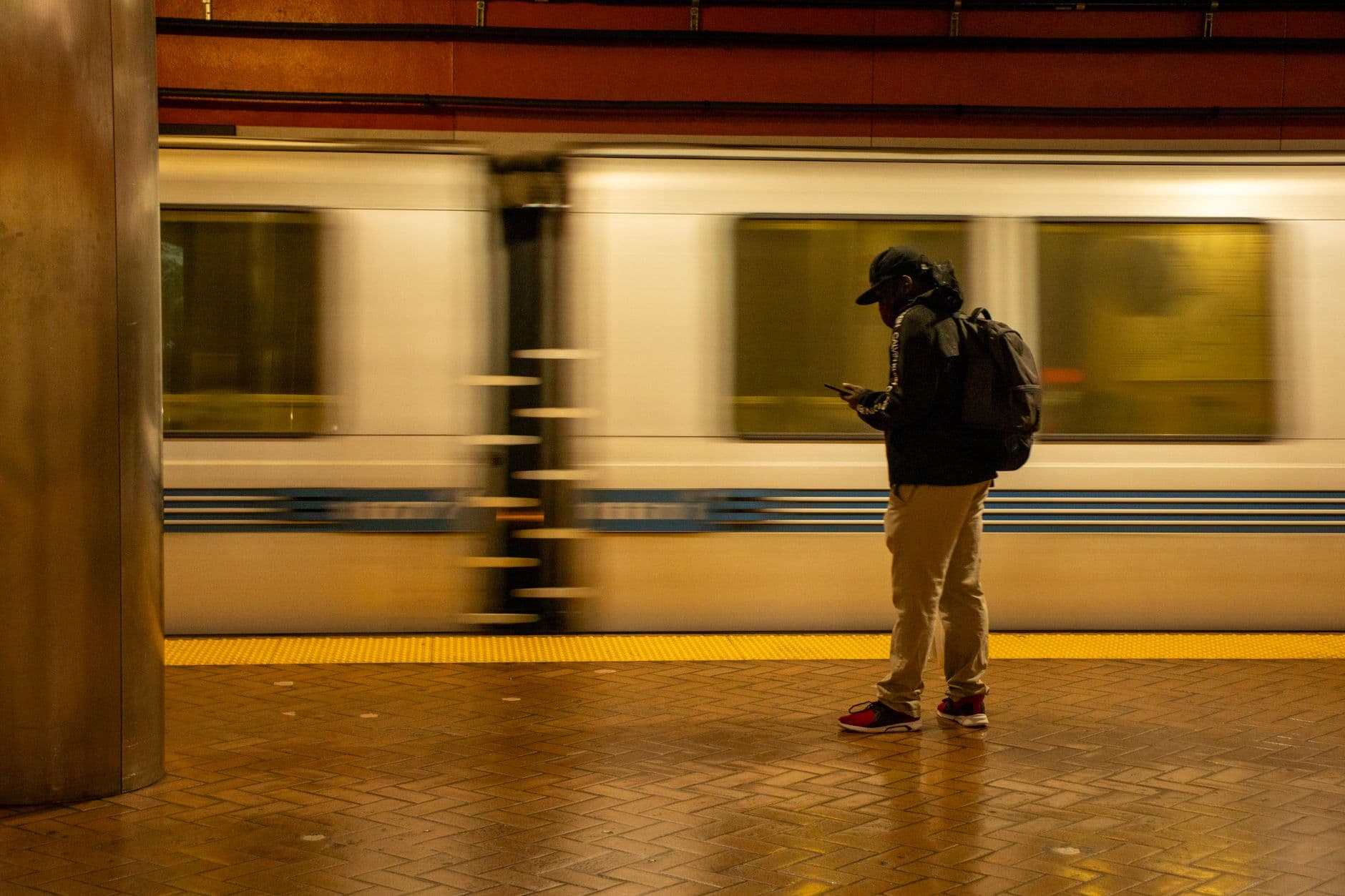
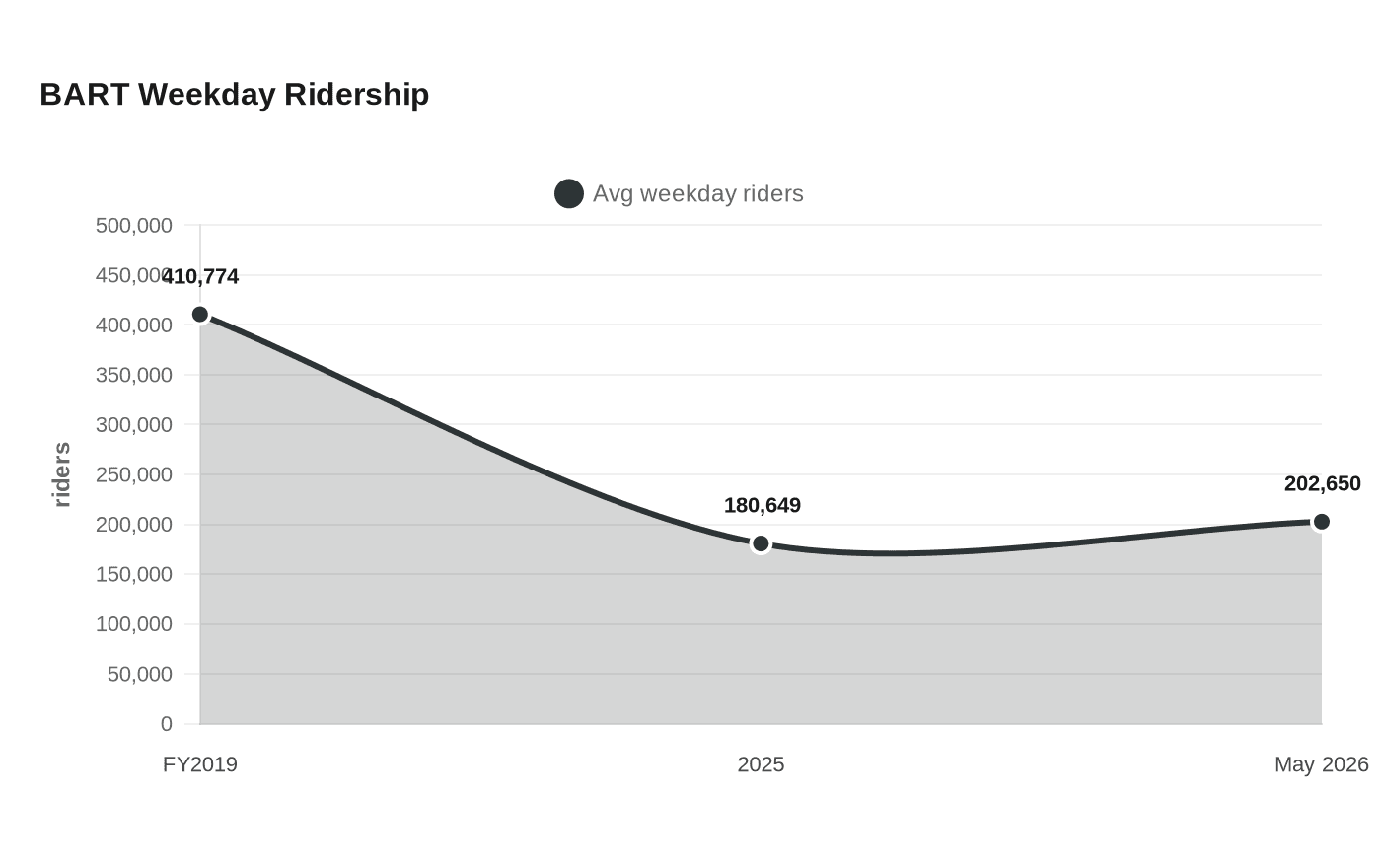
Crowds are returning to San Francisco transit, but not evenly. Muni carried 153 million passenger trips in fiscal 2023-2024 and ended that year at more than 12.6 million monthly riders, while BART’s average weekday ridership reached 180,649 in calendar 2025 and climbed to 202,650 in May 2026, its strongest monthly weekday average since the pandemic.
The split matters because BART’s recovery still trails far behind where it was before COVID-19. BART carried 55,610,841 passenger trips in 2025, up from 50,656,380 in 2024, yet those gains still sit well below the 118.1 million trips and 410,774 average weekday riders the system reported in fiscal 2019. A San Francisco Chronicle analysis put BART’s overall recovery at roughly 42% to 46% of 2019 levels, a reminder that the region’s biggest rail system is still rebuilding from a much deeper collapse than Muni.

BART’s May surge showed how much its ridership now depends on big events as much as everyday commuting. The agency said May 2026 ridership was 12% higher than May 2025 and that the month included four of its busiest ridership days since the pandemic. Bay to Breakers, Carnaval San Francisco, BTS concerts at Stanford Stadium, and games involving the Giants, Valkyries, Roots and Ballers all helped drive the spike. Nearly every station posted double-digit year-over-year gains, including SFO, South San Francisco, Berryessa/North San Jose, Milpitas and Antioch. Even so, BART warned that remote and hybrid work have permanently reduced the fare revenue that once funded a large share of its operations.

Muni’s comeback has looked different. SFMTA said its overall ridership recovery rate was 74% in fiscal 2023-2024, with an annual rider survey that produced its highest satisfaction score ever and a 48% drop in crime on Muni. The agency said Muni Metro was over 70% of pre-COVID ridership as of September 2025, nearly 20% higher than September 2024, and that ridership rose 16% from October 2023 to October 2024 and 46% from October 2022 to October 2024.
That strength is now feeding into planning decisions. SFMTA approved its final Muni Metro Capacity Study on Dec. 2, 2025, and planners are weighing longer three-car trains on the M Ocean View and N Judah lines instead of a wholesale rebuild. Across the Bay Area, the Metropolitan Transportation Commission’s Survive & Thrive effort is still trying to square rising demand with a funding model that no longer matches post-pandemic travel. The question for San Francisco is no longer whether riders will come back; it is whether they will get a better system, or simply a busier one.
This article was produced by Prism’s automated news system from verified source data, official records, and press releases, then run through automated quality and moderation checks before publishing. The system is built and supervised by the people who set the standards it runs under. Read our full AI policy.
Did this article answer your question?