California lets police ticket driverless cars in San Francisco now
Waymo got 589 San Francisco parking tickets last year. Starting July 1, police can ticket driverless cars for moving violations too.

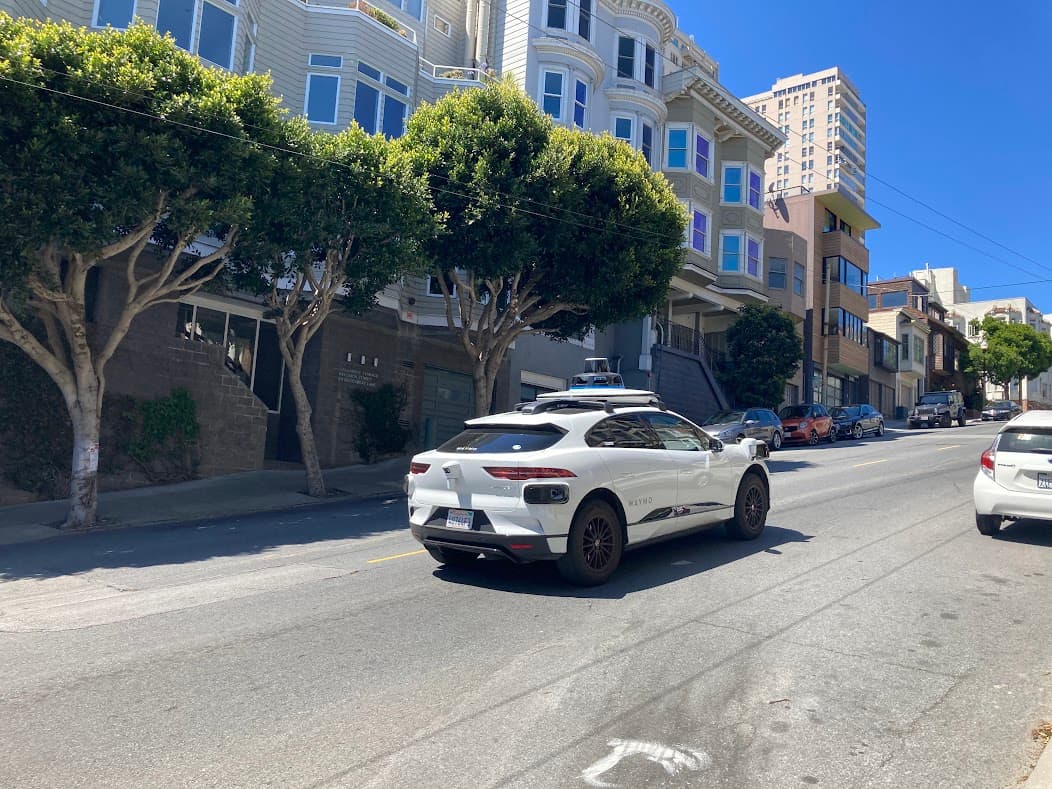
A Waymo robotaxi blocking a lane on Market Street or sitting in a street-cleaning zone in San Francisco could already cost the company a citation. Soon, the same vehicles can be ticketed for moving violations too, ending a loophole that left driverless cars far harder to penalize than human drivers.
The California Department of Motor Vehicles adopted the new autonomous-vehicle regulations on April 28, and they take effect July 1. Under the new regime, peace officers who witness a moving violation while autonomous technology is engaged can issue a notice of autonomous vehicle noncompliance. That change gives police a direct enforcement tool in a city where robotaxis have become a daily part of downtown traffic and a recurring source of complaints.

The legal framework traces back to AB 1777, signed in 2024 by former Assemblymember Phil Ting of San Francisco. The law added Vehicle Code sections 38751, 38752 and 38753, creating the structure for citations, emergency-response phone lines and geofencing orders. The DMV called the package the most comprehensive AV regulations in the nation.
San Francisco has already shown why regulators wanted a sharper tool. Waymo vehicles received 589 parking tickets in the city in 2024, costing $65,065, with 138 of those violations tied to street cleaning. The rest included obstruction and illegal stopping, a sign that the problem was not abstract policy but curb space, traffic flow and blocked streets that residents see every day.
The new rules go beyond tickets. AV companies must keep a dedicated emergency-response line available to officials at all hours, and a remote operator with situational awareness must answer within 30 seconds. Emergency officials can also send an electronic geofencing message ordering AVs to avoid or leave a zone during an emergency. If a vehicle is already inside that zone, it must exit, and no additional AVs may enter. Violations can lead to permit restrictions or suspension.
That emergency authority carries fresh weight in San Francisco after the December 2025 blackout, when Waymo vehicles stalled in intersections and live lanes and the company temporarily paused service. City leaders held a hearing in March on the outage, after reports that the vehicles stopped more than 1,500 times during the incident. For firefighters, police and transit riders, the question is no longer whether driverless cars can operate in the city, but whether the city can control them when they fail to move.

The debate is now widening beyond parking tickets and curbside friction. The Autonomous Vehicle Industry Association has praised the broader rules as a workable path for testing and deployment, while San Jose State University engineer Ahmed Banafa and state Sen. Dave Cortese have pushed for tougher oversight. In San Francisco, where Market Street, downtown intersections and emergency response all collide, the new enforcement model turns autonomous vehicles from a regulatory gray area into a test of whether the state can hold machines to the same street-level standards as everyone else.
This article was produced by Prism’s automated news system from verified source data, official records, and press releases, then run through automated quality and moderation checks before publishing. The system is built and supervised by the people who set the standards it runs under. Read our full AI policy.
Did this article answer your question?