Emory Douglas Retrospective Opens at AAACC Showcases Recent and Archival Work
At 762 Fulton Street, AAACC opened "Emory Douglas: In Our Lifetime" Feb. 19, a two-part retrospective pairing digital prints from the last 15 years with archival work through October 2026.
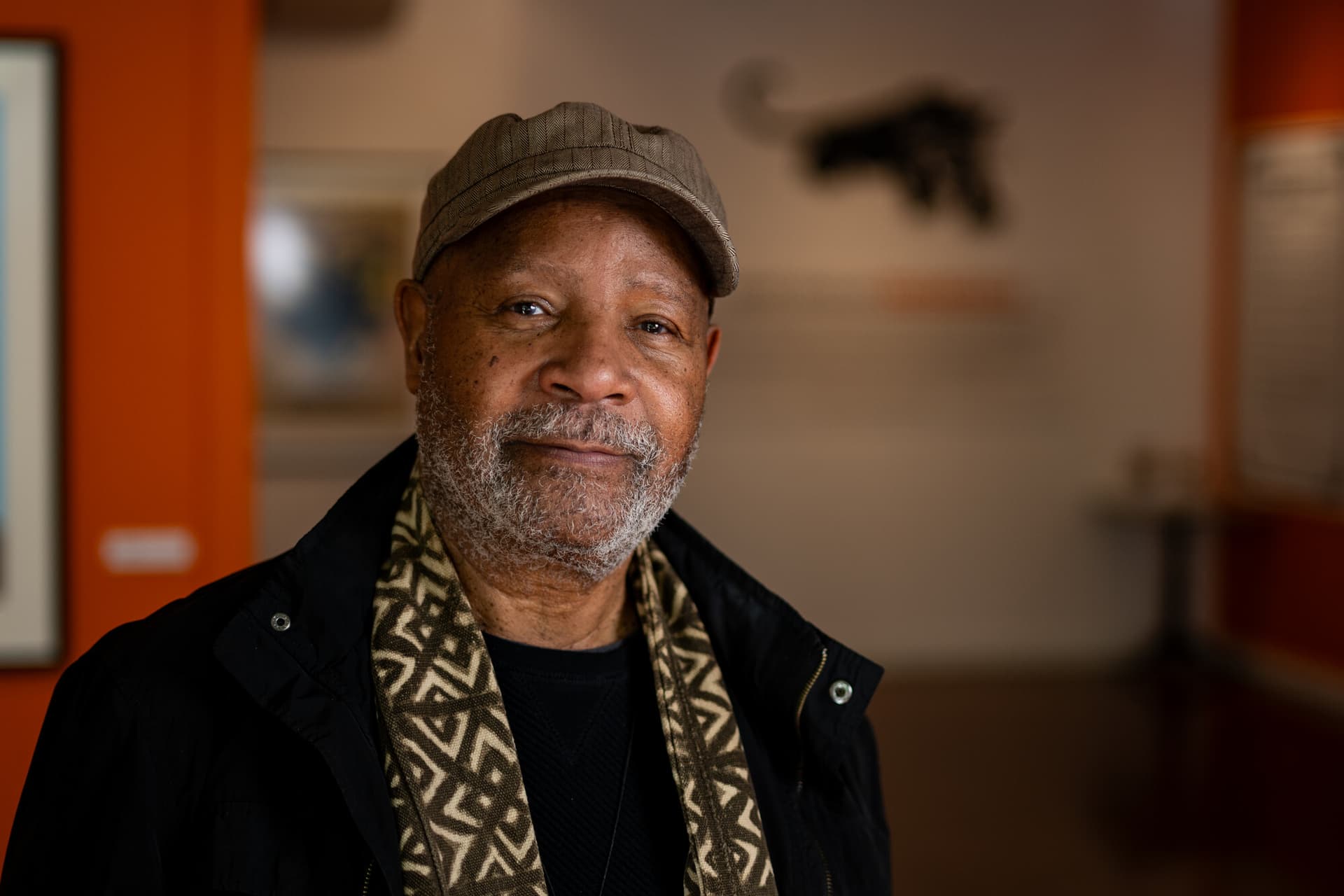
At the African American Art & Culture Complex, 762 Fulton Street, San Francisco, the two-part retrospective Emory Douglas: In Our Lifetime opened to the public on February 19 and will remain on view through October 2026. The AAACC press release dated February 4 announced an opening reception on Thursday, February 19 from 5 to 8 p.m., with RSVP offered free through the venue; the AAACC lists contact (415) 426-1100 and info@aaacc.org for more information.
Curators Rio Yañez and Rosalind McGary organized the show around Douglas’s 12-point Political Artist Manifesto, a curatorial frame the AAACC described as “a blueprint for anyone seeking to align creative practice with their revolutionary values.” The exhibition pairs a first section of recent digital prints with a second section of archival material spanning the 1960s to the present, a structure that the AAACC and KQED both highlighted when describing the two-part retrospective.
The first part foregrounds digital prints Douglas created within the last 15 years, including remixes of his most recognizable images and new work that “applies the revolutionary politics of the Black Panther Party to modern subjects,” as summarized in local coverage. Visitors will encounter historic icons such as the 1970 Paperboy, the rifle- and newspaper-toting image popularized in The Black Panther newspaper, alongside images captioned by KQED like Mother’s Love, an illustration of a little Black girl kissing her mother on the cheek.
Rio Yañez, co-curator, located Douglas in San Francisco’s civic and cultural history and framed the exhibition’s contemporary urgency when he said, “Emory Douglas is an iconic artist, to the world, and especially to San Francisco. He got his start as Minister of Culture for the Black Panther Party here in the Bay Area in 1967. He created their most well-known political graphics. He is a brilliant visual artist and activist who spreads powerful messages and engages multiple generations of people with his artwork. It’s an honor to showcase his art and to show that even after a long and storied career, he is still making critical, relevant, and urgent work.”

Douglas’s own voice appears in local television reporting and the installation text: he recalled that “And you had people who were activists, who would disagree with us, but were inspired by what we were doing. So, they were doing some of the same things. So, you were transforming.” That account situates his 20-year-old appointment as Minister of Culture in 1967 as a practical effort to make images that communicated police violence, poverty, and family life to community readers rather than to serve the academy.
AAACC’s press materials emphasize the show’s civic purpose, saying the retrospective “illustrates Douglas’s evolution as a revolutionary artist across periods of profound social upheaval” and aims to demonstrate “the power of visual art to inspire political awareness, radical imagination, and social change amidst urgent times.” For neighbors and Bay Area activists interested in the intersections of art and social equity, the retrospective offers both archival record and contemporary interventions in a venue that provided a free opening reception and local contact information for follow-up. The exhibition runs through October 2026 at AAACC and is presented under the curatorial leadership of Rio Yañez and Rosalind McGary.
This article was produced by Prism’s automated news system from verified source data, official records, and press releases, then run through automated quality and moderation checks before publishing. The system is built and supervised by the people who set the standards it runs under. Read our full AI policy.
Did this article answer your question?