Ferry Plaza Farmers Market anchors San Francisco’s downtown revival
The Ferry Building still works because it is more than a photo stop. At the Ferry Plaza Farmers Market, commuters, chefs, shoppers, and tourists give downtown a daily purpose.
A downtown place that still feels useful
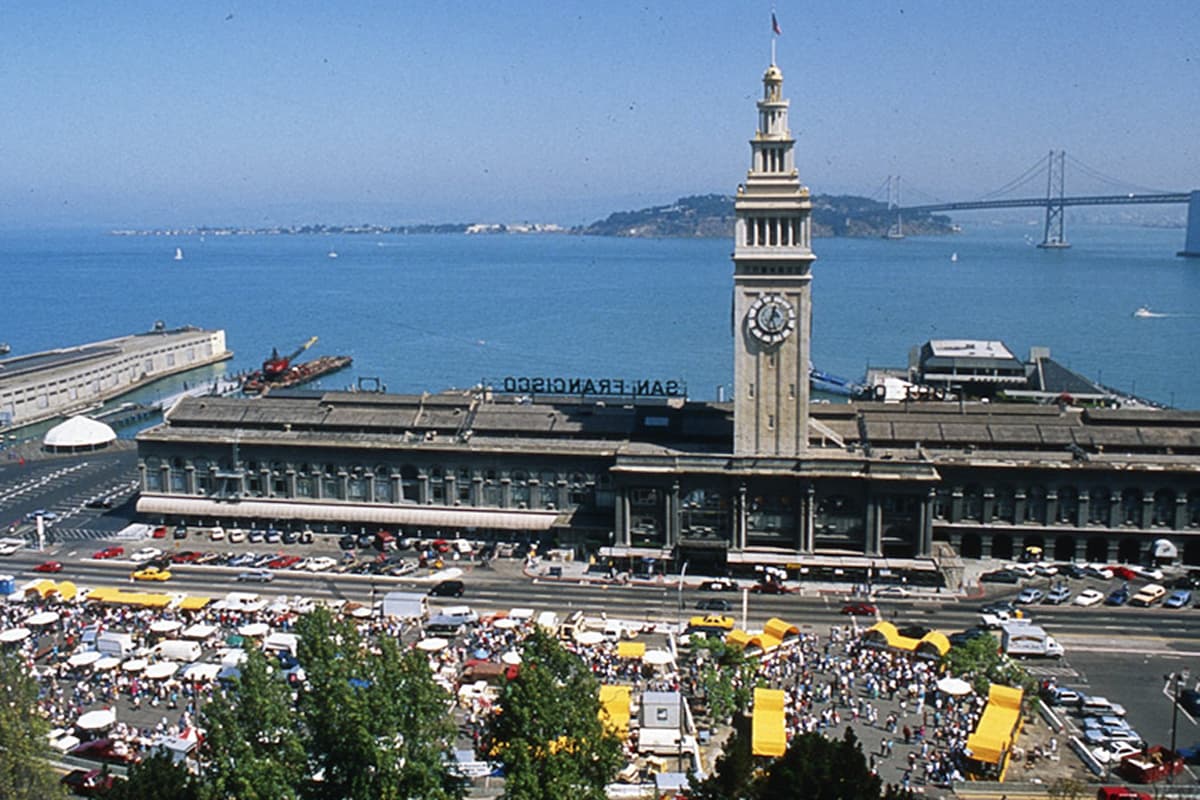
The Ferry Building endures because it does what many downtown landmarks struggle to do: it serves a practical daily purpose while also feeling unmistakably San Francisco. At the Ferry Plaza Farmers Market, the city’s commuters, office workers, chefs, shoppers, and visitors overlap in the same public space, turning a food market into a living test of downtown’s recovery. The result is not nostalgia for an older San Francisco, but a reminder that the city still has places where transit, food, and civic life meet in one visible, working setting.
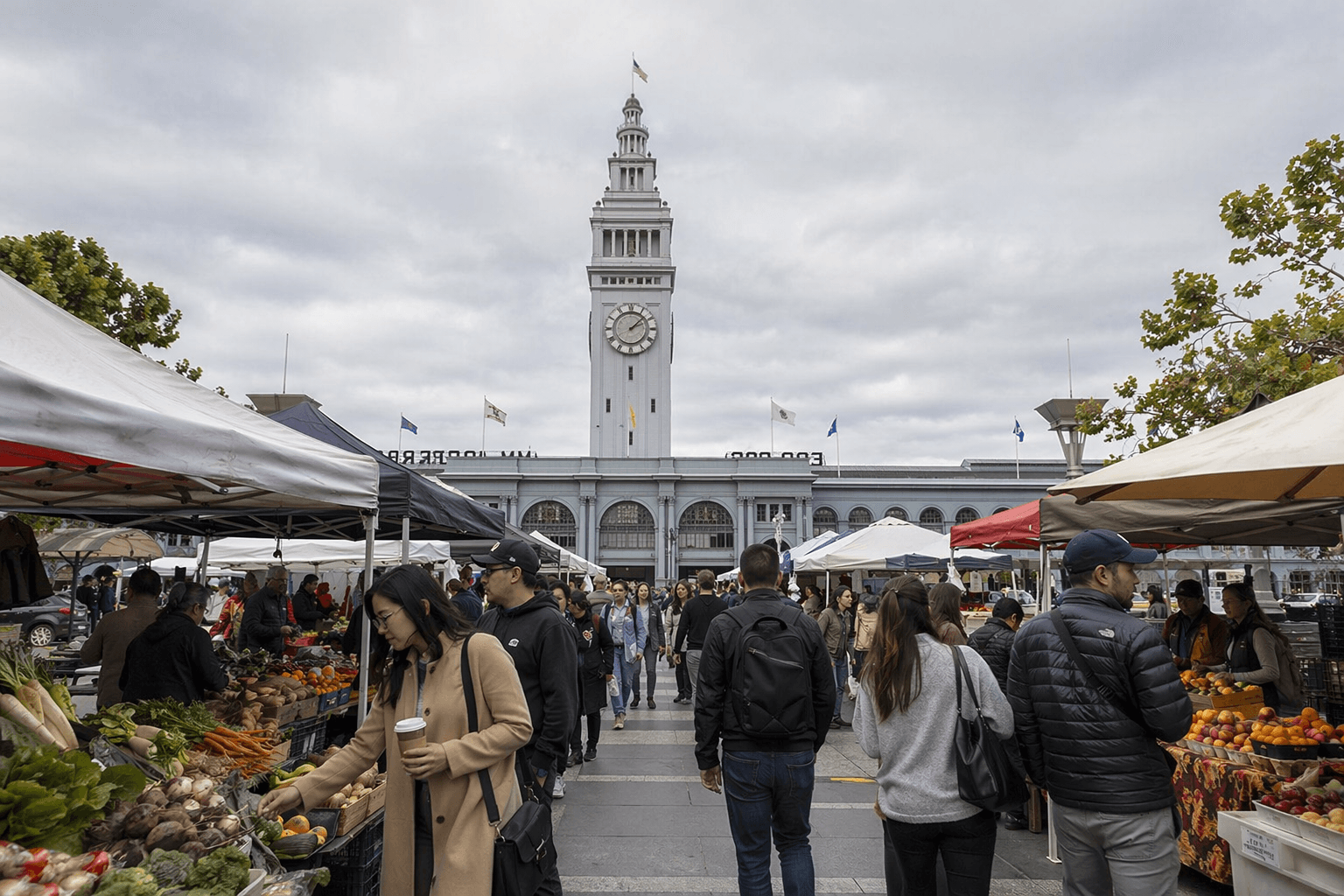
That matters in the present downtown moment. In a district still searching for a steady identity beyond office hours, the Ferry Building gives the Embarcadero something that feels active from morning into afternoon, and three days a week year-round. It is one of the rare places in the core where people arrive for a specific errand, stay because the setting invites lingering, and leave having used downtown rather than simply passed through it.
Why the market draws so many people
The Ferry Plaza Farmers Market is operated by Foodwise and certified as a California farmers market. It runs rain or shine every week on Tuesdays, Thursdays, and Saturdays, with hours of 10 a.m. to 2 p.m. on Tuesdays and Thursdays and 8 a.m. to 2 p.m. on Saturdays. Those hours make the market easy to fold into a workday, a weekend outing, or a transit transfer, which is part of why it has become so much more than a place to buy produce.
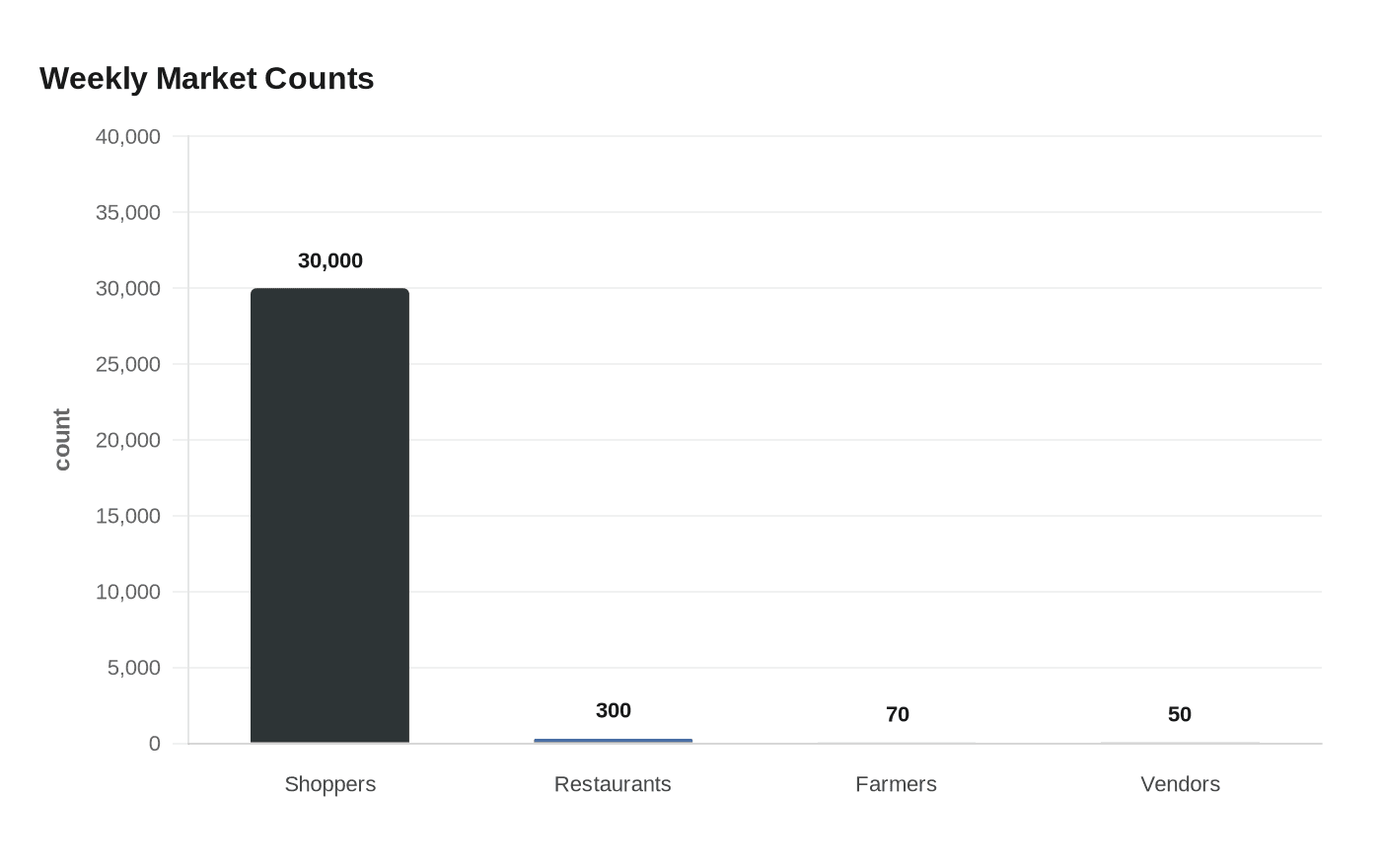
On Saturdays, the market draws about 30,000 shoppers. More than 300 Bay Area restaurants shop there weekly, and Foodwise says it hosts about 70 farmers and 50 artisan and prepared-food vendors. Free cooking demos and public education programs add another layer, giving the market the feel of an active civic classroom as much as a retail destination. That mix helps explain why the market has become a weekly ritual for residents and a supply hub for some of the region’s best-known kitchens.
The market’s draw is not just about food quality, though that is central to its reputation. It is also about the sense that downtown is still capable of offering something distinct, local, and social. People come for the tomatoes, greens, oysters, bread, and prepared foods, but they stay for the open air, the waterfront, and the sense that they are part of a crowded, functioning public place.
How the Ferry Building works as a civic anchor
The Ferry Building remains one of San Francisco’s most recognizable civic spaces because it combines commerce, transit, and public life in a way few downtown landmarks can. The Saturday market stretches across the back plaza overlooking the Bay, the south side of the building, and the front along the Embarcadero, so the whole site feels open to the city rather than sealed off from it. That matters in a neighborhood where the question is no longer simply how to fill office towers, but how to make downtown feel necessary again.
The building’s setting reinforces that role. It sits at the foot of Market Street on the Embarcadero and is reachable by MUNI, BART, ferry lines, the F Market Streetcar, and the California Street Cable Car line. In practical terms, that makes it one of downtown’s most connected destinations, designed around movement by multiple modes instead of cars. In civic terms, that makes it a place where the rhythms of commuting and leisure can overlap without feeling forced.
That overlap is part of the building’s value to San Francisco County now. Farmers, small food businesses, specialty vendors, office workers, and tourists all pass through the same place, creating a public scene that is economic and social at the same time. The market helps sustain regional agriculture, supports food entrepreneurs, and keeps a highly visible part of the waterfront active even when office occupancy across downtown remains uneven.
A building with a long civic memory
The Ferry Building’s present role makes more sense when set against its history. It opened in 1898 and originally functioned as a transportation focal point for the city. At its peak, as many as 50,000 people a day commuted by ferry through the building, a reminder that this corner of the waterfront once served as one of the city’s main gateways.
That original purpose faded as the Bay Bridge and Golden Gate Bridge opened and automobile use spread. By the 1950s, the building was used very little, and in 1955 its historic interior was lost during conversion to office space. For decades after that, the structure stood in the shadow of the double-deck Embarcadero Freeway, which cut off the waterfront and obscured the sense of place the building once had.
The 1989 Loma Prieta earthquake changed that. With the freeway damaged and later demolished, the city, the Port of San Francisco, and the City of San Francisco backed a waterfront plan that restored the street-level Embarcadero and helped remake the Ferry Building as a center point. After a four-year restoration, the building reopened to the public in March 2003. The restored Grand Hall, with its 660-foot-long skylit nave, gave the city one of its most dramatic interior public spaces, and it remains a central reason the building still feels like a civic monument instead of just another marketplace.
Why the food economy still matters here
The Ferry Plaza Farmers Market has prestige because it is tied to the city’s food economy in a way that feels both practical and symbolic. The marketplace describes the market as beloved for the quality and diversity of its fresh farm products from California’s sustainable growers, food makers, and chefs. That is not just branding. It reflects a feedback loop between the farmers, the prepared-food vendors, the market stalls, and the restaurants that rely on the site each week.
Some of the Ferry Building’s merchants reinforce that connection directly. Parachute, for example, uses locally sourced ingredients, often from the Ferry Plaza Farmers Market itself. That kind of sourcing gives the building a rare coherence: the market feeds the shops, the shops feed the experience, and the whole place benefits from being rooted in local production rather than generic retail.
That local loop is one reason the Ferry Building still matters to downtown recovery. It attracts people not because it is merely symbolic, but because it offers something useful and repeatable. In a city still working through the long aftereffects of the pandemic on its core, the building shows how a public place can support commerce, transit, and civic life at once.
What to expect when you go
The market’s weekly rhythm makes it easy to understand and use. Tuesdays and Thursdays are the quieter, more workday-friendly visits, with hours from 10 a.m. to 2 p.m. Saturdays are the full spectacle, with a larger crowd, more energy, and free cooking demos plus public education programs from Foodwise. If you want the full market atmosphere, Saturday is the day when the Ferry Plaza Farmers Market feels most like a civic event.
The setting rewards a little extra time. Because the building sits directly on the waterfront and ties into so many transit lines, a visit can easily become a broader downtown outing, whether that means walking the Embarcadero, connecting through Market Street, or simply staying long enough to watch the city move around you. That is the Ferry Building’s enduring strength: it is not only a place to buy food, but a place that still helps downtown San Francisco function as a shared public space.
This article was produced by Prism’s automated news system from verified source data, official records, and press releases, then run through automated quality and moderation checks before publishing. The system is built and supervised by the people who set the standards it runs under. Read our full AI policy.
Did this article answer your question?

