Fire Crews Contain SFO Cargo Blaze Burning Airline Amenity Items
Smoke from burning airline blankets and headphones drifted over Highway 101 while SFO's AirTrain Blue Line was suspended Friday, though crews kept all flights unaffected.
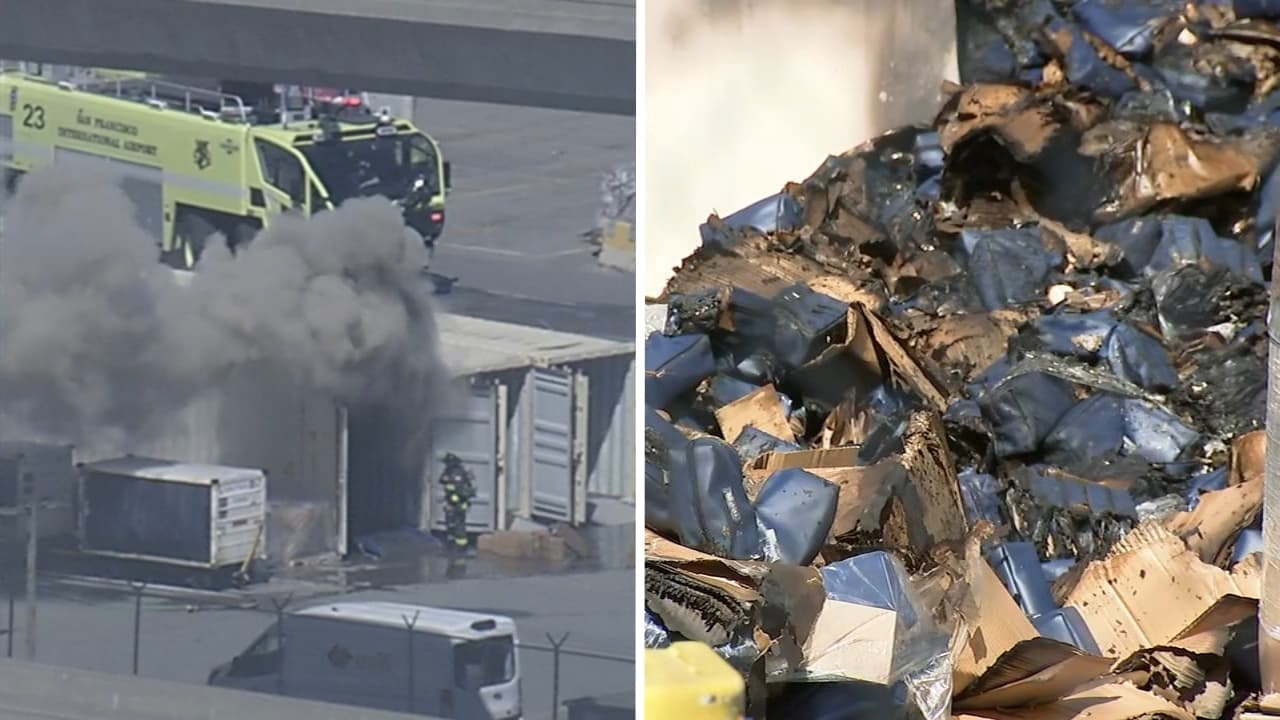
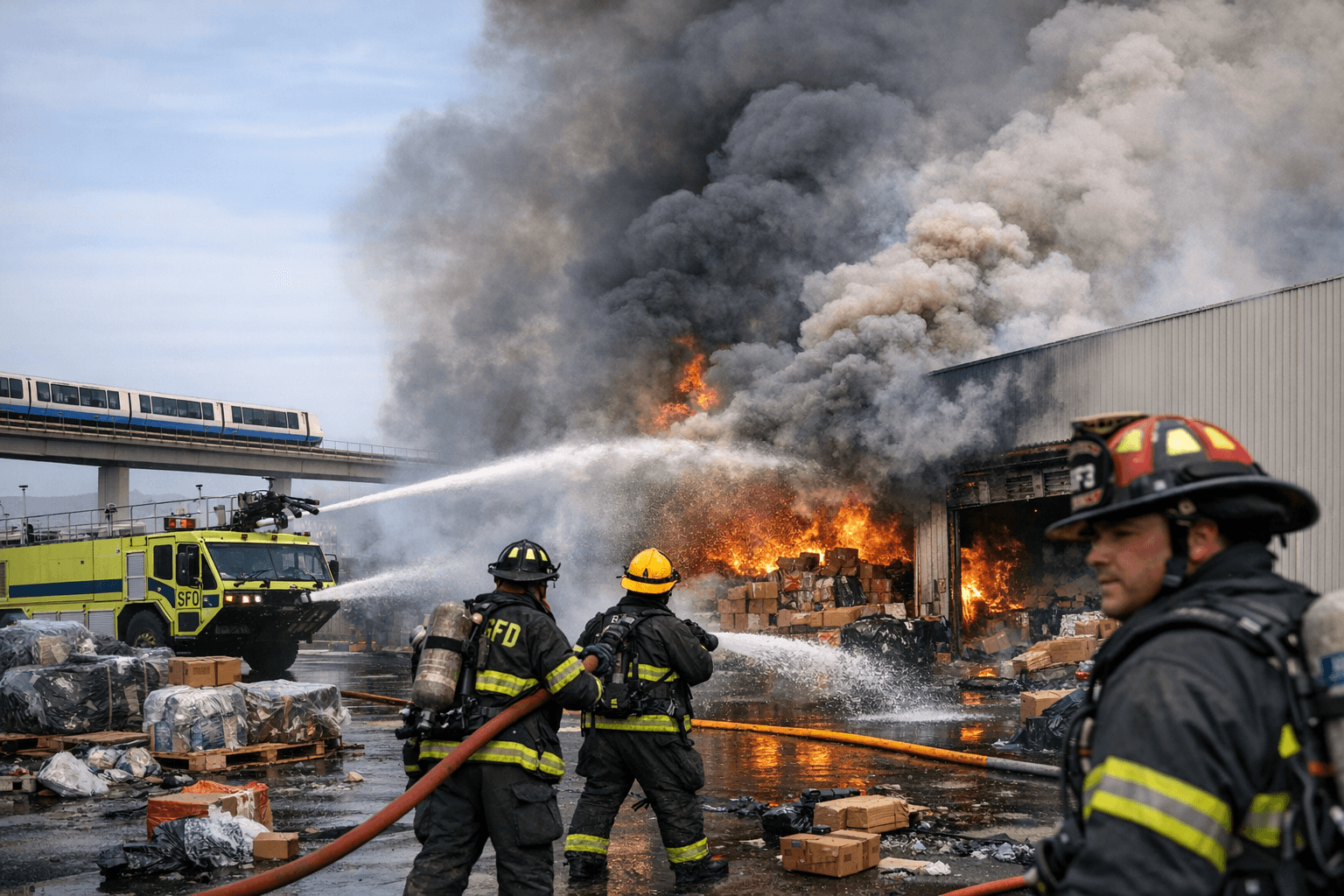
Smoke from a United Airlines cargo area rolled over U.S. Highway 101 last Friday afternoon as fire crews converged on McDonnell Road, on the west side of San Francisco International Airport's terminal complex, where flames had broken out in five conex storage containers holding an unexpected load: airline headphones, blankets, toiletries, and hand wipes.
The San Francisco Fire Department received the report at approximately 2:15 p.m. on April 3 and classified the incident as a one-alarm fire, triggering a mutual aid response from the San Bruno Fire Department. Crews from both departments contained the blaze to the five metal intermodal boxes and surrounding debris in the United Airlines cargo storage zone. No injuries were reported, and the fire never threatened any structures.
Containment was not entirely frictionless on the ground side. The billowing smoke that rose above the cargo ramp was visible across the airport campus, over the adjacent BART tracks, and along the AirTrain corridor that connects the terminals to the rental car center, long-term parking, and BART. The AirTrain Blue Line was temporarily suspended while crews worked the scene, and airport officials launched a bus backup service to maintain those connections. Nearby roadways in the cargo area also closed temporarily as smoke moved through. Airport spokesman Doug Yakel confirmed the fire had no impact on flight operations. The cause remains under investigation.
That the blaze stayed within five containers, rather than spreading to active cargo handling equipment, ramp vehicles, or the structures that line the cargo apron, reflects the layered response that airport emergency plans are designed to produce. Mutual aid agreements between SFO-adjacent municipalities are a standard part of that architecture: San Bruno Fire Department's quick arrival alongside SFFD illustrates how those protocols activate for a one-alarm event. A more serious fire, one that breached aircraft hangars or reached fuel storage infrastructure, would trigger a very different sequence: evacuation zones extending across the cargo campus, potential diversions or ground stops for arriving aircraft, and air quality advisories reaching into San Bruno, Millbrae, and South San Francisco. Friday's outcome was the best-case version of a scenario that rarely stays best-case without a practiced response.
What actually burned raises its own questions. Passenger amenity items, headphones, blankets, toiletries, and hand wipes, are not conventionally classified as hazardous cargo. But cargo fires do not always originate with the items that flame most visibly. Investigators examining this incident will likely pull manifests, review palletization records, and check surveillance footage to determine what initiated the burn. One persistent concern in aviation cargo safety is lithium batteries, which can enter the cargo stream inside consumer electronics, travel accessories, and some medical devices. The FAA's Office of Hazardous Materials Safety recorded 89 aviation incidents involving lithium battery smoke, fire, or extreme heat in 2024 alone, a 16 percent increase from the year before. Industry participants have responded through the Thermal Runaway Incident Program, led by UL Standards & Engagement, which now counts 37 passenger and cargo airlines working to understand and prevent battery-related incidents on the ground and in the air.
SFO processes a volume of cargo that makes the integrity of those protocols consequential at scale. The airport handled 537,115 metric tons of freight in 2025, a 4.5 percent decline from 562,151 metric tons in 2024, but still placing it among the nation's busiest air cargo hubs. Every day, the ramp side of SFO moves freight, mail, perishables, and consolidated shipments through logistics chains that depend on accurate declaration and careful palletization. A lapse at any step, whether an undeclared battery pack tucked inside a headphone shipment or a heat source left too close to a pallet load, can produce exactly the kind of incident that closed McDonnell Road last Friday.
The investigation into the fire's origin will determine whether what happened was an isolated handling failure or a signal of a broader gap. If investigators identify procedural lapses, SFO and the carriers or logistics vendors involved could face directed changes to cargo handling protocols. The narrow geography of the SFO campus, where the cargo ramp sits within view of one of the state's busiest highway corridors and feeds directly into the transit infrastructure that tens of thousands of Bay Area travelers rely on daily, means that what starts inside a conex container has the potential to reach well beyond the airport fence.
This article was produced by Prism’s automated news system from verified source data, official records, and press releases, then run through automated quality and moderation checks before publishing. The system is built and supervised by the people who set the standards it runs under. Read our full AI policy.
Did this article answer your question?