Four Hospitalized After Two-Vehicle Crash on Mission Street
A two-vehicle collision at Mission Street and Onondaga Avenue on Jan. 2 sent at least four people to local hospitals with non-life-threatening injuries while several others were treated at the scene. The San Francisco Police Department said impairment did not appear to be a factor and investigators urged witnesses to come forward, a request that matters for neighborhood safety and accountability.
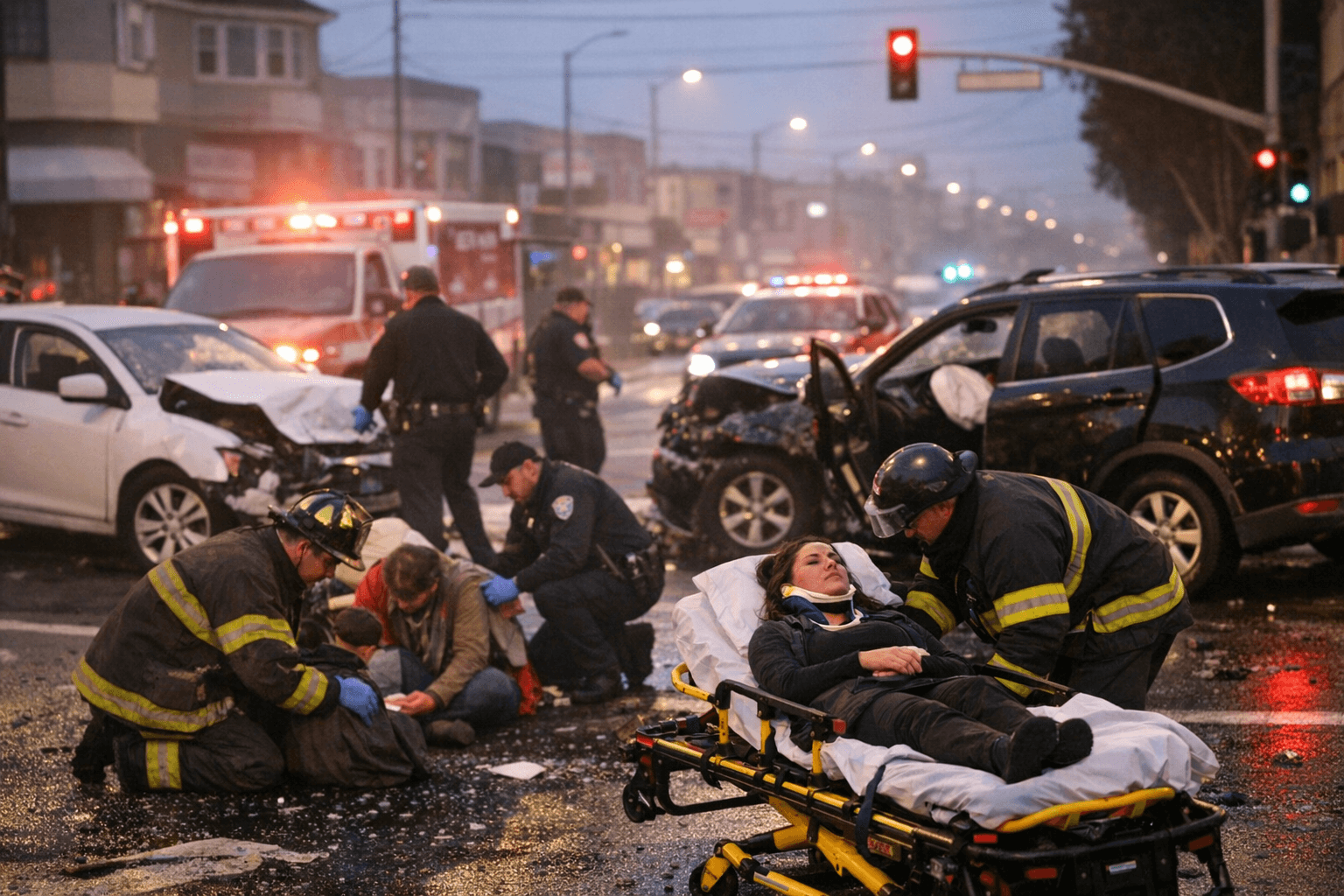
A midday collision on Jan. 2 at the intersection of Mission Street and Onondaga Avenue left multiple people injured and disrupted traffic in a busy Mission District corridor. Emergency responders transported at least four people to San Francisco hospitals with injuries described as non-life-threatening, and several additional people received treatment at the scene before being released.
San Francisco Police Department investigators conducted an on-scene investigation and released preliminary information indicating impairment did not appear to be a factor in the crash. Investigators asked witnesses to contact authorities with any information that could help determine the sequence of events and contributing causes. The request for public assistance underscores the challenges of reconstructing collisions in heavily trafficked areas where bystander accounts and footage can fill critical gaps.
Mission Street is a major north-south artery that carries transit routes, bicycles, pedestrians, and private vehicles. Crashes at such intersections can have outsized local effects beyond immediate injuries: they create short-term disruptions to bus service and local traffic, place demands on emergency medical services and hospital emergency departments, and raise concerns about pedestrian and bicyclist safety for nearby residents and businesses. Even when injuries are not life-threatening, the medical, economic, and psychological impacts can be significant for those involved and their families.
Traffic collisions are also a public health and equity issue. Communities that rely more heavily on transit, walking, and local businesses can face disproportionate exposure to traffic risks. The need for timely investigations, transparent findings, and targeted safety improvements is particularly acute in neighborhoods where people depend on streets for daily mobility and commerce.
City agencies and community groups often respond to such incidents by reviewing traffic patterns, signal timing, and crosswalk visibility, and by considering engineering, enforcement, and education measures aimed at preventing future crashes. Residents and neighborhood organizations can play a role by reporting hazardous conditions and advocating for traffic-calming measures at high-risk intersections.
For now, investigators continue assessing the Jan. 2 collision and have asked anyone with information to contact the San Francisco Police Department. The outcome of the investigation may inform whether roadway changes, enforcement efforts, or other interventions are warranted to protect residents who live, work, and travel through the Mission Street corridor.
This article was produced by Prism’s automated news system from verified source data, official records, and press releases, then run through automated quality and moderation checks before publishing. The system is built and supervised by the people who set the standards it runs under. Read our full AI policy.
Did this article answer your question?