Haight Street's Last Fotomat Kiosk Reborn as Micro Radio Studio
The last Fotomat kiosk on Haight Street, derelict for years, is now a $400/month micro radio studio built by two founders in days during a March heat wave.
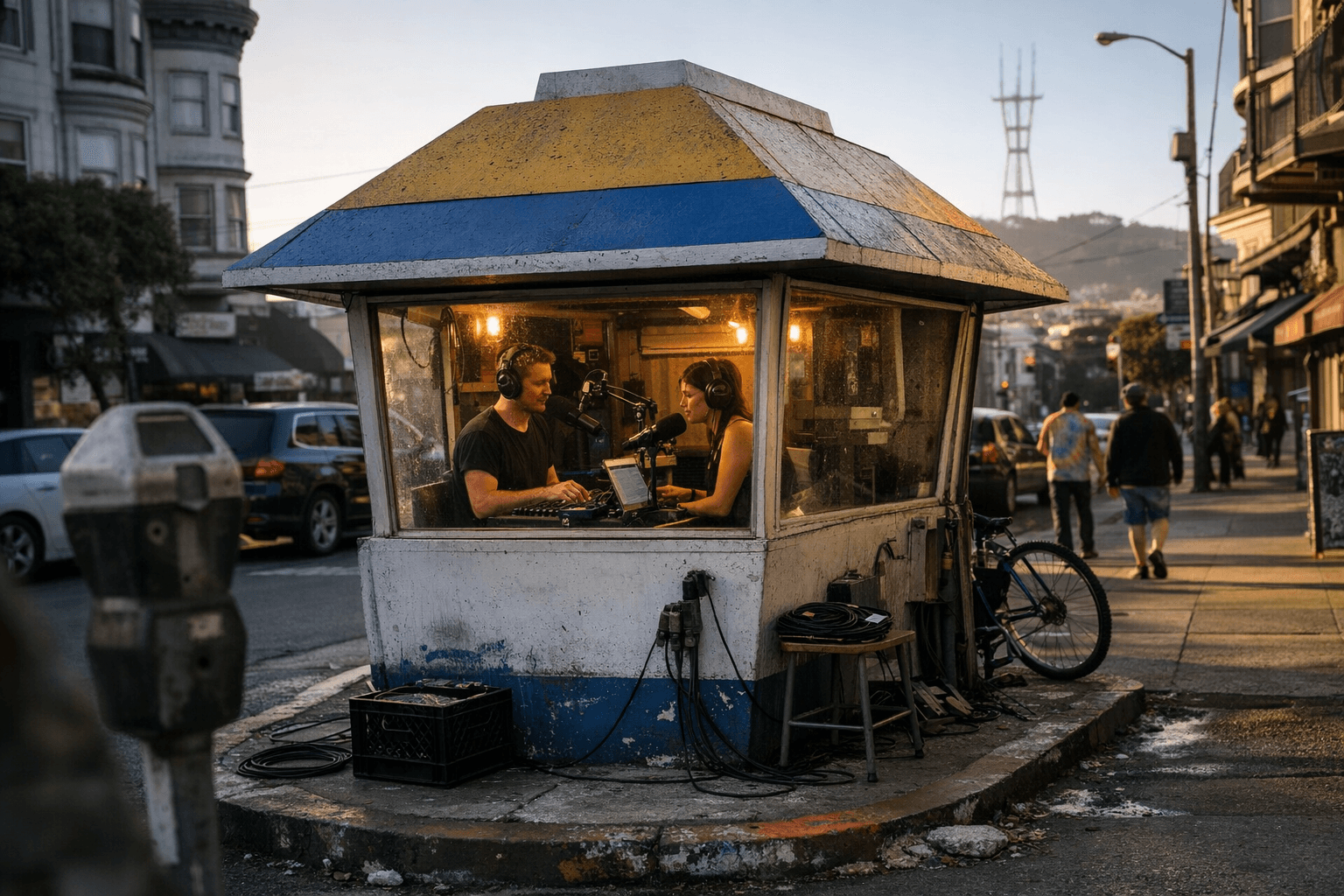
The kiosk sat full of debris on Haight Street, barely larger than a walk-in closet, one of the last Fotomat photo-development booths still standing in San Francisco. Arthur Javier saw it and had a single thought: one person, a DJ setup, and it could work.
Javier and co-founder Erika Martinez, the duo behind program.audio, a radio venture, record label, and music magazine, signed a three-year lease and pushed through a DIY retrofit in mid-March during a record heat wave. The monthly rent: roughly $400.
The Fotomat chain once scattered drive-up kiosks across American parking lots for quick photo development. In San Francisco, this Haight Street outpost had sat dormant long after the chain faded. Javier came across the property after reading about the surviving structure and decided almost immediately that the format fit his vision.
"I just felt like one person, DJ equipment, had to fit in there somehow," Javier said.
Within days of first walking through the booth, the pair had cleared the debris, worked around the absence of running water, and installed equipment to stream music and host programming. Martinez kept the project quiet at first, limiting access to members of their collective and staging an invite-only series of shows and parties that drew crowds before the project went public.
The Haight has long been a neighborhood that resists clean narratives about San Francisco's cultural drift, and the Fotomat revival fits that tension. Where larger redevelopment battles consume years and tens of millions of dollars, Javier and Martinez moved in weeks at a price point that makes most commercial leases in the city look absurd by comparison.
The project is small by almost every measure except what it signals: that neglected urban spaces still have a second life if someone decides to claim them. For a neighborhood whose countercultural identity is now mostly sold back to tourists on vintage tees, a functioning radio studio inside a preserved piece of retro architecture represents something rarer: actual use.
This article was produced by Prism’s automated news system from verified source data, official records, and press releases, then run through automated quality and moderation checks before publishing. The system is built and supervised by the people who set the standards it runs under. Read our full AI policy.
Did this article answer your question?