Hundreds March Through Downtown San Francisco After Fatal Federal Immigration Shootings
Hundreds marched through downtown San Francisco after fatal federal immigration shootings in Minneapolis, protesting ICE and spotlighting local fears about enforcement and community safety.
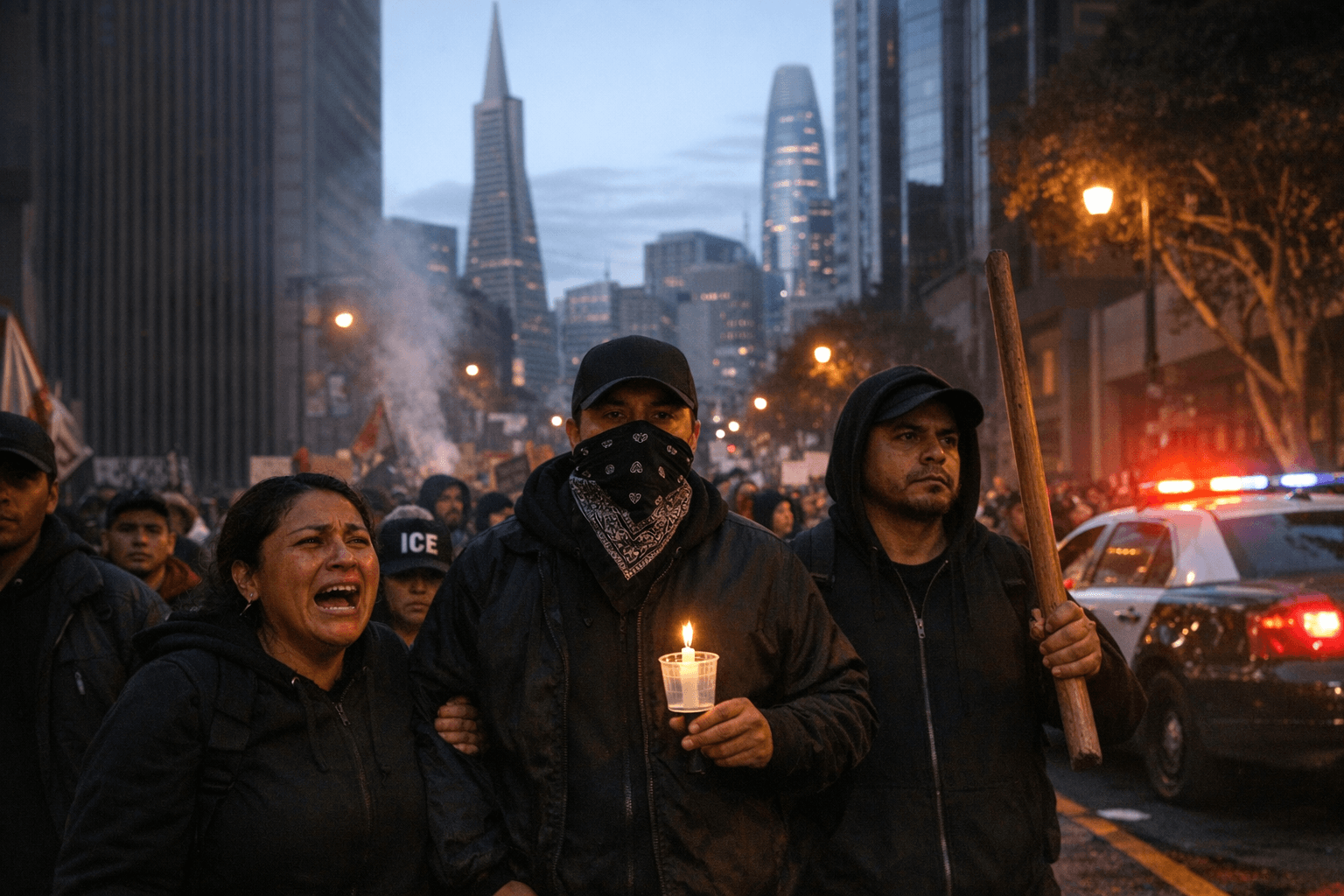
Hundreds of demonstrators converged in San Francisco on Jan. 24, marching from the Embarcadero through downtown in response to fatal shootings of protesters and legal observers by federal immigration agents in Minneapolis earlier that day. The procession stopped outside a federal building that houses U.S. Immigration and Customs Enforcement (ICE) offices, where protesters carried signs reading "Abolish ICE" and chanted against enforcement practices they described as violent and discriminatory.
The demonstration, which drew participants from around the region, moved along Market Street and adjacent downtown streets, briefly disrupting transit and traffic as it went. Organizers and speakers urged expanded community organizing, the creation of local ICE surveillance networks, and action to end what they called a "mass deportation machine." The crowd included long-time San Francisco activists and newer participants mobilized by the Minneapolis shootings and broader national debates over immigration enforcement.
For San Francisco residents the march underscored immediate public safety and public health concerns. Large demonstrations concentrated in the Financial District and along Market Street can delay commutes for transit-dependent workers and create short-term strain on municipal transit operations. More enduring is the impact on immigrant communities: high-profile federal enforcement events and visible local protests can deepen fear and mistrust, discouraging people from seeking medical care, reporting crimes, or accessing city services. Mental health providers and community clinics in neighborhoods with large immigrant populations may see increased need for trauma-informed outreach and culturally competent care in the days and weeks following such incidents.
The demonstration also highlights persistent policy tensions between federal immigration enforcement and local priorities in sanctuary jurisdictions. Protesters framed their demands as a response to what they view as discriminatory and violent enforcement practices, and their calls for local surveillance networks reflect a desire for community-led accountability and rapid information-sharing during enforcement actions. Those proposals raise questions for local policymakers about the balance between protecting civil liberties, ensuring public safety, and staying within legal constraints.
City officials, health providers, and community organizations face immediate choices about how to respond: coordinate mental health and legal aid outreach for affected residents, ensure accessible information about safe routes and transit updates, and monitor potential disruptions in downtown business districts. For many San Franciscans, the march was both an expression of solidarity with victims in Minneapolis and a reminder that federal enforcement actions can reverberate here at home.
As activists plan next steps and city services assess needs, the episode is likely to shape local conversations about immigrant safety, public health preparedness, and how San Francisco protects vulnerable residents while managing downtown disruptions.
This article was produced by Prism’s automated news system from verified source data, official records, and press releases, then run through automated quality and moderation checks before publishing. The system is built and supervised by the people who set the standards it runs under. Read our full AI policy.
Did this article answer your question?