I-80 closure sends riders to BART, weekend trips jump 46 percent
A weekend I-80 shutdown pushed riders onto BART, and weekend trips jumped 46 percent in a test of whether the system can absorb stranded drivers.
When eastbound Interstate 80 went dark through SoMa, BART became the Bay Area’s pressure valve. Trips jumped 46 percent on both Saturday and Sunday, a sharp weekend surge that showed how quickly riders turn to transit when a major freeway between 17th Street and 4th Street is taken out of service.
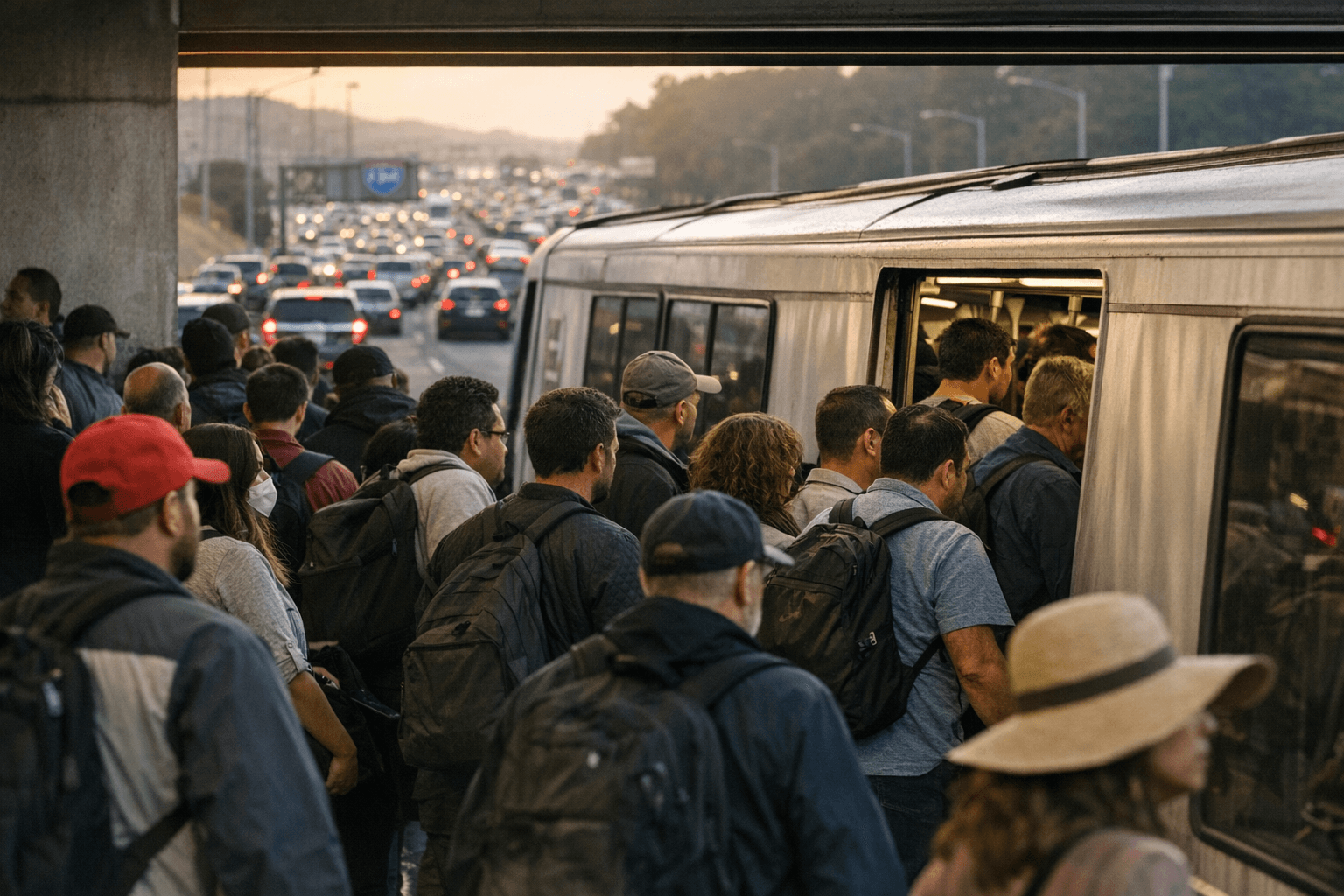
Caltrans closed the eastbound lanes from 11 p.m. Friday, April 17, to 6 a.m. Monday, April 20, as part of a two-year rehabilitation project on the Central/Bayshore freeway viaducts, which the agency says are 71 years old. The southbound and northbound U.S. 101 Bayshore Freeway connector ramps were also shut, while the San Francisco-Oakland Bay Bridge stayed open. Caltrans had urged drivers to avoid the area altogether, and NBC Bay Area warned of heavy congestion across SoMa, Mission Bay and nearby corridors.
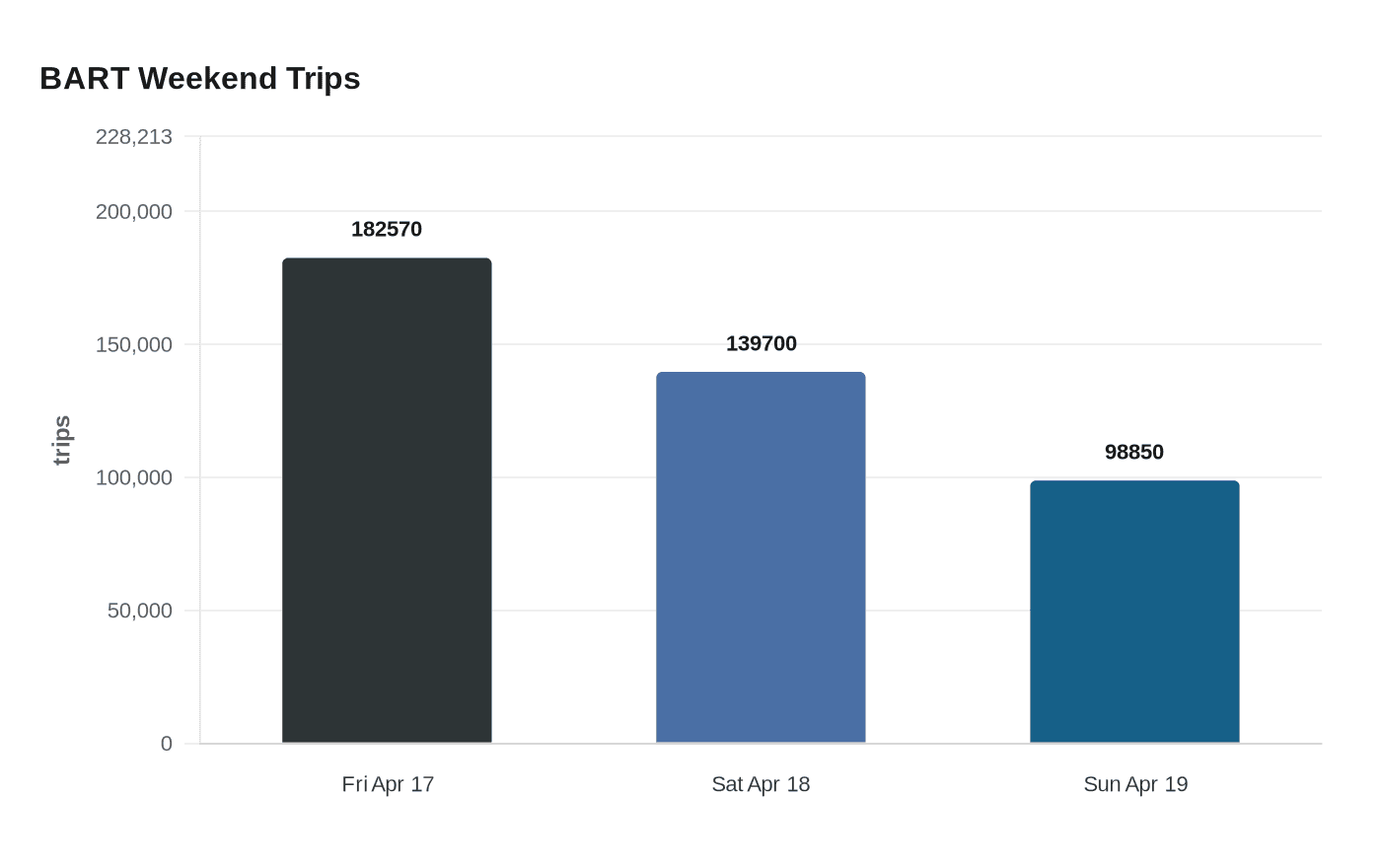
BART said the weekend closure helped drive 182,570 trips on Friday, April 17, about 16 percent more than the previous Friday and nearly 25,000 additional riders. Saturday, April 18, brought 139,700 trips, and Sunday, April 19, reached 98,850 trips, both up 46 percent from the prior weekend. The agency said warm weather also helped, coming after a rainy previous weekend that typically suppresses ridership. BART ran its standard five-line weekend service and said it had the capacity to handle the extra demand.
The numbers amount to more than a one-off traffic detour. They offer a live test of whether BART can absorb displaced drivers when a major road in San Francisco fails, and how much latent demand still exists for transit when driving becomes inconvenient or impossible. That matters as much for emergency planning as it does for day-to-day commuting, especially in a county where closures on the freeway network quickly spill into neighborhood streets and station platforms.
The timing also sharpened the financial stakes. BART says it faces a structural deficit of $350 million to $400 million, emergency funds will run out in 2026, and the agency has balanced its FY26 budget with $35 million in ongoing cuts and cost controls. It projects a $376 million deficit for FY27. At the same time, March 2026 was BART’s strongest month since the pandemic, with 5,403,140 exits, and March 25 was its busiest post-pandemic day at 227,300 exits, surpassing the previous high set during Super Bowl LX week. For San Francisco, the weekend closure showed that transit can still carry the load when the freeway cannot, but it also raised the harder question of whether the system is being funded to do that job again.
This article was produced by Prism’s automated news system from verified source data, official records, and press releases, then run through automated quality and moderation checks before publishing. The system is built and supervised by the people who set the standards it runs under. Read our full AI policy.
Did this article answer your question?