Jack Dorsey backs drug-free supportive housing push in San Francisco
A rally at City Hall and a 26% overdose figure have turned drug-free supportive housing into a test of San Francisco's housing policy and recovery strategy.
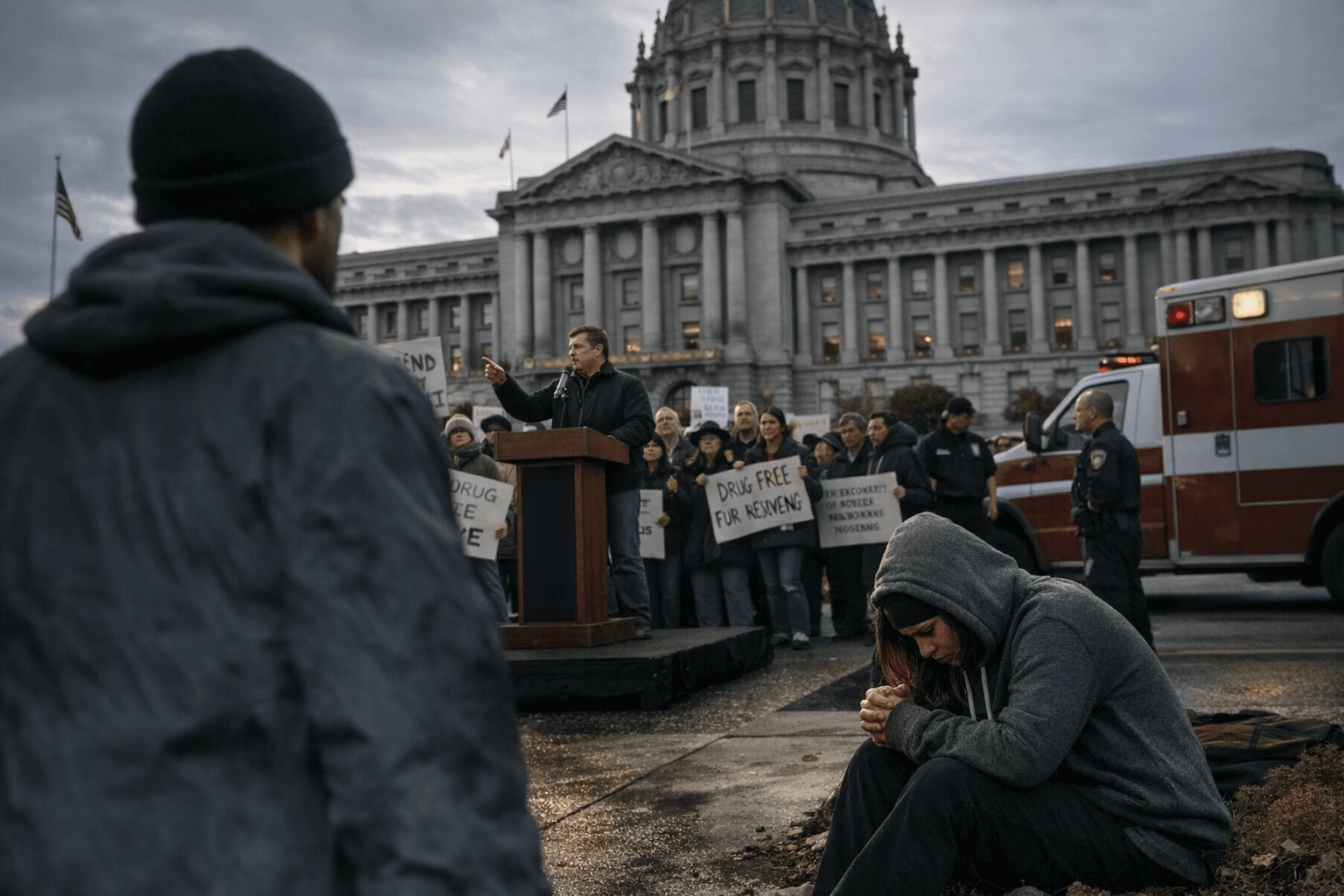
A rally at City Hall on April 23 put a stark number at the center of San Francisco’s housing debate: 26% of fatal overdoses between June 2024 and July 2025 occurred in permanent supportive housing. Jack Dorsey backed the push as District 6 Supervisor Matt Dorsey, who said he is in recovery, urged the city to offer a drug-free option for people who want one.
About 100 members of San Francisco’s addiction recovery community gathered at City Hall to support the proposal, which also drew backing from District Attorney Brooke Jenkins. The measure is co-sponsored by Rafael Mandelman, Stephen Sherrill, Danny Sauter, Bilal Mahmood and Alan Wong, and it was heard by the Board of Supervisors’ Public Safety and Neighborhood Services Committee.
The legislation would make it city policy to expand drug-free, site-based permanent supportive housing and would bar city funding for new drug-tolerant site-based projects except in limited circumstances. It would also require the Department of Homelessness and Supportive Housing to survey residents about whether they want drug-tolerant or drug-free housing. Dorsey has said San Francisco has roughly 9,000 site-based permanent supportive housing units, but only 42 are designated drug-free.
The consequences would be immediate for who gets in, and who does not. Under the current system, San Francisco follows state Housing First guidance across more than 15,000 supportive housing units, and residents cannot be evicted solely for drug or alcohol use unless there are other lease violations. A drug-free model would create a separate lane for residents pursuing sobriety and recovery, while leaving people who continue using outside those buildings. Supporters say that would make buildings safer for residents, neighbors and staff. Critics warn it could erode Housing First principles and increase eviction risk.
The debate comes as the city tries to show progress against overdose deaths without abandoning harm reduction. San Francisco’s overdose prevention plan says fatal drug overdoses fell by more than 20% in the first ten months of 2024 compared with the same period in 2023, a drop equal to 159 fewer lives lost. The city also says Black and African Americans have an opioid overdose death rate more than five times the citywide rate, a disparity that keeps the crisis politically charged.
SFDPH says it has added 400 residential treatment and care beds and more than tripled street outreach workers since the 2022 overdose plan. All 156 HSH-funded permanent supportive housing sites now have naloxone stations available 24/7, and the department has completed 148 overdose response trainings in those buildings, training 1,614 people. A January 2025 city presentation said telehealth visits facilitated nearly 1,500 visits from March to October 2024, with about 40% of clients starting medication treatment for opioid use disorder.
This article was produced by Prism’s automated news system from verified source data, official records, and press releases, then run through automated quality and moderation checks before publishing. The system is built and supervised by the people who set the standards it runs under. Read our full AI policy.
Did this article answer your question?