Lurie launches effort to rename San Francisco's Cesar Chavez Street
Lurie tapped Joaquin Torres and Susan Leal to weigh a Cesar Chavez Street rename as abuse allegations reshaped the city’s view of Chávez. The fight could ripple through the Mission, school names and daily navigation.

Mayor Daniel Lurie has asked Assessor-Recorder Joaquin Torres and former city treasurer Susan Leal to lead a working group on whether San Francisco should rename Cesar Chavez Street, turning a 3-mile corridor from the Bayview waterfront through the Mission to Noe Valley into the center of a much bigger reckoning over neighborhood identity.
The move comes as new allegations of sexual abuse have pushed governments, schools and other institutions around California to reconsider honors tied to César Chávez. In San Francisco, the question reaches far beyond a sign swap. Cesar Chavez Street is woven into the city’s geography and civic memory, and the name sits on institutions that the Mission still uses every day, including Cesar Chavez Elementary School and San Francisco State University’s Cesar Chavez Student Center.
Supervisor Jackie Fielder has already signaled support for the push, saying her office will back community efforts to remove Chávez’s name from District 9 institutions. That matters because District 9 includes the Mission District and the street itself, placing the political fight squarely in the neighborhoods most likely to feel the effects in maps, business addresses and the language residents use to talk about where they live.
Longtime Latino leaders and organizers are weighing a question that cuts both ways. For many San Franciscans, the 1995 decision to replace Army Street with Cesar Chavez Street was a long-delayed acknowledgment of farmworker organizing and Latino political pride. For others now reassessing Chávez’s legacy, the abuse allegations have made the old honor harder to defend. Mission organizer Olga Miranda said many people are still processing the news, a sign of how deeply the issue has landed in the city’s Latino communities.
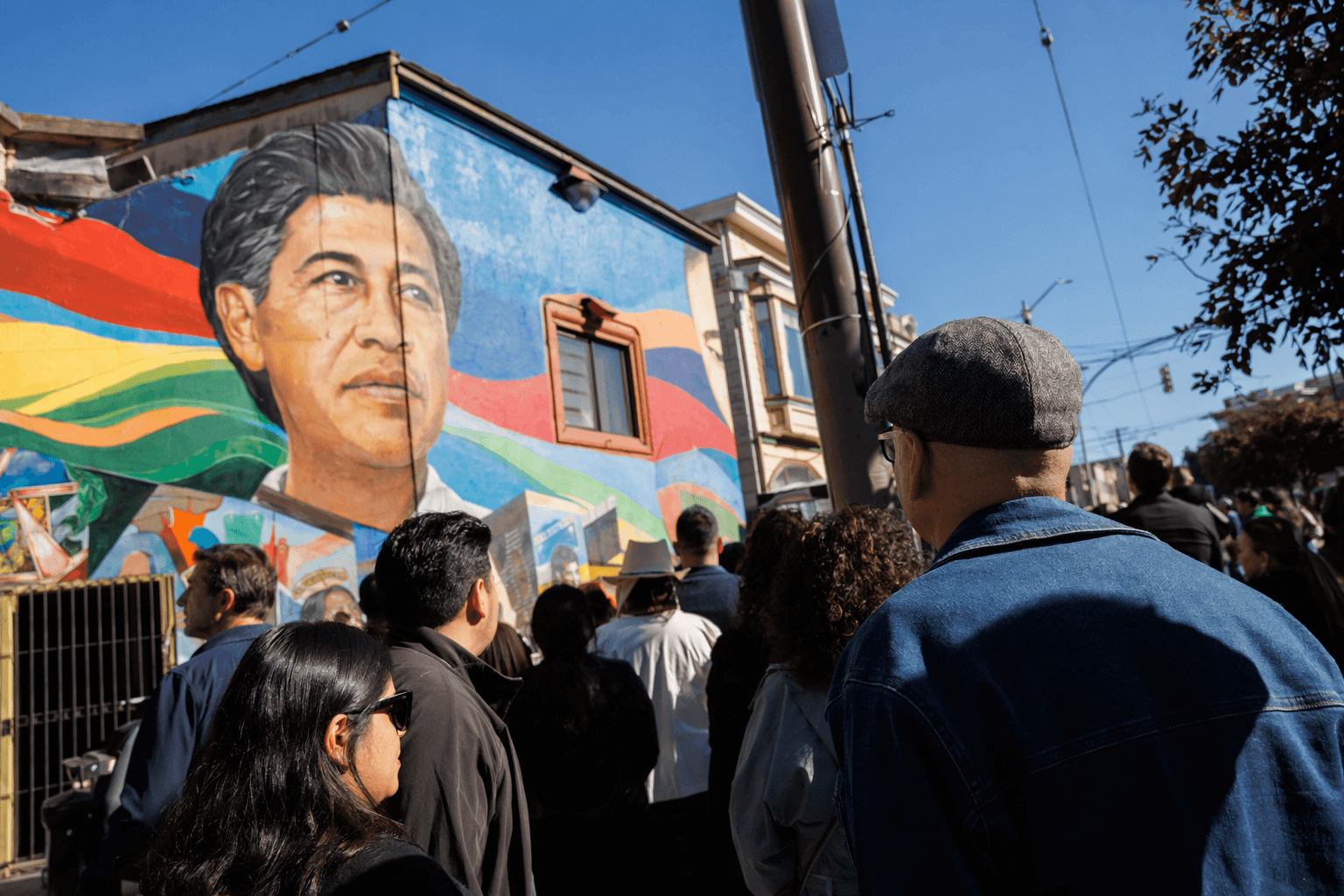
Any change would likely be slow, expensive and bureaucratic. San Francisco supervisors voted unanimously in 1995 to rename Army Street after Chávez, and the unveiling brought 100 new street signs to the corridor on Chávez’s birthday, two years after his death. At the time, Caltrans estimated freeway-sign changes alone would cost $900,000.
San Francisco Public Works says street renamings can be initiated by either members of the public or the Board of Supervisors, and approved changes are added to the city’s Official Map. In many cases, street signs must carry both the old and new names for five years after approval, a detail that suggests any reversal would ripple through the city’s bureaucracy long after the political argument is settled.
The city has already shown that this debate can move beyond one street. San Francisco’s César Chávez Day Parade and Festival was renamed the Dolores Huerta Parade and Festival in 2026, underscoring how the reassessment of Chávez is spreading through Bay Area institutions with real consequences for neighborhood identity.
This article was produced by Prism’s automated news system from verified source data, official records, and press releases, then run through automated quality and moderation checks before publishing. The system is built and supervised by the people who set the standards it runs under. Read our full AI policy.
Did this article answer your question?