Maxine Rose Schur Reflects on Keepsakes That Carry Loved Ones’ Memories
Maxine Rose Schur reflects on how everyday keepsakes - notably a stainless-steel bowl - carry memory and loss, a reminder for San Francisco residents about the value of personal artifacts and communal recovery.
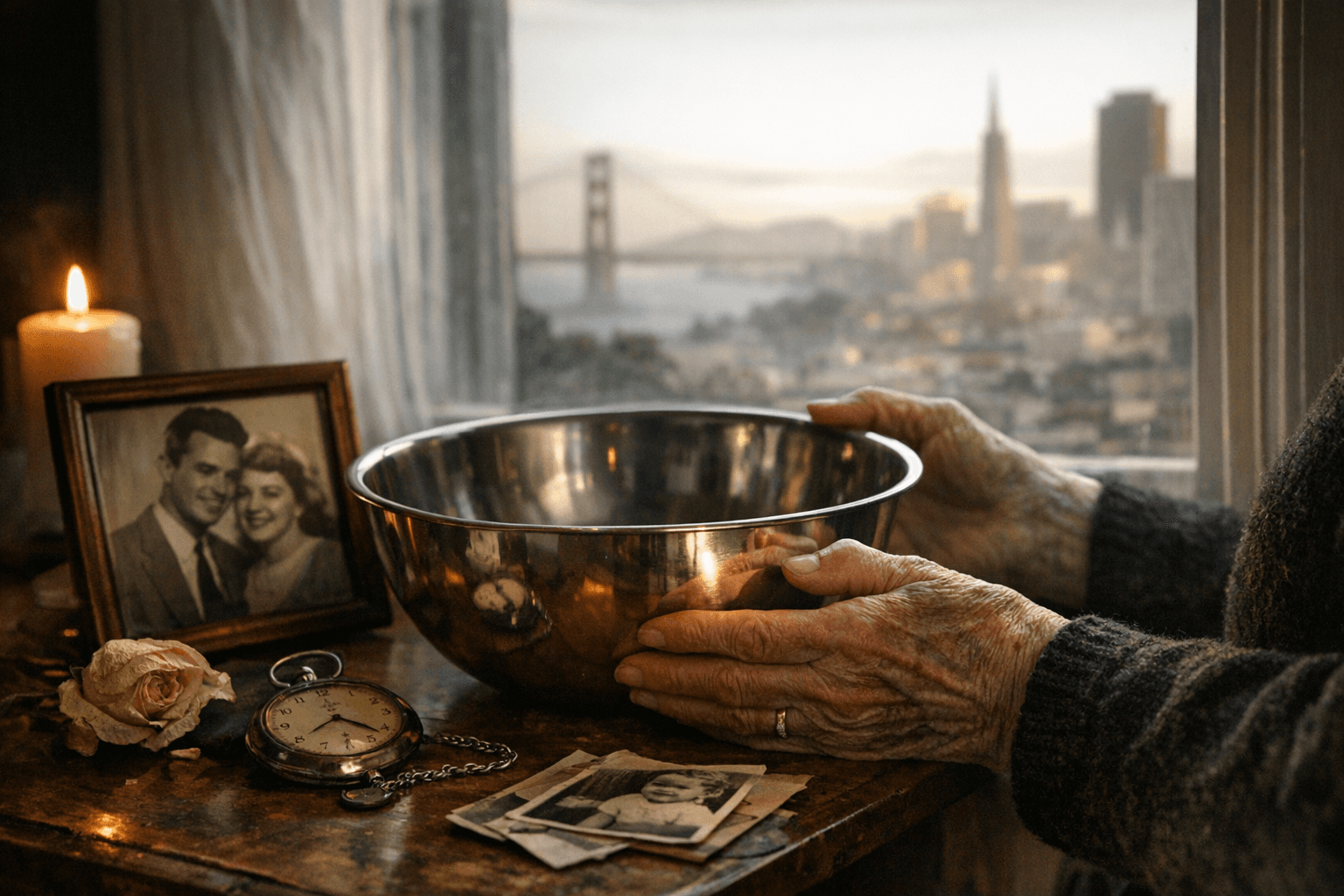
A stainless-steel bowl becomes the lens through which Maxine Rose Schur examines memory, mourning and what communities quietly lose when personal items slip from private life into public markets. Her essay centers on that kitchen object and the small domestic acts that give it meaning: "It was my mom’s bowl in which she stirred her cheesecake batter, made her special matzoh balls with chopped nuts, and assembled her potato salad."
Schur frames the bowl against a moment of rupture. "When my house burned down, only a few things elicited a sense of loss… like how that old stainless-steel bowl," she writes, tying the material damage of a disaster to emotional and cultural loss. The anecdote that follows, a childhood memory of sitting in the kitchen at age 10, anchors the object in daily life: "One spring day when I was 10, I sat in the kitchen while my mom made her potato salad." That scene is amplified by the child's exuberance: "I enthusiastically describing all the wonderful things about Girl Scout camp. I happily recounted the jokes we played on the counselors, the funny songs we sang, and how my frog won the jumping frog race!"
The essay moves beyond a single artifact to explore rituals of remembrance. A simple household practice, tending a spouse's wardrobe, becomes an act of continued caregiving. Schur records her mother's reasoning in plain terms: "I want your father's things to look nice." She adds editorial reflection from the piece itself: "Caring for my father’s clothes was her way of still caring for him. She was honoring her husband. And keeping him close, just a bit longer." Those lines show how material stewardship functions as an emotional and social practice, not merely household maintenance.
Schur also asks readers to consider the afterlife of objects that outlive their owners. "Now whenever I browse in a thrift store, or look over stuff at a garage sale, I wonder… what secret sentiments are also being sold?" For San Francisco residents, where thrift stores, community sales and neighborhood swaps are commonplace, that question has civic dimensions. Items that circulate in secondhand markets often carry histories that are invisible to buyers and to institutions that manage disaster recovery, estate disposition and charitable donation.
The practical implications touch public policy and civic services. When fires, evictions or other displacements occur, recovery programs and nonprofit networks tend to focus on quantifiable losses, documents, housing, appliances, while emotional and cultural losses tied to personal artifacts are harder to assess and address. Recognizing the non-economic value of keepsakes could influence how local recovery services, donation centers and community organizations prioritize outreach, counseling and inventory practices.
Schur signs off plainly: "With a Perspective, I’m Maxine Rose Schur." Her piece invites San Franciscans to inventory not only their belongings but the meanings they carry, and to consider how local systems can better preserve the intangible value that attaches to everyday objects.
This article was produced by Prism’s automated news system from verified source data, official records, and press releases, then run through automated quality and moderation checks before publishing. The system is built and supervised by the people who set the standards it runs under. Read our full AI policy.
Did this article answer your question?