OpenAI, Anthropic IPO hopes spark early San Francisco real estate buzz
AI IPO fever is already lifting San Francisco home prices and office demand, while stock-for-home talk hints who will profit first and who will be priced out.
The next AI windfall is already showing up in San Francisco real estate. Bay Area sellers have begun asking for pre-IPO OpenAI or Anthropic stock in home deals, a sign that the wealth tied to those companies is moving through the market before any public offering lands.
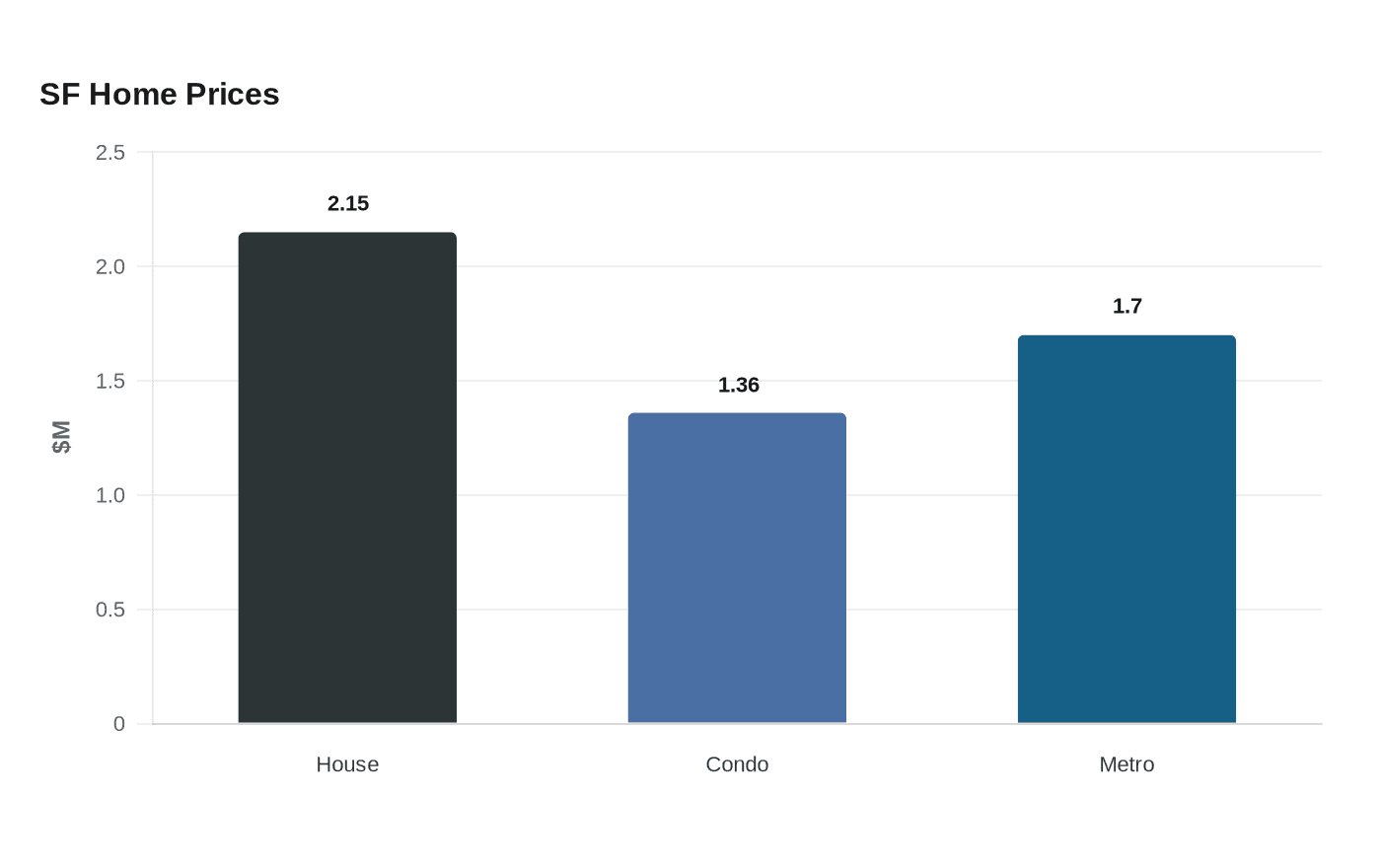
The pressure is most visible in housing. In March, Compass said San Francisco’s median house price hit a record $2.15 million, up 18% from a year earlier, while condo prices rose 27% to $1.36 million. Redfin put the metro median sale price at a record $1.7 million, up 14.4% year over year, and said condo prices climbed 24.4%, the steepest jump since 2013. Inventory stayed tight at 1.8 months of supply in the city area, compared with 3.2 months nationwide, which means new wealth can move prices faster than supply can respond.
The office market is sending the same signal. Kidder Mathews said San Francisco logged more than 3.4 million square feet of leasing activity in the first quarter of 2026, with about 854,854 square feet of net absorption. Even with that demand, the city’s overall vacancy rate stood at 28.0%, and direct vacancy was 24.9%, showing how much empty space still sits on the market. But the biggest AI firms are already claiming a larger share of the city’s footprint: Kidder Mathews said OpenAI occupied about 1.0 million square feet across multiple buildings after adding 222,000 square feet at 1800 Owens, while Anthropic leased 420,000 square feet at 300 Howard, plus 102,000 square feet at 400 Howard and 104,000 square feet at 505 Howard.

That leasing surge is why brokers and city watchers are watching Mission Bay, Downtown San Francisco and the Howard Street corridor so closely. Avison Young said AI office footprints in the city totaled 8.75 million square feet in the first quarter, or 13.4% of occupied space, underscoring how quickly AI companies have become the main source of demand. In the IPO chatter, Anthropic’s valuation has been pegged at $965 billion and OpenAI’s at $852 billion, numbers big enough to reshape the market for luxury housing, commercial space and the professional services that follow both.
For San Francisco, the central question is not whether the AI boom creates wealth. It is who captures it first, and how much of the city feels the price pressure before wages, housing supply and public policy catch up. City government is expected to get little direct tax benefit because California law bars municipalities from imposing income taxes, which leaves the upside concentrated in high-end real estate and local services while the downside lands in a tighter, pricier housing market.
This article was produced by Prism’s automated news system from verified source data, official records, and press releases, then run through automated quality and moderation checks before publishing. The system is built and supervised by the people who set the standards it runs under. Read our full AI policy.
Know something we missed? Have a correction or additional information?
Submit a Tip