Report says Golden Gate Bridge far safer from ship strike collapse
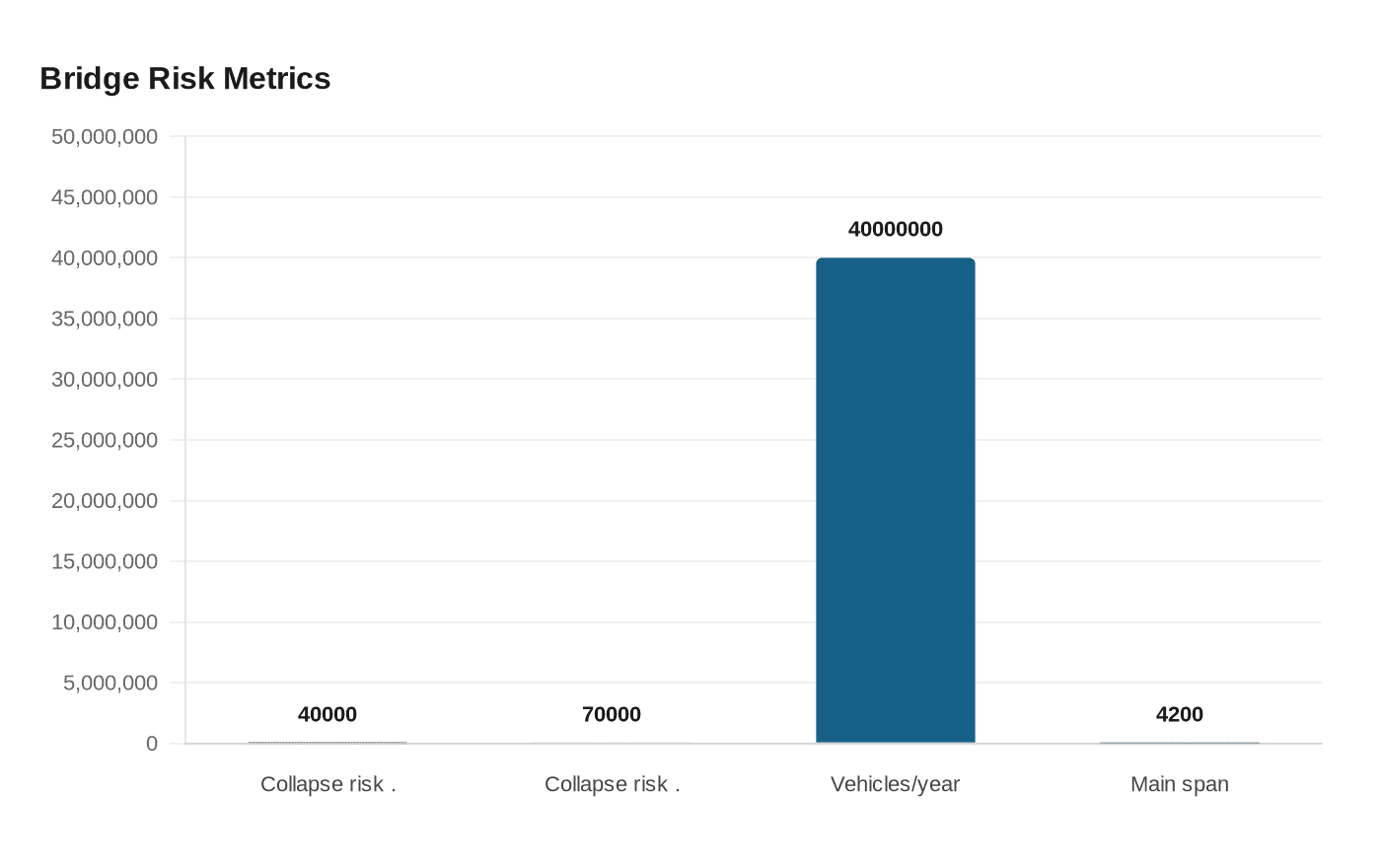
The bridge’s ship-strike collapse risk was put at about 1 in 40,000 to 70,000 a year, far below common safety benchmarks.
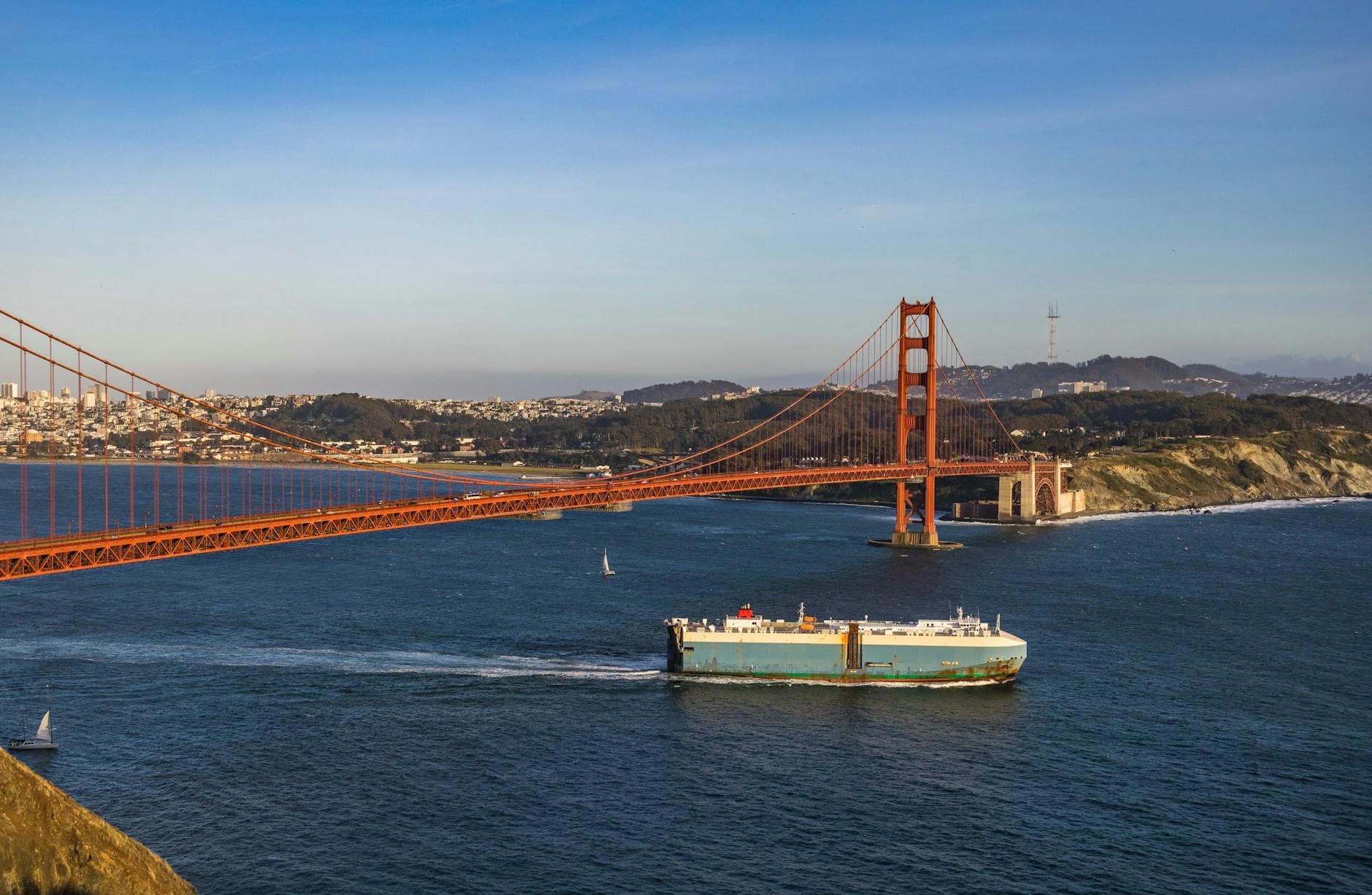
After the collapse of Baltimore’s Francis Scott Key Bridge, the question hanging over San Francisco was simple: could the Golden Gate Bridge suffer the same fate? A new engineering assessment said the answer is far less alarming than many feared, estimating the annual chance of a ship-strike collapse at roughly 1 in 40,000 to 70,000.
That risk number matters because the Golden Gate is not a bridge built on wishful thinking. The Golden Gate Bridge, Highway and Transportation District said on March 20, 2025, that the span was in full compliance with state and federal inspection and evaluation requirements and had one of the most robust ship-collision protection systems on the West Coast. The main span stretches 4,200 feet, and the bridge serves up to 40 million vehicles a year.
The protections are physical, not theoretical. The North Tower sits half on land and half in the water, so a large vessel would run aground before reaching the pier. The South Tower is shielded by a concrete fender ring that extends into the seabed. The district said that fender is filled with sand, like a highway crash barrel, and measures 27 feet thick at its base and 10 feet thick at sea level. After the Key Bridge collapse, the district hired a consultant in 2025 to assess the South Tower fender system’s structural capacity for ship collisions, with the results to be submitted to the Federal Highway Administration.
The broader national warning came from the National Transportation Safety Board, which issued its vessel-strike report on March 18, 2025. The board identified 68 other bridges frequented by ocean-going vessels that were built before modern American Association of State Highway and Transportation Officials vessel-collision guidance and therefore had unknown collapse risk. The Golden Gate Bridge was not singled out in that group, but the report pushed bridge owners to reassess vulnerability and reduce risk before a disaster forces the issue.
Even so, the bridge is not finished hardening itself. The retrofit program began after the 1989 Loma Prieta earthquake, which killed 68 people, injured at least 3,700 and caused an estimated $6 billion to $7 billion in losses across the region. The Golden Gate Bridge escaped observed damage then because the epicenter was about 60 miles south, but the district said the quake drove the retrofit work that followed. By July 2008, the bridge was far enough along in that effort that it no longer faced potential collapse in a major earthquake, though damage risk remained until the full retrofit is complete.
That work kept advancing in 2025. Engineering reporting in September said the fourth seismic phase focused on the main towers and side spans, with Halmar International brought on in March 2024 as construction manager and general contractor. In October, the district approved a $1 billion seismic package expected to take 11 years, with construction set to begin in 2026. For Bay Area commuters crossing between San Francisco and Marin County, the message was blunt: the bridge is old, heavily used and still being reinforced, but the latest engineering evidence says ship-strike collapse is a low-probability event, not an imminent one.
This article was produced by Prism’s automated news system from verified source data, official records, and press releases, then run through automated quality and moderation checks before publishing. The system is built and supervised by the people who set the standards it runs under. Read our full AI policy.
Did this article answer your question?