San Francisco homelessness falls 22%, reaches lowest level since 2011
Unsheltered homelessness fell to 3,400, but family homelessness rose and officials warned the one-night count can miss people on city streets.

A 22% drop in San Francisco’s unsheltered homelessness marks the sharpest decline in years, but the harder question is whether residents will feel it on their own blocks. The city’s preliminary 2026 Point-in-Time Count put unsheltered homelessness at 3,400 people, down from 4,354 in 2024, the lowest level recorded since 2011.
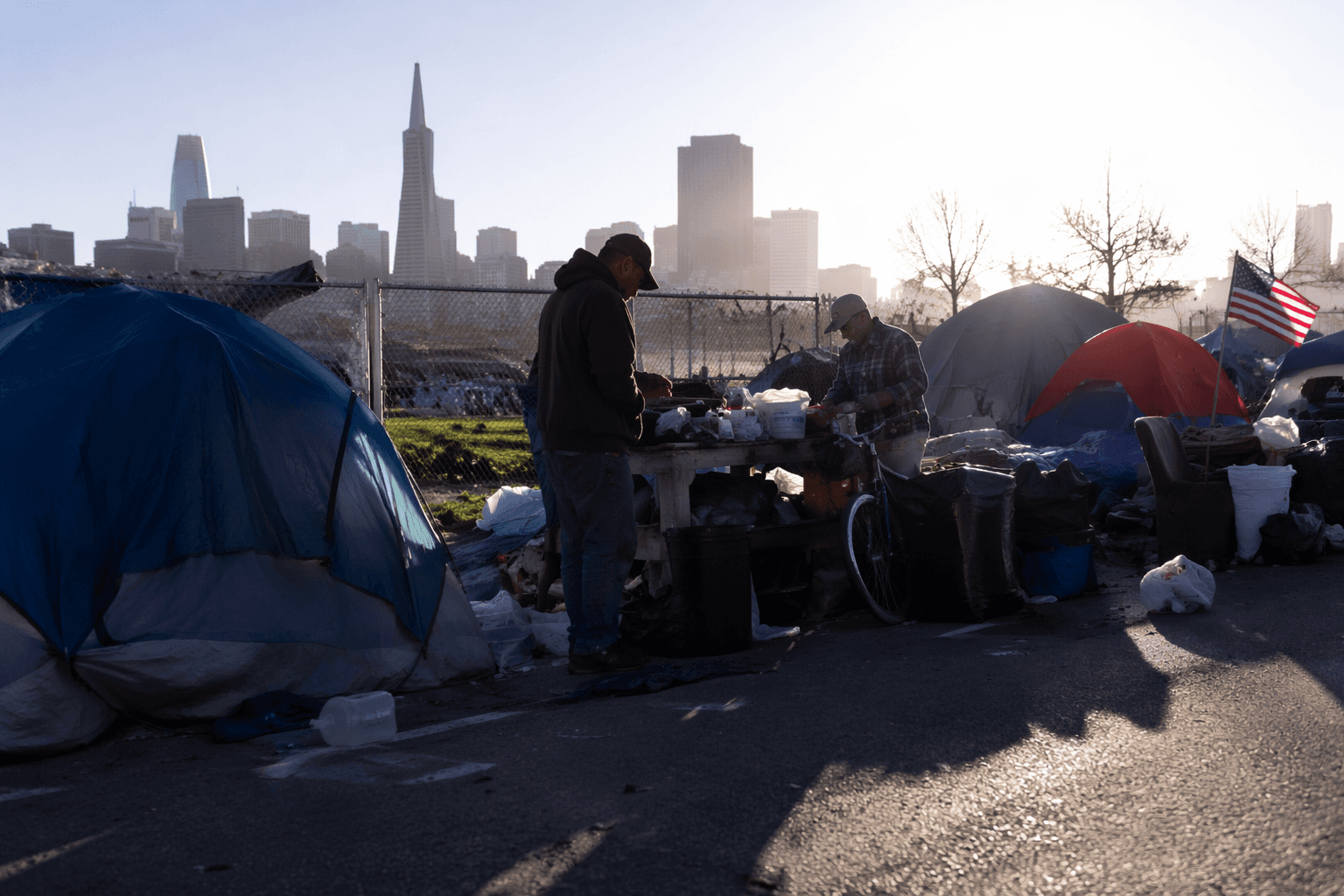
The overall tally also moved lower, though less dramatically. Total homelessness fell 4% to 7,973 people from 8,323 two years earlier, and the sheltered rate climbed to 57%, the highest level the city has recorded. The count found an 85% drop in people living in tents and structures, with fewer than 100 people in tents or makeshift structures, a visible change for neighborhoods that have long lived with encampments and sidewalk camps.
City Hall quickly pointed to supportive housing, outreach and treatment as the main drivers. Mayor Daniel Lurie tied the numbers to his Breaking the Cycle strategy, which includes more than 600 new treatment-focused beds, a 24/7 police-friendly crisis stabilization center at 822 Geary Street and the planned RESET Center, a Rapid Enforcement, Support, Evaluation, and Triage facility intended as an alternative to jail or hospitalization for people arrested under the influence of drugs. Officials said the goal is to move more people off the street and into care faster, especially when crises spill into places like the Mission District and other dense neighborhoods where residents, merchants and service providers feel the strain most sharply.
But the headline decline comes with an important caution. The 2026 street count used a changed method, with enumerators administering surveys during the unsheltered count when possible to reduce duplication and avoid over-counting. Because of that shift, the year-to-year comparison is not a perfect apples-to-apples measure. The survey itself is also only a one-night snapshot conducted in January, even though the city’s service system reaches many more people across the year than the count captures. The city’s dashboard also includes supplemental data for people in jails, hospitals, residential treatment facilities and San Francisco Unified School District students who lack fixed, regular and adequate housing.
The picture is not uniformly better. Family homelessness rose 15% to 465 families, and the number of people in families experiencing homelessness climbed 34% to 1,474 from 1,103 in 2024. That means the city’s progress on tents and unsheltered street homelessness still leaves a growing number of parents and children in unstable housing, a reminder that the struggle has shifted rather than disappeared.
This article was produced by Prism’s automated news system from verified source data, official records, and press releases, then run through automated quality and moderation checks before publishing. The system is built and supervised by the people who set the standards it runs under. Read our full AI policy.
Did this article answer your question?