San Francisco honors Grandpa Vicha, recommits to protecting seniors
Grandpa Vicha’s name returned to City Hall as supervisors weighed whether San Francisco has done more than memorialize the 84-year-old killed in Anza Vista.

Grandpa Vicha’s name returned to City Hall Tuesday night, but the real measure of the moment was whether San Francisco has done more than memorialize the 84-year-old killed in Anza Vista and has actually made daily life safer for seniors who still ride Muni, shop in neighborhood corridors and cross the street alone.
The San Francisco Board of Supervisors passed a resolution on April 21 honoring Vicha Ratanapakdee, the Thai immigrant whose death on January 28, 2021, after he was shoved to the ground, became one of the city’s most painful anti-Asian violence cases and a flashpoint in the Stop Asian Hate movement. Ratanapakdee’s story, carried through the city for five years as “Grandpa Vicha,” has come to stand for a broader fear many older residents still carry in a fast-moving city: that a routine walk can turn deadly in seconds.
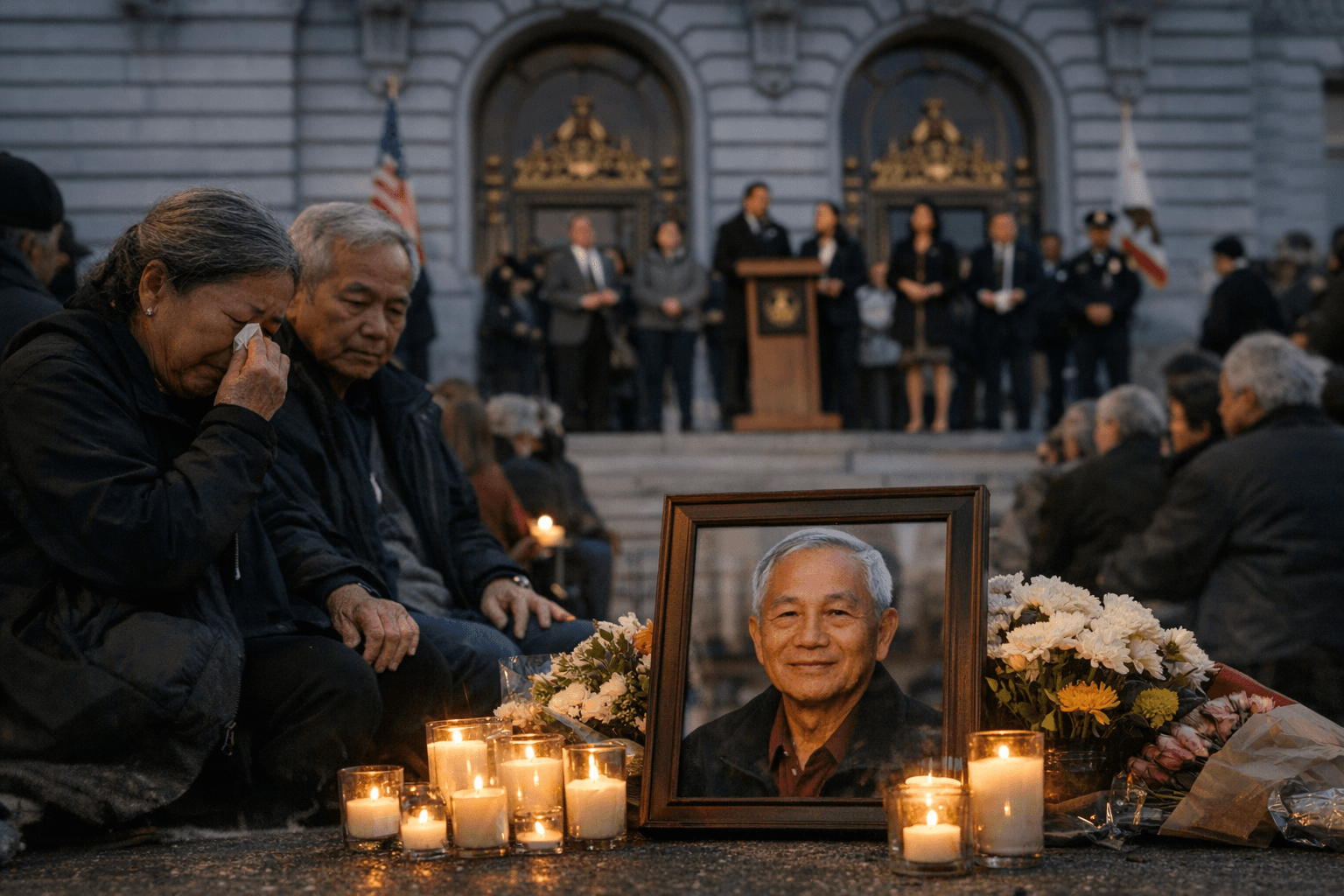
The resolution was more than ceremonial because San Francisco has already tied his memory to the public landscape. In October 2022, the city renamed the area Vicha Ratanapakdee Way. In 2024, the San Francisco Arts Commission approved a Vicha Ratanapakdee Mosaic Stairway Project for Vicha Ratanapakdee Way near Terra Vista Avenue and O’Farrell Street in District 2, with the design intended to visually honor his life. Those steps show City Hall has chosen not to let the case fade into abstraction, even as the question remains whether the city’s response has translated into measurable protection.
That question matters in a city where elder safety is a policy issue, not just a memorial one. San Francisco Adult Protective Services responds to abuse, neglect, exploitation and self-neglect involving older adults and adults with disabilities. The city says more than 1,200 seniors were reached through its annual elder-abuse and scam-prevention campaign, a reminder that the risks facing older residents are not limited to violence in public spaces.
The stakes are rising with the population itself. San Francisco estimated 164,036 adults age 65 and older, about 18.3% of the city’s 2020 population, and projected that share would continue climbing by 2030. That makes the board’s recommitment to senior protection a practical test for City Hall under an 11-member body that meets on Tuesdays in regular session. For San Francisco, honoring Grandpa Vicha now means proving that the city’s promises to seniors are visible not only in resolutions and mosaics, but in policing, street design, language access, anti-Asian safety outreach and elder services that hold up in everyday life.
This article was produced by Prism’s automated news system from verified source data, official records, and press releases, then run through automated quality and moderation checks before publishing. The system is built and supervised by the people who set the standards it runs under. Read our full AI policy.
Did this article answer your question?