San Francisco leaders spotlight Black maternal health, push for budget action
At City Hall, leaders tied Black Maternal Health Week to the budget fight, as Black birthing mothers made up 4% of births but 50% of pregnancy-related deaths.
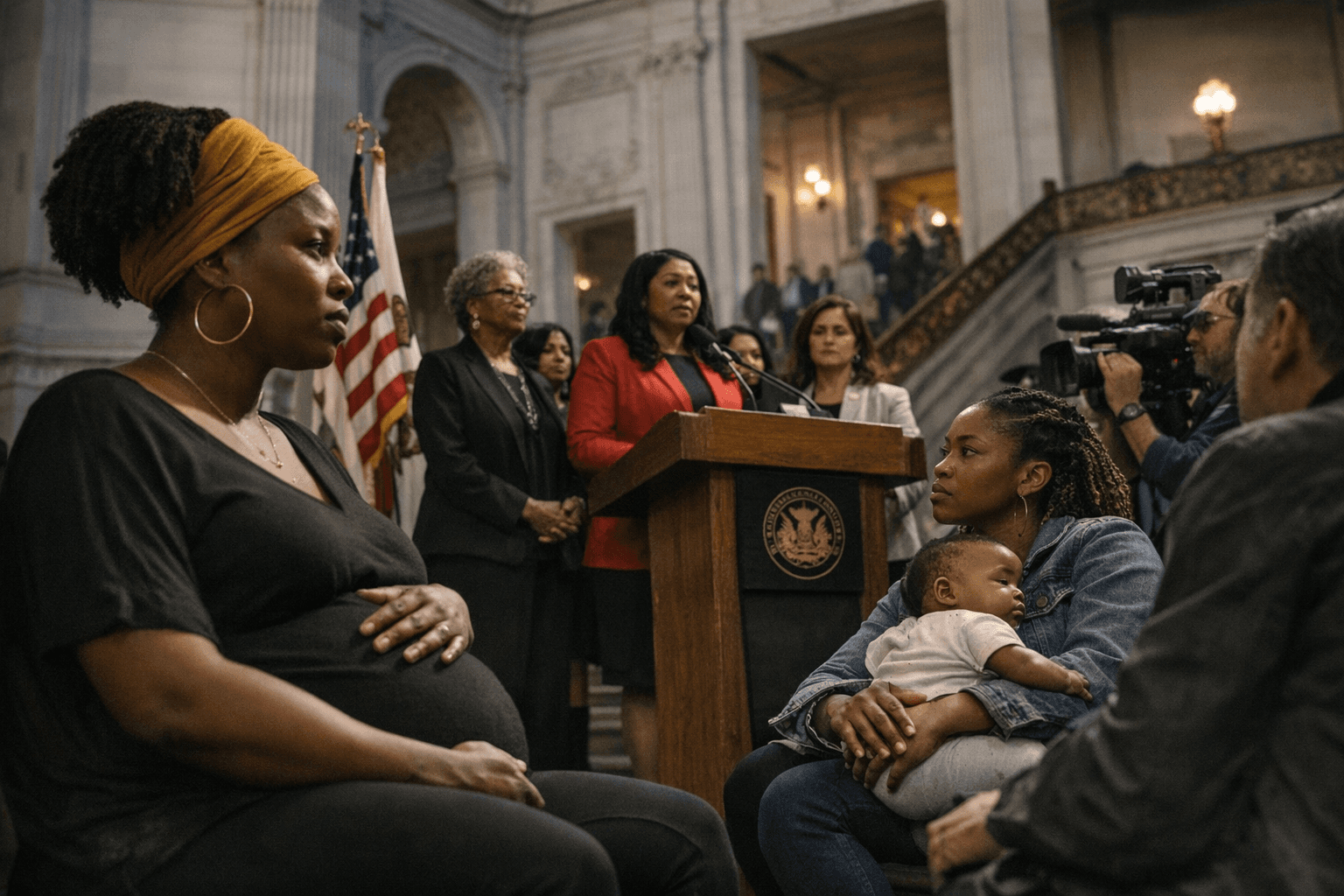
On the steps of San Francisco City Hall, Mayor Daniel Lurie, District Attorney Brooke Jenkins, Supervisors Shamann Walton and Myrna Melgar and community advocates turned Black maternal health into a budget issue, not just an awareness-week message. The gathering landed as the city weighed cuts and competing priorities, with leaders pressing for direct funding, staffing and accountability for Black families.
The disparities behind the rally were stark. The San Francisco Department of Public Health says Black infant mortality rates are two to four times higher than those of other ethnic groups statewide, and Black women in San Francisco are 1.7 times more likely to have a preterm birth than White women. The department also says that of 10 documented maternal deaths in recent years, five were Black mothers. A 2025 Board of Supervisors resolution put the gap even more bluntly, saying Black birthing mothers make up just 4% of births in San Francisco but account for 50% of pregnancy-related deaths.
Lurie has already moved the issue into city government. On Feb. 24, he launched Strong Starts, a citywide effort that brings together city departments to improve maternal and infant health outcomes, including lower preterm birth rates and fewer infant and maternal deaths. Wednesday’s rally added pressure to show that the initiative is more than a slogan, with Melgar and Walton linking the disparities to investments, staffing, resources and political will.
San Francisco already has programs built around the problem. Its Perinatal Equity Initiative includes home-visiting doula support through SisterWeb San Francisco Community Doula Network and a hospital obstetric racism intervention developed with the UCSF Preterm Birth Initiative. City leaders and advocates also pointed to the San Francisco Women’s Agenda as part of the broader push to improve care before, during and after delivery.
The timing mattered as well. Black Maternal Health Week marked its 10-year anniversary in 2026, and the City Hall event underscored how far the conversation has shifted from symbolism to accountability. In a city that likes to cast itself as progressive on health policy, the question now is whether Strong Starts and the city’s existing equity programs will produce measurable drops in deaths, preterm births and the racial gap that has persisted for Black mothers and babies.
This article was produced by Prism’s automated news system from verified source data, official records, and press releases, then run through automated quality and moderation checks before publishing. The system is built and supervised by the people who set the standards it runs under. Read our full AI policy.
Did this article answer your question?