San Francisco one-bedroom rents hit record $4,000 a month
South Beach one-bedrooms now average $4,660, and San Francisco’s $4,000 median means a solo renter needs about $160,000 a year to stay afloat.
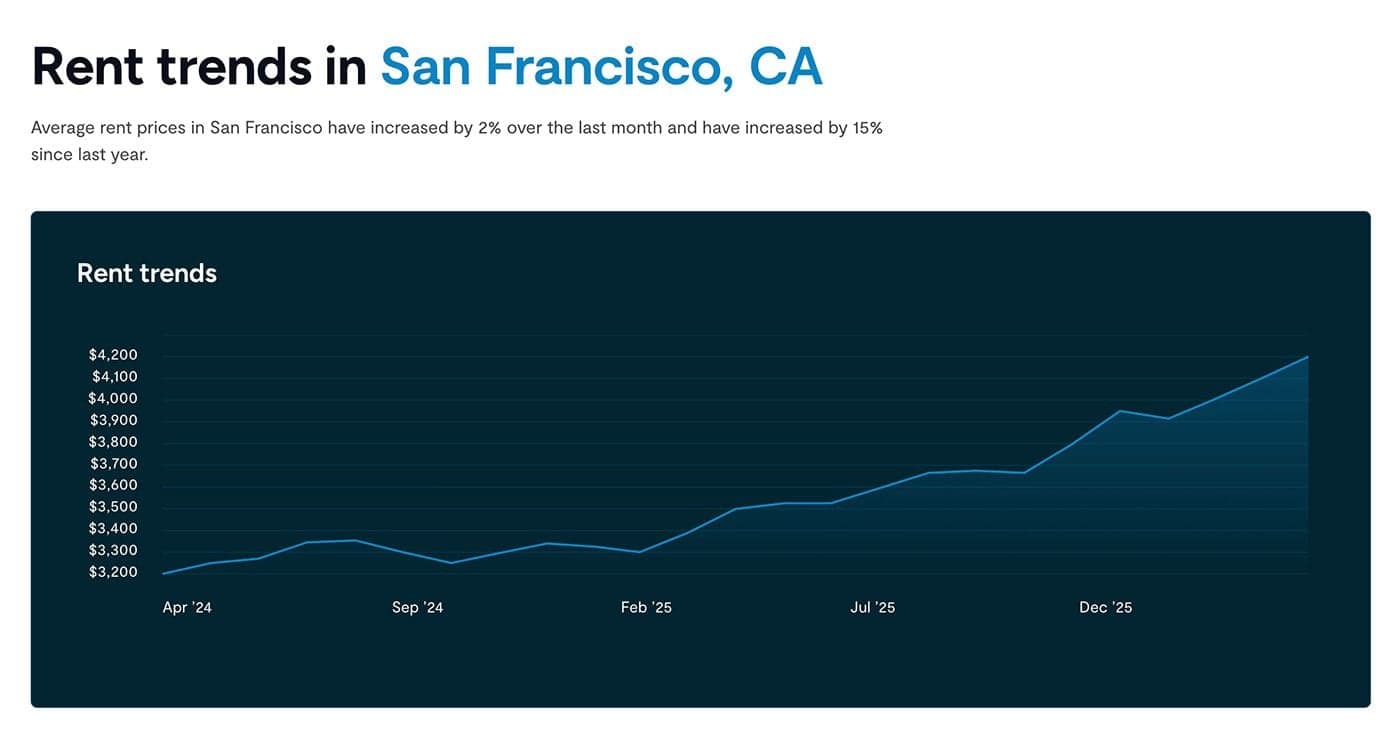
In South Beach, where a one-bedroom now averages $4,660 a month, San Francisco’s rent market has pushed the citywide median for a one-bedroom to $4,000. Under the standard rule that housing should cost no more than 30% of income, that means a renter needs about $160,000 a year just to afford a typical unit alone.
That is far above what many local workers make. A new credentialed SFUSD teacher starts at $79,468, less than half the income needed for a $4,000 one-bedroom. A city custodian tops out at $83,304, with a starting salary of $68,588, while a parking control officer starts at $71,266. Even San Francisco’s minimum wage of $19.61 an hour works out to about $40,789 a year, leaving a huge gap between the city’s housing prices and the paychecks of service workers and many public employees.
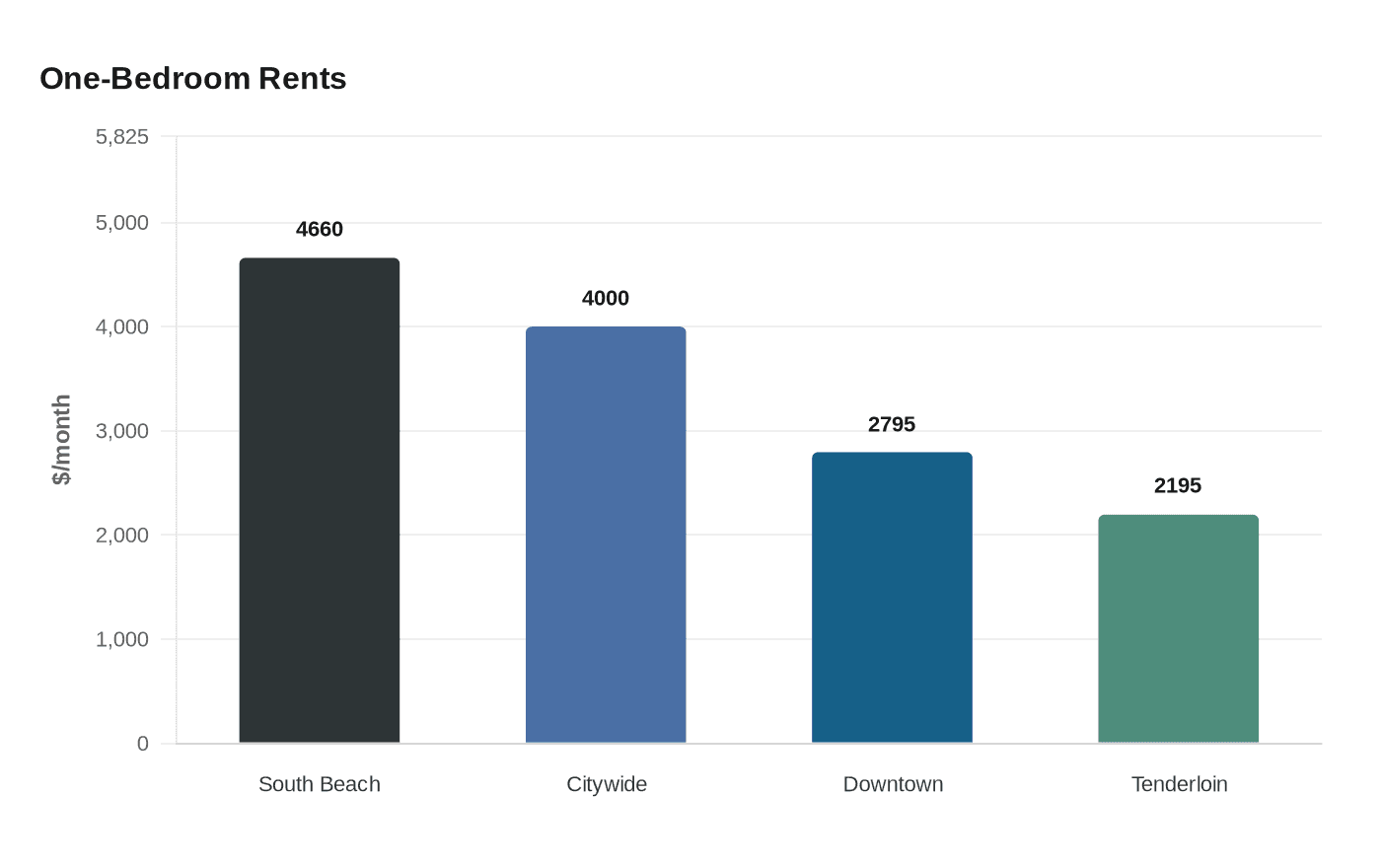
The spread across neighborhoods shows how uneven the squeeze has become. South Beach remains one of the city’s priciest rental markets, with average apartment rent at $4,890 and two-bedrooms at $5,900. Downtown San Francisco looks cheaper by comparison, with average apartments at $2,195, one-bedrooms at $2,795 and two-bedrooms at $4,195. The Tenderloin sits at the other end of the market, with average apartments at $1,820 and one-bedrooms at $2,195, but even there a two-bedroom averages $5,020, a reminder that scarcity reaches across unit types.
The broader numbers point to a market that is still running hot. Zumper’s San Francisco page puts the citywide average apartment rent at $3,995, up 14% from a year earlier. Its one-bedroom listing data shows rents up 2.81% from the previous month and 13.78% year over year. The national rent report said San Francisco one-bedrooms crossed $4,000 for the first time in city history in May 2026, and that the city now leads the country in annual rent growth at more than 21%. Studios average about $2,500, and two-bedrooms average $5,397.
That pressure lands on a city already tracking housing stress in other ways. The San Francisco Rent Board reported 1,033 eviction notices filed between March 1, 2024 and Feb. 28, 2025, while the annual allowable increase for rent-controlled units was set at 1.4% for the year that began March 1, 2025. San Francisco Planning says its Housing Inventory has been published regularly since 1967, but the gap between production, wages and asking rents remains stark. The San Francisco-Oakland-Hayward consumer price index rose 3.8% from a year earlier in April 2026, and the region’s rent index reached 532.153, underscoring how housing continues to drive the cost of living. Until incomes catch up or supply broadens, the $4,000 one-bedroom will keep deciding who can live alone in San Francisco and who is pushed toward roommates, longer commutes or leaving the city altogether.
This article was produced by Prism’s automated news system from verified source data, official records, and press releases, then run through automated quality and moderation checks before publishing. The system is built and supervised by the people who set the standards it runs under. Read our full AI policy.
Did this article answer your question?

