San Francisco rents surge 17% as housing supply tightens
A one-bedroom now asks $3,480, nearly 17% more than a year ago. Controlled units face a 1.6% cap while the market keeps climbing.
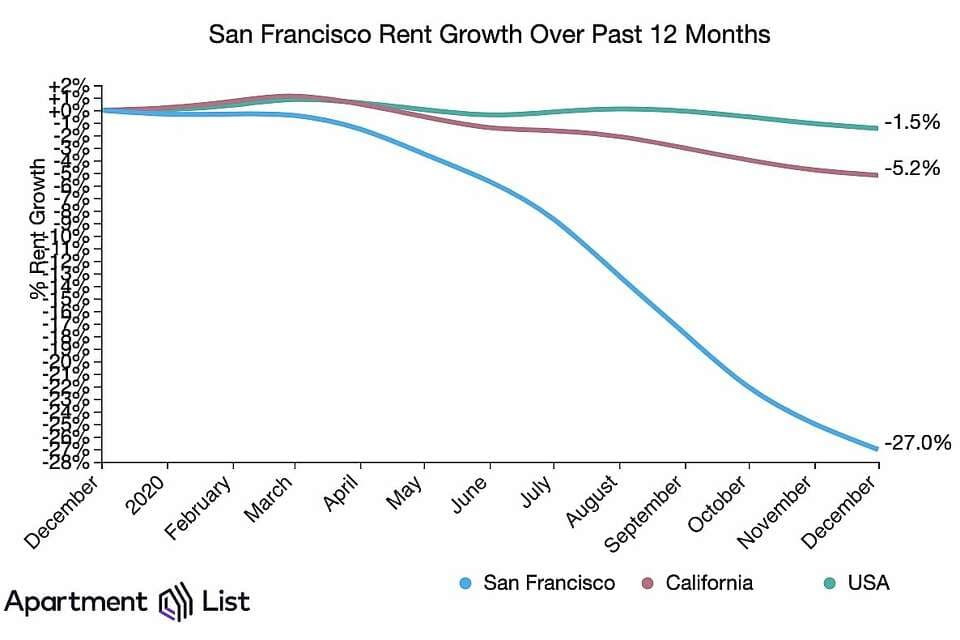
San Francisco renters are facing another sharp jump, with the median asking price for a one-bedroom apartment rising from $2,980 in May 2025 to $3,480 in May 2026. The increase was nearly 17 percent, and San Francisco ranked first among the nation’s 100 largest cities for rent growth, according to Apartment List data.
One renter sent dozens of inquiries and then competed in a remote video tour with 15 other people. Apartment List economist Rob Warnock called the city’s supply-demand balance a “dramatically unhealthy supply-demand relationship.”
San Francisco is now the most expensive large city in the country, with median rents of $3,592 for a one-bedroom and $4,257 for a two-bedroom apartment, according to Apartment List data. The city’s rent-control limit is 1.6 percent for leases covered between March 1, 2026 and February 28, 2027, leaving many existing tenants protected from the full market surge while newcomers and anyone who has to move are exposed to the full price shock.
San Francisco’s 2023 Housing Element calls for 82,000 new homes over eight years, from 2023 to 2031, more than 2.5 times the target in the previous cycle. Mayor London Breed’s Housing for All strategy was designed to turn that plan into action through administrative reforms, legislation and accountability measures, and the San Francisco Planning Commission approved Housing for All legislation on June 30, 2023.
Breed announced new SoMa legislation on July 23, 2024 to strip out zoning rules that had favored office space over housing, and a June 2026 economic impact report on the family zoning plan said two proposed ordinances would allow more housing across a large stretch of the western half of San Francisco.
SPUR’s June 2026 analysis found even market-rate housing often does not pencil out for developers under current conditions, and an advisory committee recommended recalibrating inclusionary housing requirements.
The San Francisco Controller’s Office found in March 2025 that the metro division had lost more than 5 percent of total employment since peaking in mid-2022, even as the city’s housing costs kept climbing.
This article was produced by Prism’s automated news system from verified source data, official records, and press releases, then run through automated quality and moderation checks before publishing. The system is built and supervised by the people who set the standards it runs under. Read our full AI policy.
Did this article answer your question?