San Francisco supervisors weigh budget, mental health and park changes
Budget talks, a mental health contract extension and Embarcadero park changes all hit City Hall, with June 24 budget comment day and waterfront plans in motion.

San Francisco’s next round of City Hall decisions reaches straight into housing, mental health care and the waterfront. The full 11-member Board of Supervisors meets Tuesday, June 16, at 2:00 p.m. in the Legislative Chamber at City Hall, where money questions, public safety oversight and park changes are all moving at once.
Budget decisions set the tone for the next two years
Mayor Daniel Lurie’s proposed $16.9 billion budget for fiscal years 2026-27 and 2027-28 is the biggest item hanging over the board’s work. It is built to close a $642 million deficit and adds a new $100 million reserve for housing and homelessness, a sign that the city is bracing for pressure even before the final numbers are settled.
That matters because the budget is not just an accounting document. It will shape which services hold steady, which departments absorb cuts and how much room the city has to respond if federal support tightens. Public comment day on the budget is June 24, and the board’s budget hearing calendar for FY2026-27 and FY2027-28 is already posted, giving residents a clear moment to weigh in before the spending plan hardens.
The budget fight will run through the board’s money panels, especially the Budget and Appropriations Committee and the Budget and Finance Committee. The full board, including Rafael Mandelman, Connie Chan, Chyanne Chen, Matt Dorsey, Jackie Fielder, Bilal Mahmood, Myrna Melgar, Danny Sauter, Stephen Sherrill, Shamann Walton and Alan Wong, will have to balance the city’s immediate needs against the longer arc of a two-year spending plan.
Mental health services stay tied to a live contract
The budget debate overlaps with a separate, very concrete mental health item. A June 2 Board agenda includes a resolution to extend the Department of Public Health’s agreement with Richmond Area Multi Services, Inc. by three years from June 30, 2026, for peer-to-peer employment and peer specialist mental health certificate services.
That is the kind of item that turns policy language into an actual service pipeline. Peer support programs can be one of the few bridges between treatment, recovery and paid work, especially for residents who need help navigating the mental health system from the inside rather than through a hospital bureaucracy. The board’s state-mandated hearing on changes to health care funding adds another layer, because it links broad budget choices to the day-to-day funding stream that supports care.
For residents, the key question is not abstract reform but continuity. If the extension moves forward, it would keep a specific Department of Public Health partnership in place beyond June 30, preserving services that connect mental health support with job readiness and professional certification.
Public safety scrutiny shifts to crime trends and oversight numbers
Public safety will also get its own close look when the Police Commission meets June 17. Its agenda includes a Chief’s Report on weekly crime trends and public safety concerns, plus an automated license plate reader update, both of which have immediate implications for how police activity is tracked and justified in public.
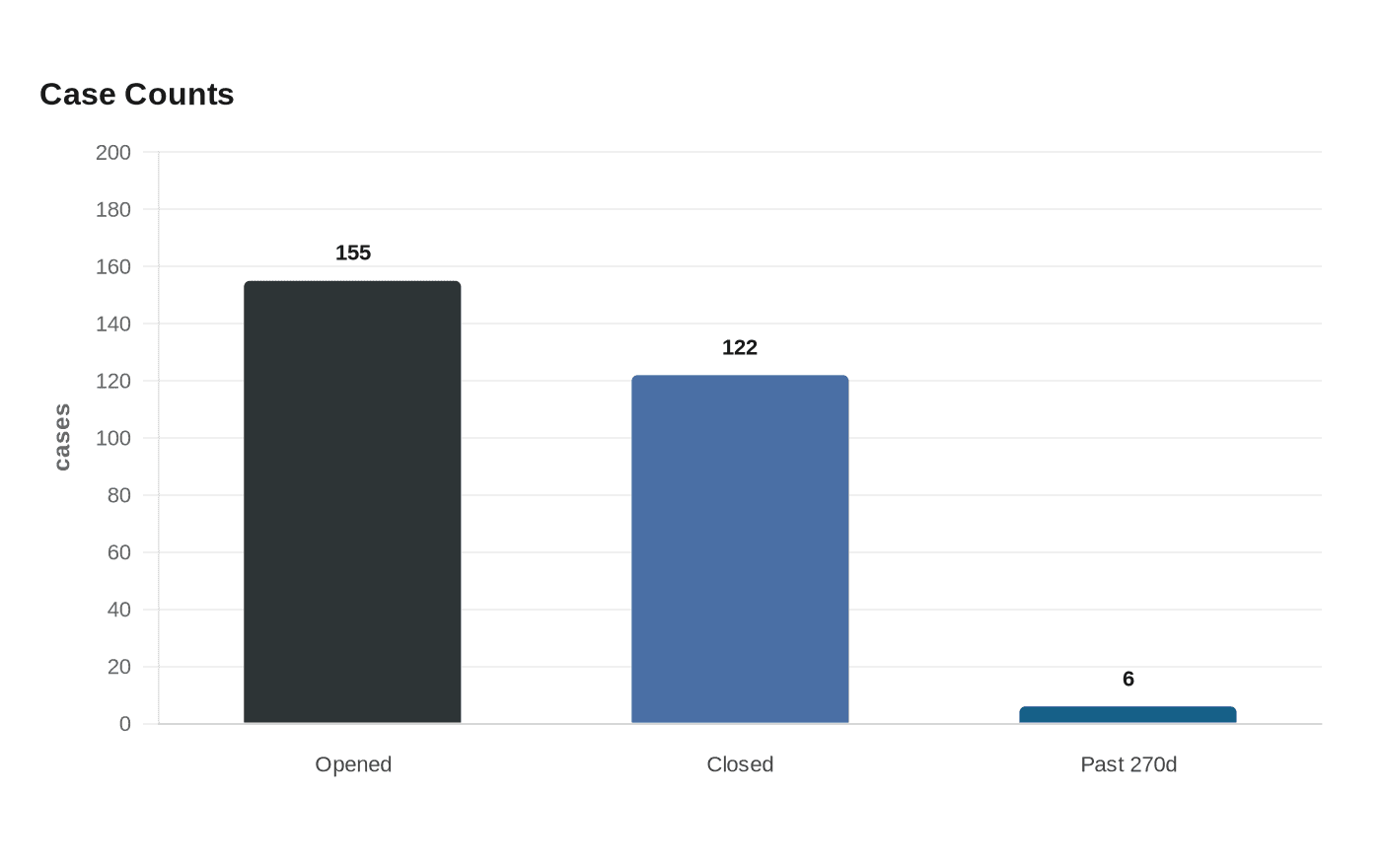
The Department of Police Accountability’s June 3 weekly report gives that conversation some hard numbers. Since the last Police Commission meeting, 155 cases were opened and 122 were closed. Incoming complaints were about 18 percent higher than the same period last year, while the number of cases past 270 days fell to six, described as a historic low.
Those figures point in two directions at once. More complaints suggest more public friction, while the lower number of stale cases suggests the oversight system is clearing backlogs faster. That mix is likely to matter to residents who want both faster accountability and closer scrutiny of crime, especially as the Police Commission weighs tools like license plate readers that can expand surveillance as easily as enforcement.
The board’s Public Safety and Neighborhood Services Committee is the natural home for the broader political fallout from those issues. Even when the commission is the body taking testimony, supervisors are the ones who eventually decide how much authority, money and oversight the department gets.
Embarcadero Plaza and Sue Bierman Park move from concept to construction politics
The waterfront is another place where decisions made now will show up in the daily life of downtown San Francisco. Mayor London Breed announced on November 4, 2024, a public-private partnership with BXP and the Downtown SF Partnership to redesign Embarcadero Plaza and adjacent Sue Bierman Park, signaling a long-running effort to reshape one of the city’s most visible public spaces.
The funding structure tells the story of the scale. BXP would contribute about $2.5 million for design, public funding would be sought for more than $15 million, and private funding would be sought for up to $10 million. That means the project is not just a landscape refresh, but a large civic investment that could affect how people move between Downtown San Francisco, the Ferry Building and the broader waterfront.
The Vaillancourt Fountain is the most visible symbol of that shift. Completed in 1971 as part of Lawrence Halprin’s Embarcadero Plaza design, the fountain has been inoperable since May 2024 after the last functioning pumps failed. City project documents say the Recreation and Park Department now proposes to disassemble and remove it for storage and further analysis because of an immediate public safety risk and deteriorating structural integrity.
For people who use the Embarcadero every day, that is not a distant preservation debate. It is a decision about what kind of public space the city wants along the waterfront, how much risk it will tolerate in a heavily used civic plaza and whether the next version of the site will feel more open, more controlled or simply more usable.
By the time supervisors leave City Hall this week, the city’s most consequential questions will already be clearer: how San Francisco pays for its next two years, whether mental health services stay intact, how aggressively it watches public safety and what the Embarcadero will look like when the construction dust settles.
This article was produced by Prism’s automated news system from verified source data, official records, and press releases, then run through automated quality and moderation checks before publishing. The system is built and supervised by the people who set the standards it runs under. Read our full AI policy.
Did this article answer your question?