San Francisco’s 16th Avenue Tiled Steps turn a stairway into art
A 163-step mosaic in Golden Gate Heights shows how neighbors turned a steep block into San Francisco’s first tiled stairway and a lasting civic landmark.
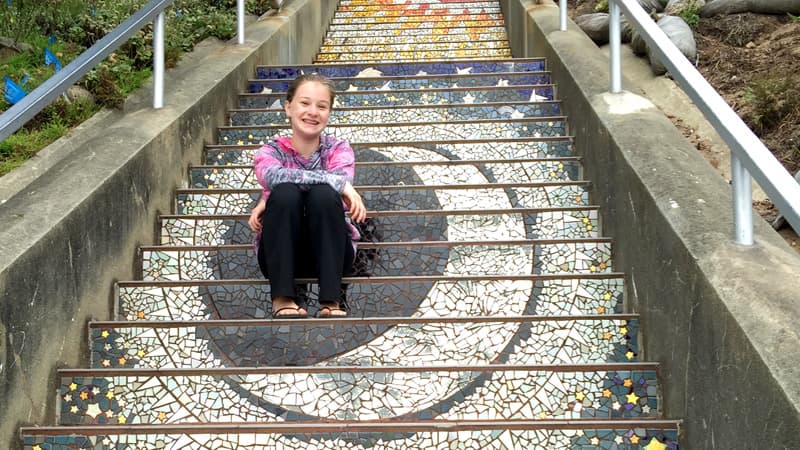
A burst of sea-to-stars mosaic tiles climbs Moraga Street in Golden Gate Heights, turning a steep 163-step public stairway into one of San Francisco County’s most recognizable neighborhood landmarks. The 90-foot rise is still a working piece of infrastructure, but it now pulls walkers uphill for the art, the view and the sense that a residential block can become shared civic space.
How neighbors remade a block
The 16th Avenue Tiled Steps began as a grassroots neighborhood collaboration in 2003, when Jessie Audette and Alice Yee Xavier started the project as a way to connect neighbors. Artists Aileen Barr and Colette Crutcher led the initiative, and more than 300 people helped transform the stair risers into the mosaic artwork that now defines the block.
That origin matters because the steps were never just a commissioned installation dropped into place from above. The project grew from local effort, with artists, donors, sponsors and residents all shaping a stairway that had to work as public infrastructure and as public art. The result is visible in the design itself: a flowing sea-to-stars theme that moves up the stairway instead of sitting on it like a separate object.
What you see on the climb
The stairway sits on Moraga Street between 15th and 16th avenues in San Francisco, in the Golden Gate Heights neighborhood. San Francisco Stairways describes it as 90 feet high and calls it the city’s first tiled stairway, which helps explain why it has become such a fixture in western-neighborhood walking tours and photo stops.
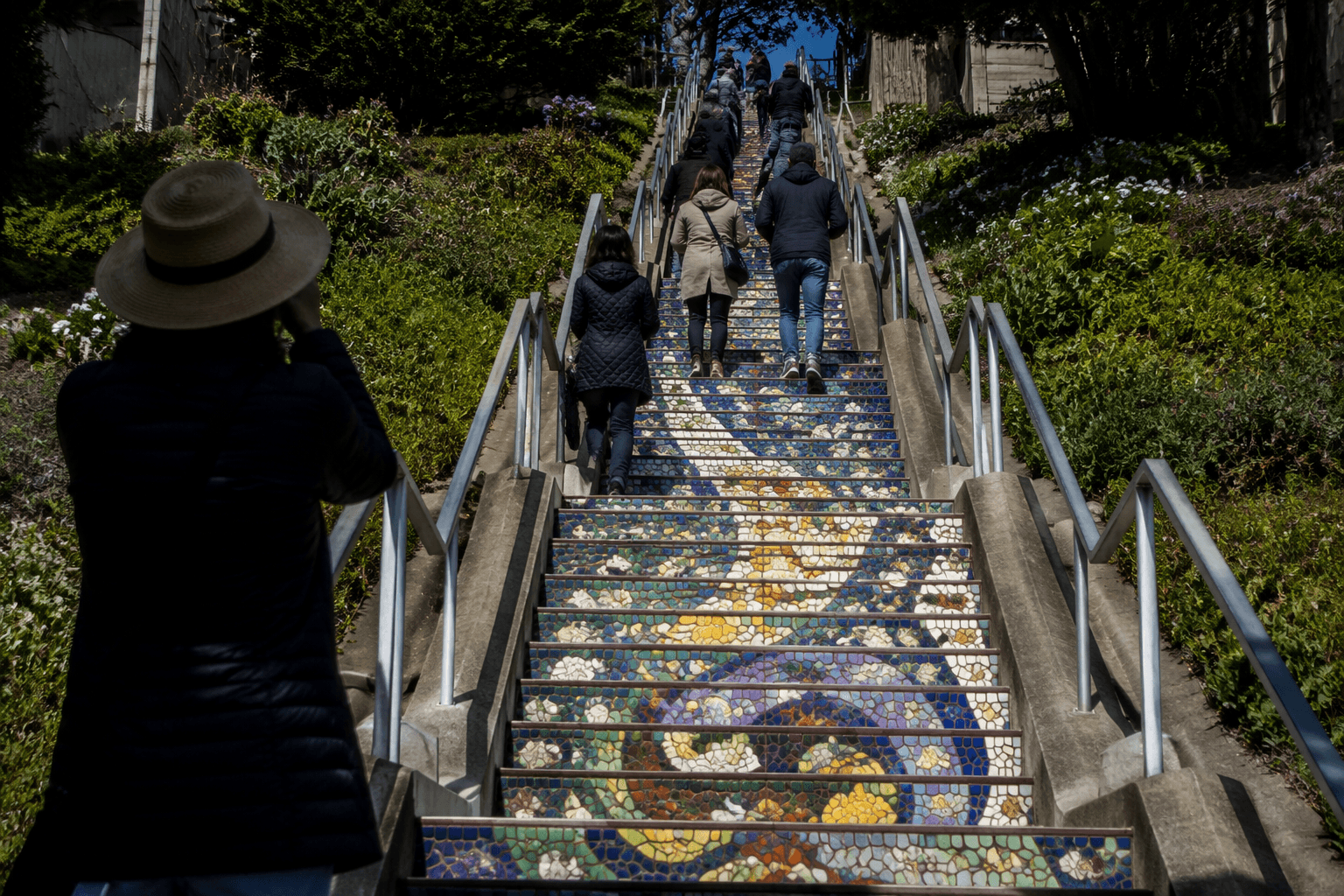
The climb is straightforward but memorable: 163 steps, outdoors, open for everyday public use. Because the artwork runs up a steep residential hillside, the experience changes as you go, with the mosaic drawing your eye upward and the city opening out behind you near the top. That mix of utility and spectacle is part of what keeps the site popular all year, not just during a particular season.
The payoff is not only the tiles themselves. The top gives walkers views over San Francisco, which turns the stairway into both a destination and a route through the neighborhood. That is also why visitors often pair it with other hilltop walks and stairway landmarks in the western neighborhoods, including the nearby Hidden Garden Steps.
Why this landmark still belongs to the neighborhood
The 16th Avenue Tiled Steps are a useful San Francisco story because they show how block-level organizing can reshape how a street feels without changing what it does. The stairway remains a public route on a real residential block, so the landmark is inseparable from the people who live around it and use it every day. That is where visitor etiquette matters: the steps are meant to be enjoyed, but they are also part of Moraga Street, not a stand-alone park.
The project’s longevity is part of the point. San Francisco Beautiful gave the steps a Beautification Award in 2006, lending citywide recognition to what began as a neighborhood collaboration. A later milestone marked the steps’ 20th anniversary of opening, underscoring that the installation has endured as both civic art and everyday infrastructure.
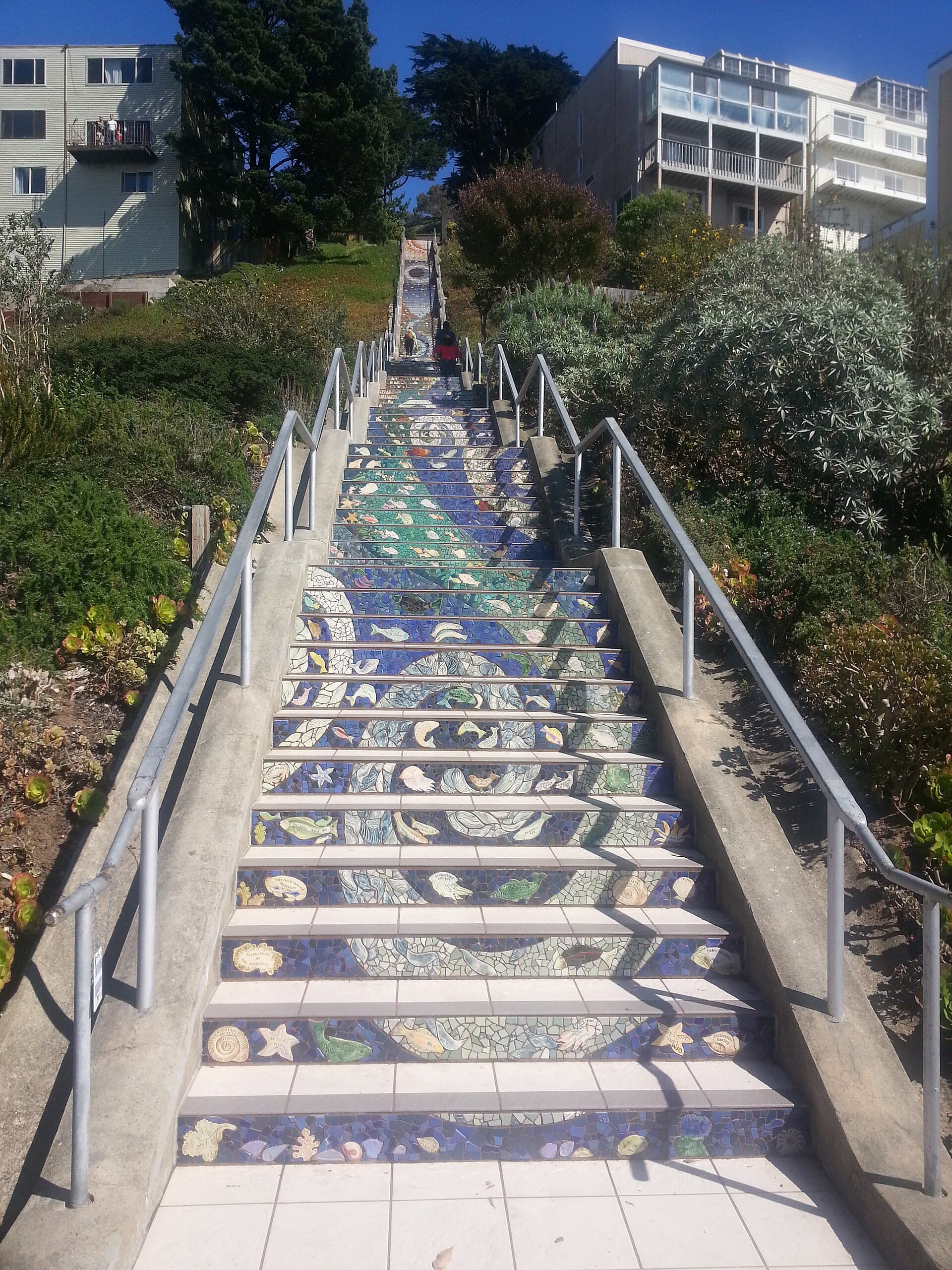
That endurance also explains why the steps keep drawing attention long after the tiles were set. Outdoor, permanently installed and open for public use, the stairway does not depend on an exhibition calendar or a special event to matter. It stays relevant because it sits at the intersection of neighborhood pride, foot traffic and shared maintenance of a place people still have to live beside.
A model for San Francisco’s hills
San Francisco has many steep streets, but few have been turned into something as legible and beloved as the 16th Avenue Tiled Steps. The project’s 2003 start, 2005 completion and more than 300 volunteer hands make it a strong example of how community-funded public art can do more than decorate a block. It can change the way people move through a neighborhood, give residents a landmark they helped create and make an ordinary stairway worth crossing the city for.
That combination of access, art and neighborhood ownership is what has kept the 16th Avenue Tiled Steps relevant for two decades and counting.
This article was produced by Prism’s automated news system from verified source data, official records, and press releases, then run through automated quality and moderation checks before publishing. The system is built and supervised by the people who set the standards it runs under. Read our full AI policy.
Did this article answer your question?