SF State students press leaders on transparency, housing, AI, free speech
Students packed Malcolm X Plaza to press SF State on housing, AI and free speech, building on a 2024 protest that forced the university to change its investment policy.
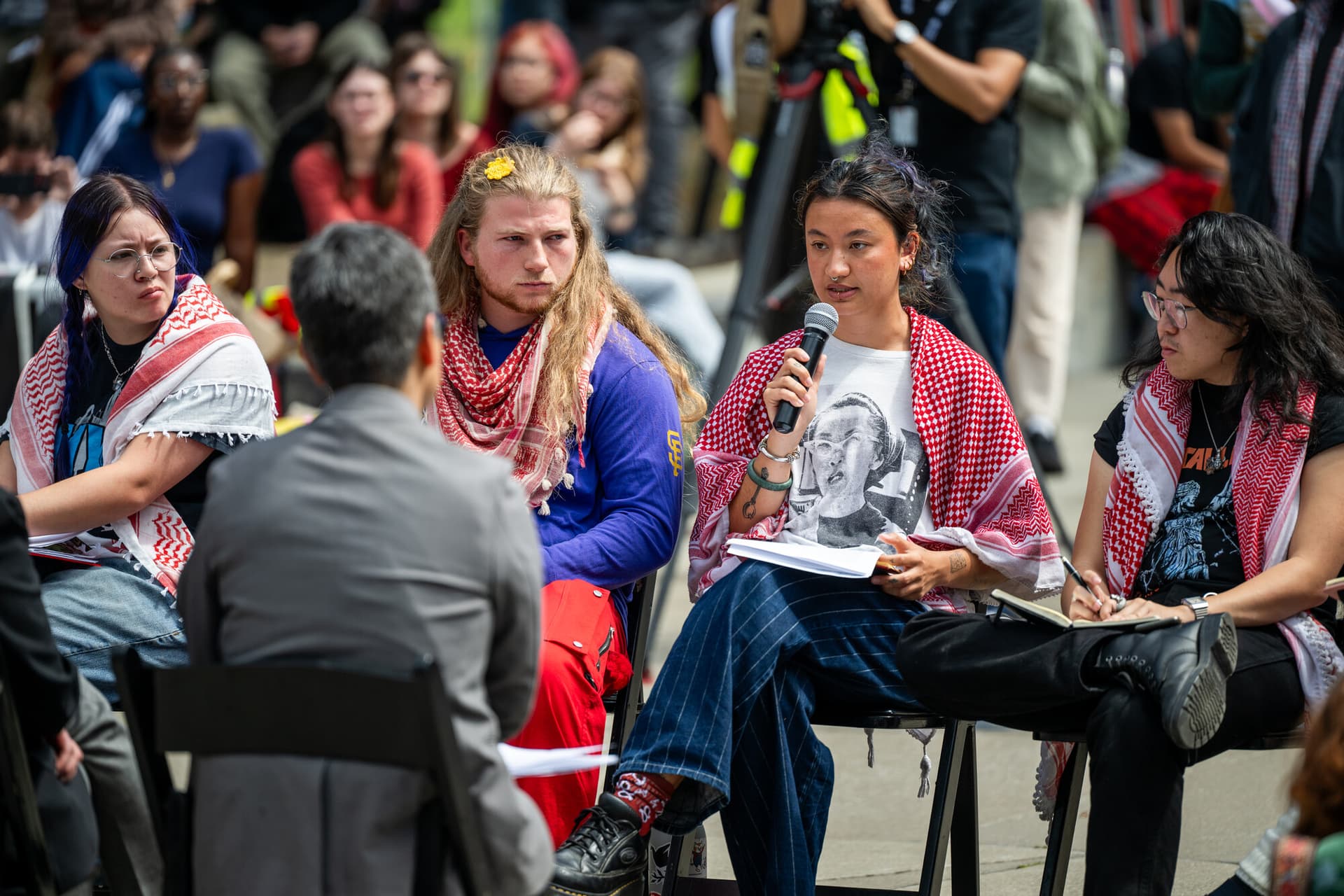
Malcolm X Plaza became a pressure point for San Francisco State University on April 8, as students, faculty and community members confronted President Lynn Mahoney and Provost Amy Sueyoshi over transparency, housing, artificial intelligence, free speech and campus protections. The gathering marked a new phase for a campus movement that has moved from protest into formal negotiation, with students now testing whether organizing can win changes in university governance.
That shift matters because SF State has already shown that sustained student pressure can produce policy changes. During the spring 2024 pro-Palestinian encampment on The Quad, which ended after about two weeks, the university agreed to work with protesters to explore limits on investments in companies that profit from weapons manufacturing, advance human rights and provide greater transparency around investments. University messaging later said the SF State Foundation would post extensive investment information on its website.
The foundation’s revised investment policy statement was approved by its Investment Committee on August 13, 2024, and ratified by the Foundation Board on December 12, 2024. Under the policy, the foundation shall not hold direct investments in companies that primarily engage in or profit from weapons manufacturing and will make best efforts to minimize exposure through indirect investments. Reports on the foundation’s portfolio put the endowment at about $160 million to $163 million.
Mahoney has framed that response as a balance between activism and campus stability. She said the campus community had worked together to “support student activism and keep our campus safe and operational,” and later said SF State was proposing to expand its investment policy to include a “core commitment to advancing human rights.” For students, that history is part of why the current organizing effort has more leverage than a typical campus complaint campaign.
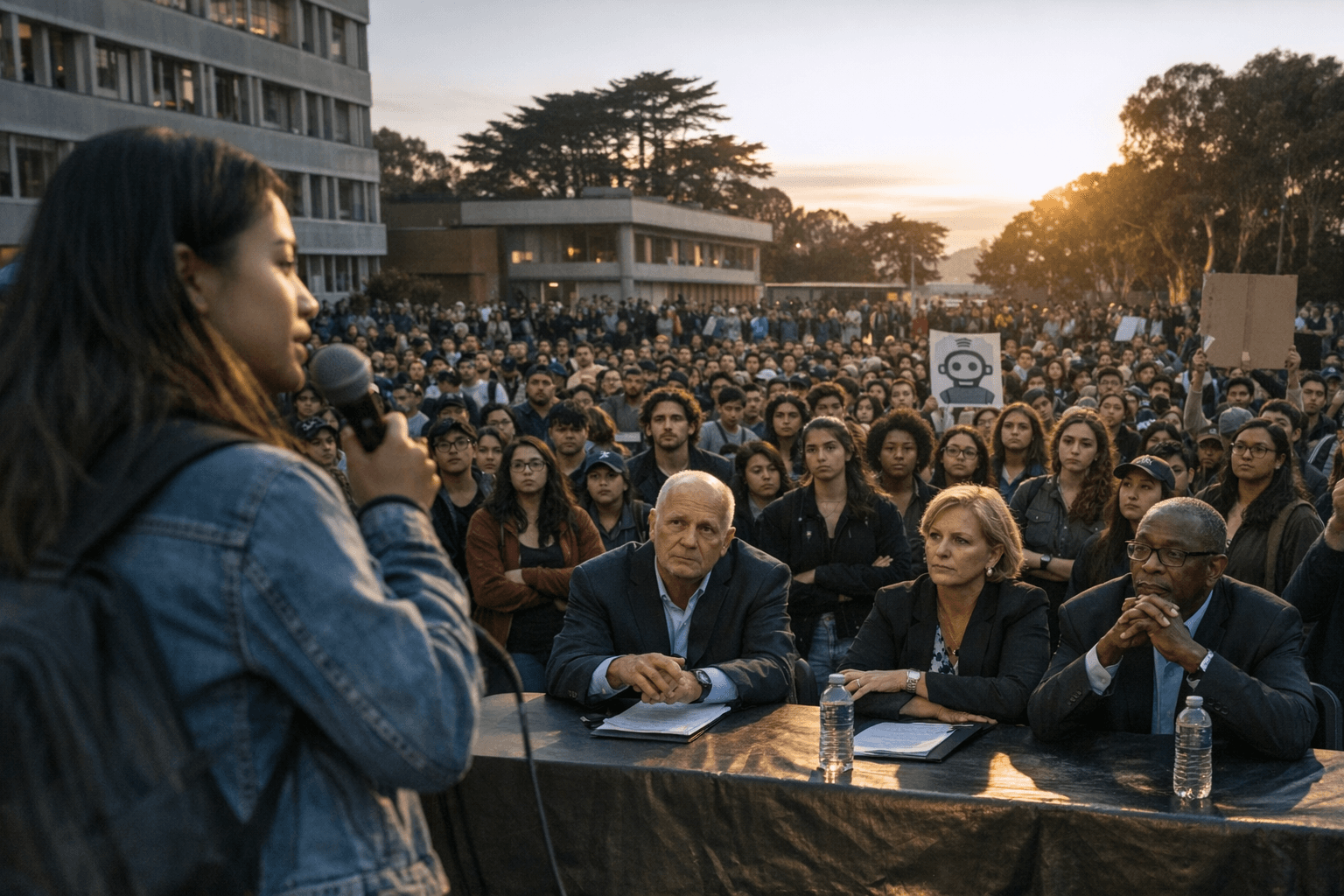
The latest demands reach beyond investments and into the daily mechanics of university life. Students pressed leaders on how housing decisions are made, what role artificial intelligence plays in campus decision-making, and whether the university will protect free speech and student organizing without retreating into bureaucracy. Those issues land at a moment when California State University leaders are warning of a 7.95% ongoing cut and a $252.3 million deferral of compact funding in the 2025-26 operating budget proposal, while current CSU undergraduate tuition is listed at $6,450 a year before campus fees and housing.
SF State has long linked its identity to political engagement, pointing to the 1968 student strike that helped create the College of Ethnic Studies. By bringing that tradition into a discussion about budgets, housing and governance, the campus is signaling that protest alone is no longer the goal. The new test is whether student power can be translated into durable institutional influence at a university that still sees itself as a pipeline for civic and nonprofit leaders, creatives and activists across San Francisco.
This article was produced by Prism’s automated news system from verified source data, official records, and press releases, then run through automated quality and moderation checks before publishing. The system is built and supervised by the people who set the standards it runs under. Read our full AI policy.
Did this article answer your question?