State opens limited king salmon fishing off California coast after years of closures
King salmon reopened in a tightly rationed return: California’s first ocean salmon season since 2022 was capped at 7,000 Chinook statewide and only a few Bay Area windows.
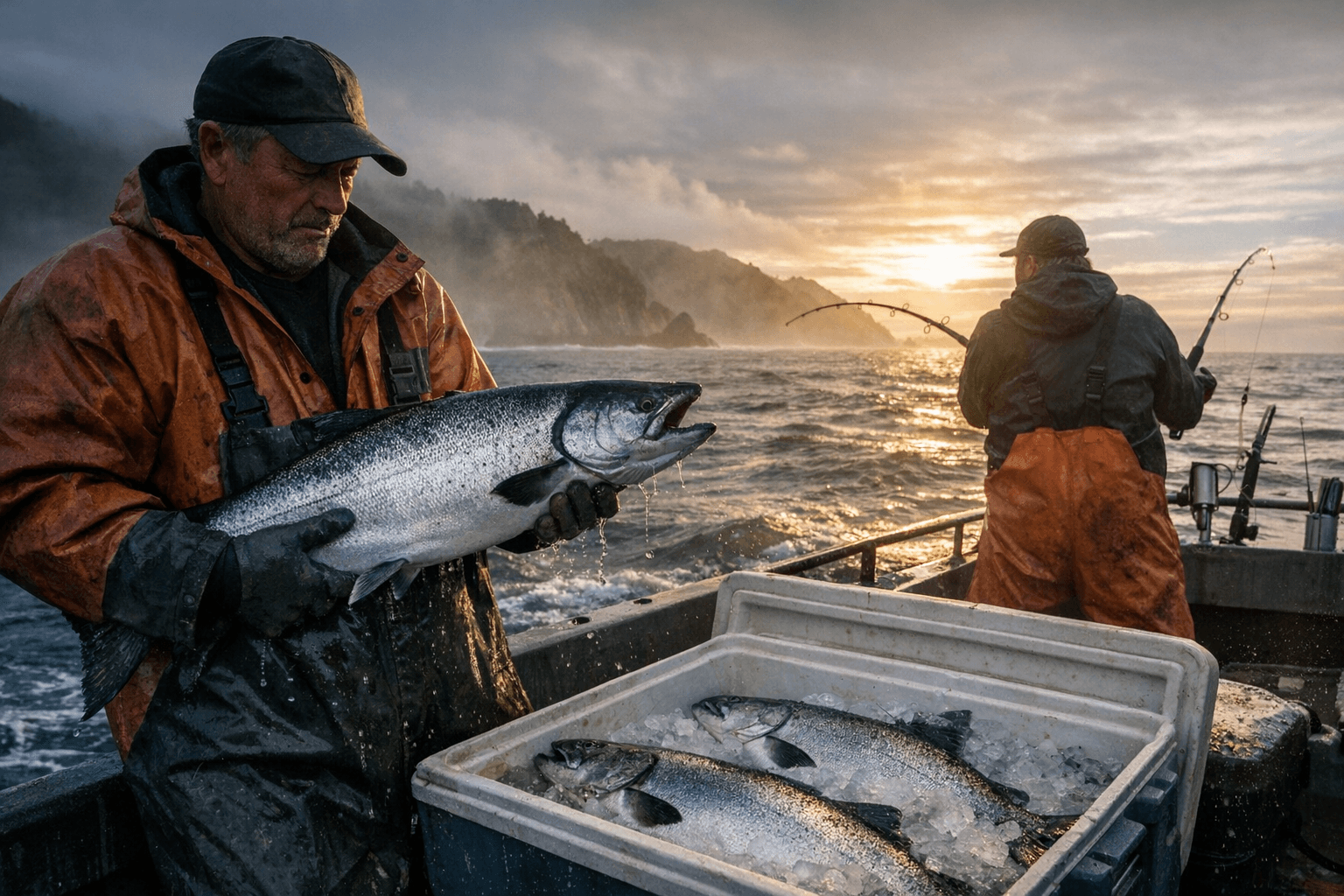
King salmon returned to California waters in 2025, but the rebound was tightly rationed. The first recreational ocean salmon season since 2022 opened statewide for just two days, June 7-8, and the summer harvest was capped at 7,000 Chinook fish, a reminder that the fishery was back only in limited form.
For San Francisco anglers and the restaurants that count on local seafood, the fall season brought more chances, but not much more certainty. The San Francisco Subarea was scheduled for openings on September 4-7, September 29-30, October 1-5 and October 27-31, with the season set to close as soon as the 7,500-fish fall Chinook guideline was reached. California wildlife officials also warned that launch ramps and marinas would be crowded and that long waits were likely as anglers rushed to take advantage of the rare opening.
The commercial side stayed far more constrained. California’s commercial salmon fishery remained closed for a third straight year in 2025, a sign of how fragile the stock still was after years of low abundance forecasts and weak returns. State biologists linked the decline to multi-year drought and climate disruption, including poor in-river spawning and migration conditions, severe wildfires, harmful algal blooms, ocean forage shifts, habitat damage and thiamine deficiency.
By April 12, 2026, fishery managers said the outlook had improved enough to reopen commercial ocean salmon fishing for the first time in three years and allow more recreational opportunities in 2026. The Pacific Fishery Management Council met April 7-12 in Portland, Oregon, and sent its recommendations to the National Marine Fisheries Service for federal implementation. California officials said the strongest rebounds were in Sacramento River fall-run Chinook and Klamath River fall-run Chinook, two populations that carry outsized weight in setting seasons up and down the coast.
The change mattered in San Francisco because salmon is both a working-waterfront fish and a menu staple, especially when local boats can still land enough fish to make supply predictable. But even with the reopening, 2026 marked the first year California used vessel-based trip limits and seasonal harvest guidelines for the commercial fishery, underscoring how carefully managers were still handling the stock. Wade Crowfoot said the state’s Salmon Strategy for a Hotter, Drier Future, launched in 2024, was helping restore habitat, remove barriers, improve flows and reconnect rivers, and he said California had invested hundreds of millions of dollars in salmon recovery in recent years. For now, the comeback looked real, but limited, more a managed recovery than a full return.
This article was produced by Prism’s automated news system from verified source data, official records, and press releases, then run through automated quality and moderation checks before publishing. The system is built and supervised by the people who set the standards it runs under. Read our full AI policy.
Know something we missed? Have a correction or additional information?
Submit a Tip