Study Finds San Francisco Business Taxes Hurt Job Growth, Recovery
San Francisco’s downtown is still missing jobs, workers and shoppers, while a new study says the city’s business taxes are pushing harder on employers than peer cities.
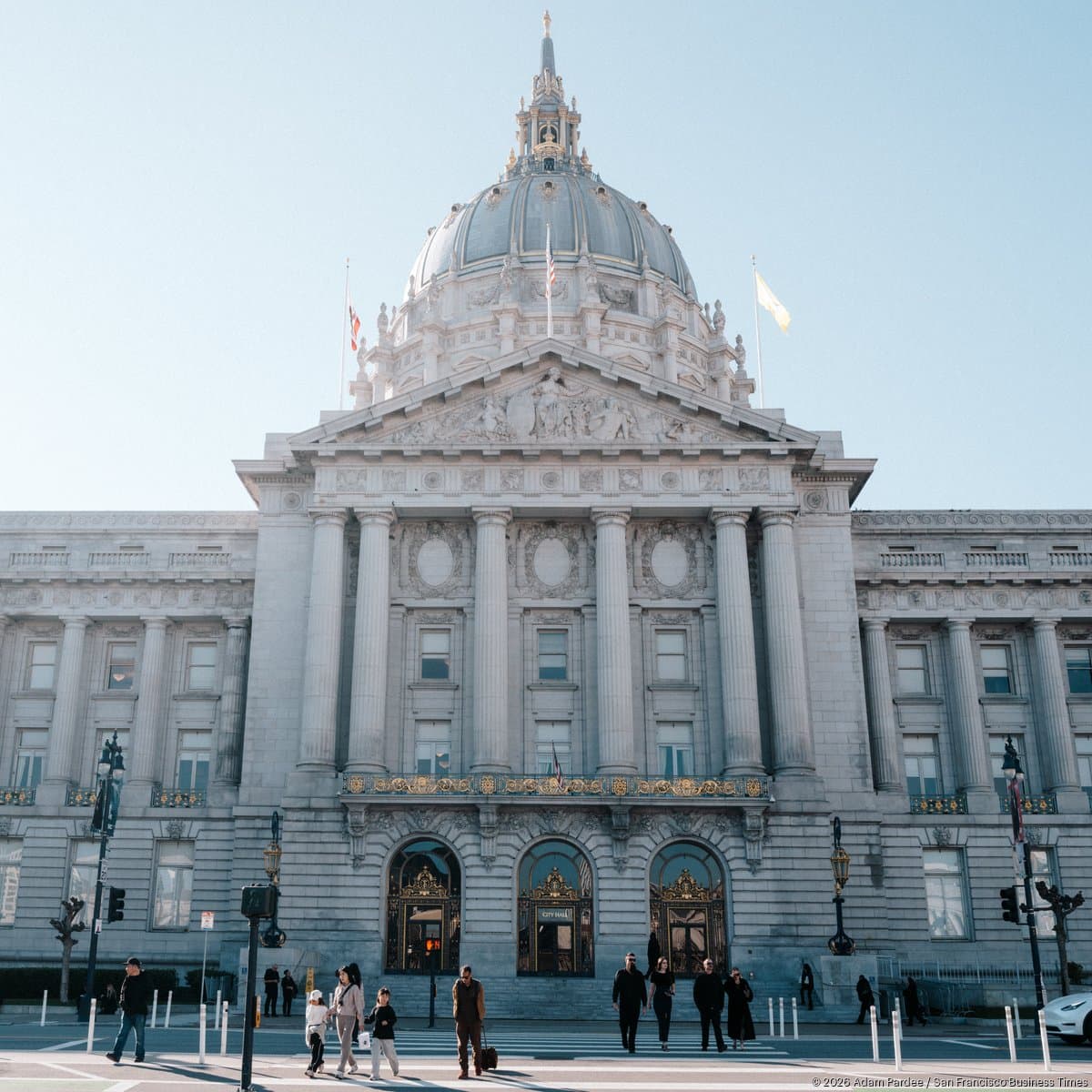
San Francisco’s downtown recovery is still lagging badly, and a new Bay Area Council Economic Institute study says the city’s business tax structure is one reason office towers are not refilling, storefronts are not rebounding and employers are not expanding here the way they might elsewhere.
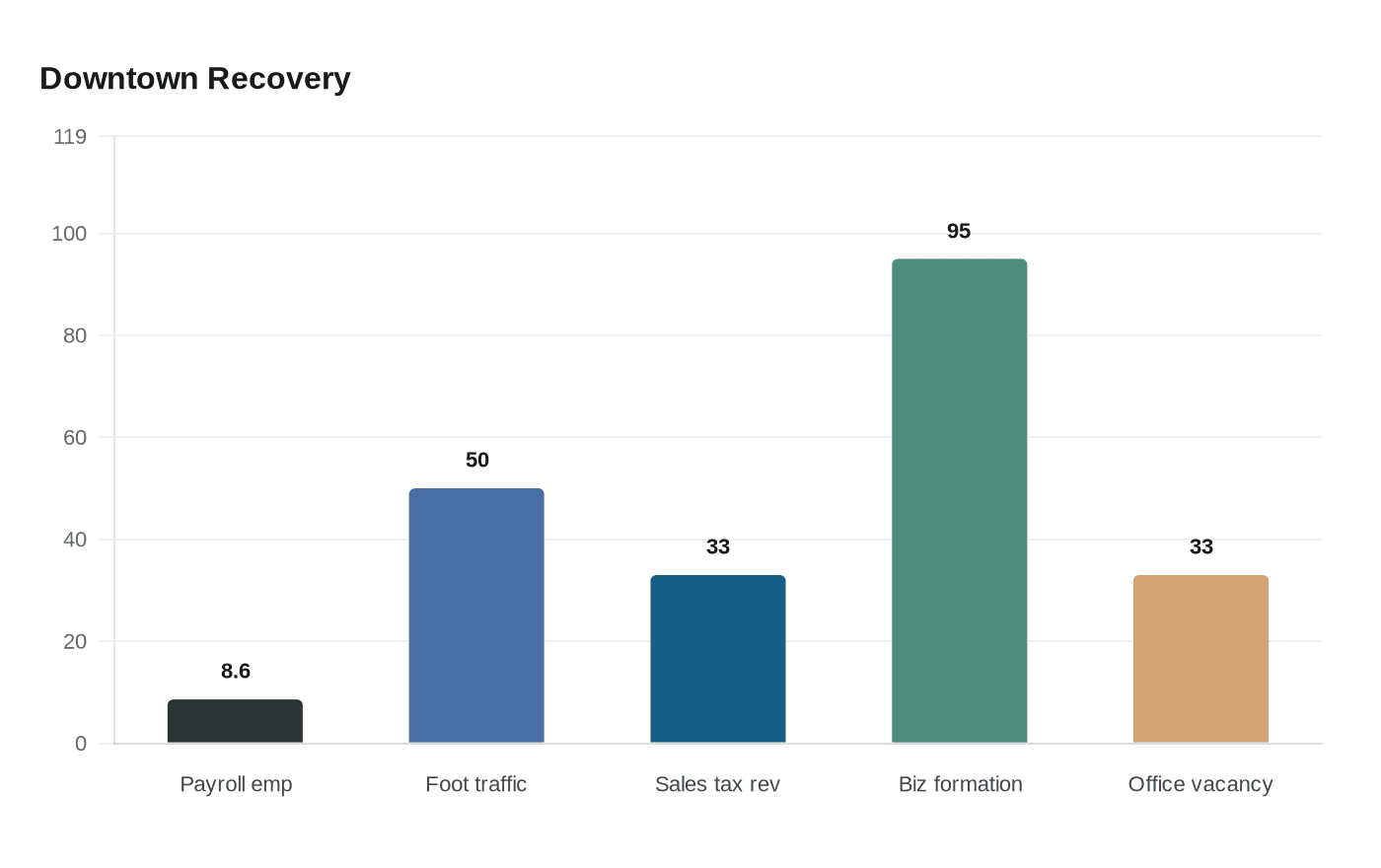
The report says payroll employment in San Francisco remains about 8.6% below pre-pandemic levels. Downtown weekday foot traffic is still about half of 2019 levels, downtown sales-tax revenue is roughly one-third below pre-pandemic averages, net new business formation in downtown office sectors has fallen by more than 95% since 2017, and office vacancy is about 33%, the highest among the peer cities analyzed.
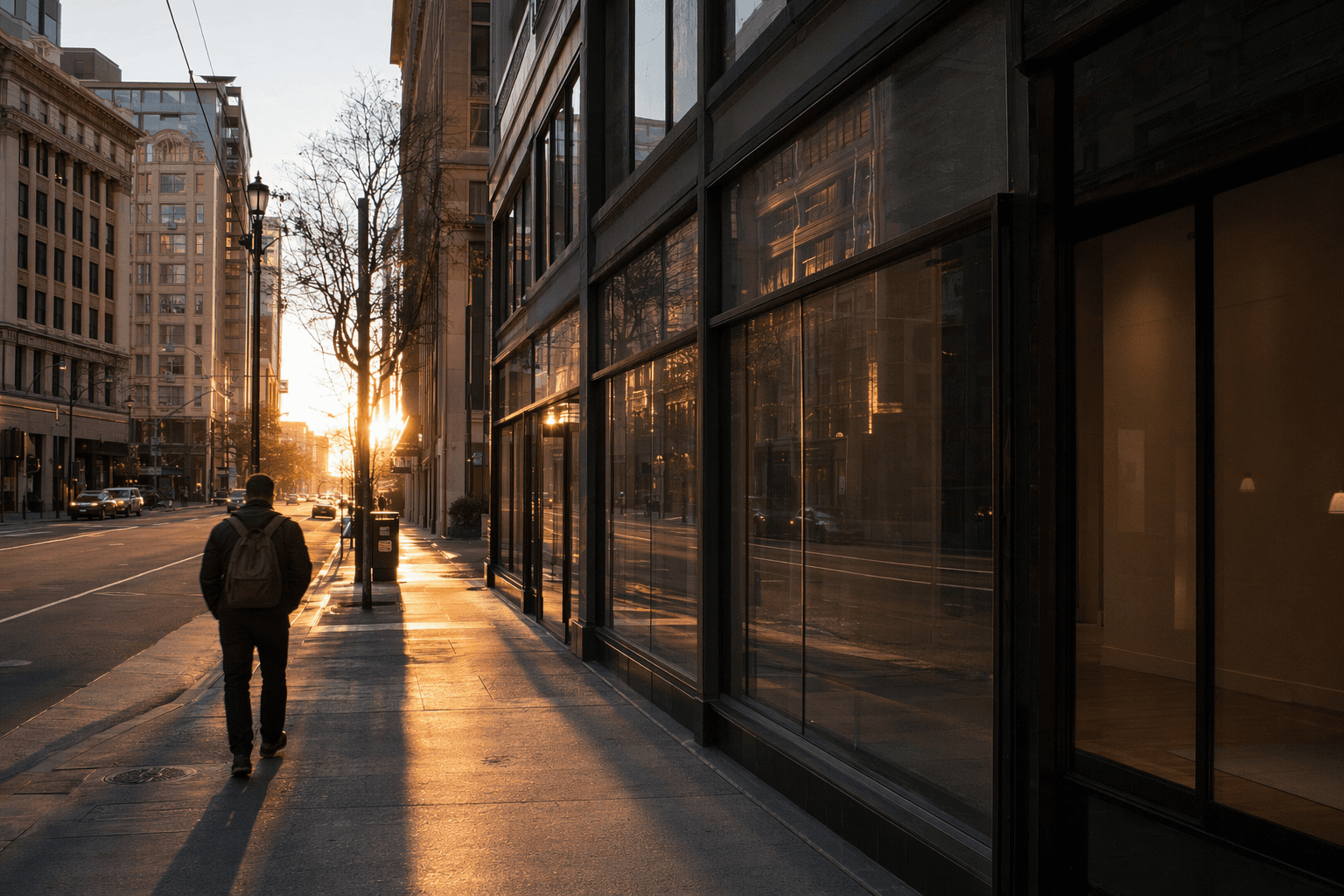
That comparison matters because the study places San Francisco alongside cities such as Oakland, Austin, Boston, Denver, Miami, Nashville, Raleigh, Portland, Pittsburgh and Seattle. It says San Francisco’s large companies face a business-tax burden more than double Oakland’s, reinforcing a fear business leaders have been raising for years: companies can shift jobs, investment and expansion plans across the Bay and beyond if the tax bill gets too high or too unpredictable.
The issue has been building since July 2023, when Mayor London Breed, Board President Aaron Peskin and Supervisor Rafael Mandelman asked the city’s treasurer, controller and chief economist to review San Francisco’s business tax structure and recommend reforms. That review warned that the city’s tax base was becoming more concentrated in office industries hit hardest by remote work, more dependent on a small number of large taxpayers and more exposed to commercial real estate weakness.
City leaders followed with a February 2024 proposal that called for a simpler, more predictable and more equitable system for small businesses. Voters approved Proposition M on November 5, 2024, overhauling the tax structure, raising the small-business exemption ceiling to $5 million in San Francisco gross receipts, eliminating about $10 million in license fees starting in 2026 and consolidating deadlines. The controller estimated the changes would reduce revenue by about $40 million a year in fiscal years 2024-25 through 2026-27 before generating about $50 million annually beginning in fiscal 2028-29.
That tradeoff sits at the center of the city’s latest debate. San Francisco’s business taxes are its second-largest source of tax revenue after property taxes, but voters will consider Measure C and Measure D in the June 2, 2026 election. Measure D would raise the business tax based on the ratio of top executive pay to employee pay, while Measure C would expand the small-business exemption and accelerate the scheduled top-executive-pay tax rate increase.
For San Francisco, the question is no longer abstract tax policy. It is whether downtown can bring back office workers, whether neighborhood corridors can fill empty storefronts and whether the city can fund services without pricing out the employers it needs most.
This article was produced by Prism’s automated news system from verified source data, official records, and press releases, then run through automated quality and moderation checks before publishing. The system is built and supervised by the people who set the standards it runs under. Read our full AI policy.
Did this article answer your question?

