Top San Francisco Outdoor Walks and Views with Transit, Accessibility Tips
A concise local guide to top San Francisco outdoor walks and views with transit and accessibility tips that matter for daily recreation and equitable access.
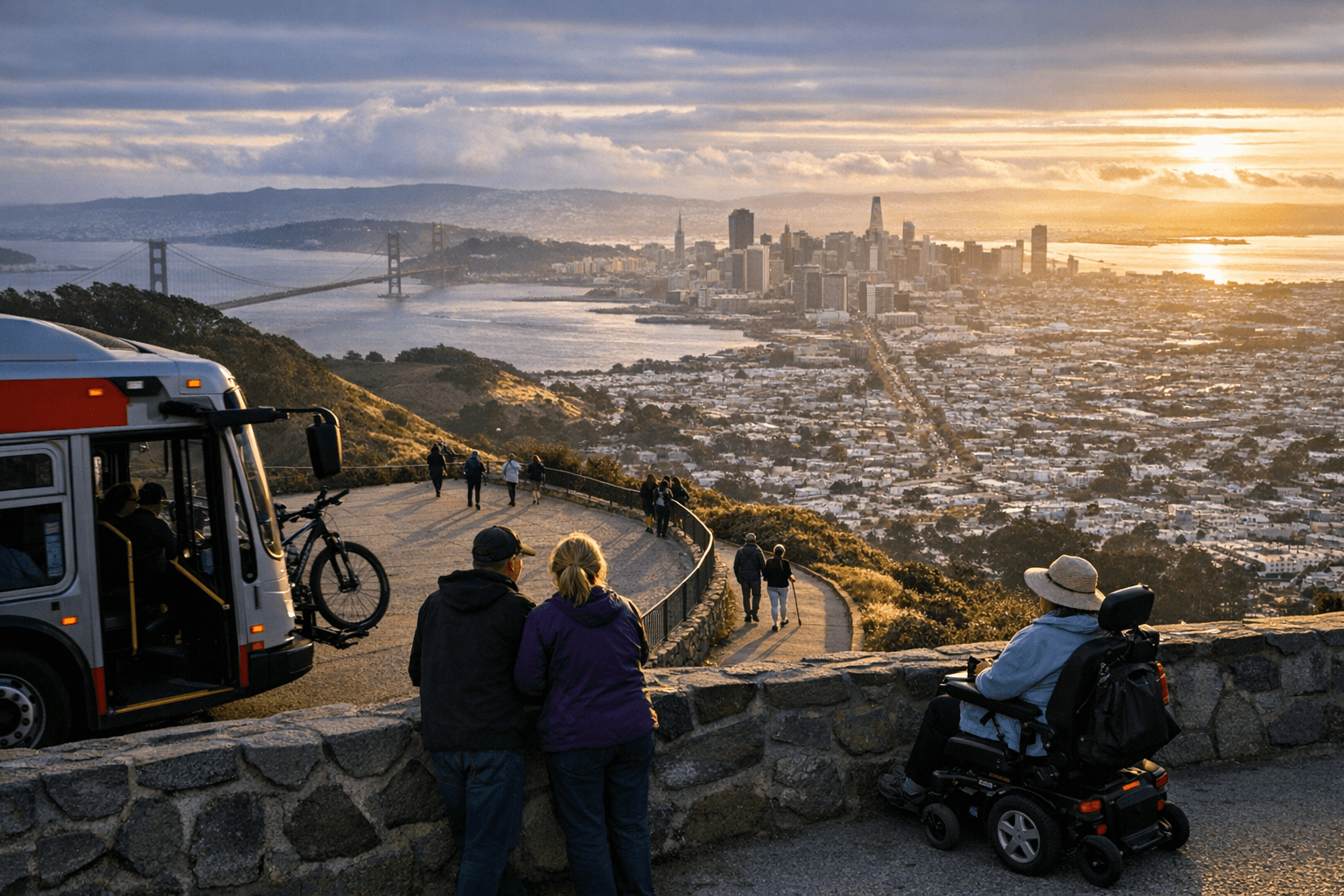
San Francisco’s public landscapes offer high-value walks that shape daily life for residents and visitors, and transit and accessibility choices determine who can reach them. Golden Gate Park, Lands End and the Sutro Baths overlook, Crissy Field and the Marina Promenade, Twin Peaks, and the Embarcadero waterfront each deliver distinctive views and civic value while raising practical questions about transit connections, crowd management, and accessibility.
Golden Gate Park remains a multiuse anchor for neighborhoods across the city. Free gardens, lakes and select free museum days make the Conservatory of Flowers, Stow Lake and adjacent cultural sites important low-cost destinations. Muni service and existing bike routes provide frequent access to the park, and many major paths are paved for mobility devices, though some trails remain uneven. Plan visits during early mornings or weekday afternoons to avoid peak crowds and to take advantage of better light for views and photography.
Lands End Coastal Trail and the Sutro Baths overlook combine ocean cliffs and the ruins of a 19th century bathing complex. The site is popular with walkers and trail runners but includes steep sections and stairs that limit wheelchair access. Access relies on Muni corridors to the Richmond and Outer Sunset interface and on bike paths along the Great Highway for those approaching from the west. The trail’s geography and exposure to coastal fog known locally as Karl the Fog mean visibility and footing can change quickly.
Crissy Field and the Marina Promenade offer direct beachside views of the Golden Gate Bridge and expansive bay vistas. Flat, paved promenades along the shoreline support wheelchair users and families with strollers, and the area connects to regional bike routes that link the Marina to the Presidio and the Richmond. Use early mornings for calmer winds and clearer Bridge views; late afternoons can be windy and crowded on weekends.
Twin Peaks provides one of the most complete city panoramas, with a paved summit viewpoint accessible by vehicle and by public transit routes that stop near the lower loops. The short, steep walk to the main overlook is manageable for many visitors, but limited parking and gusty conditions make transit or rideshare attractive alternatives.
The Embarcadero waterfront centers on the Ferry Building and uninterrupted Bay views. BART access to Embarcadero station and the F Market streetcar create a flat, fully accessible corridor for commuters and leisure walkers. Ferry Building vendor hours and weekend markets concentrate foot traffic; weekday visits reduce congestion.
These sites matter for public health, tourism revenue and neighborhood quality of life. San Francisco Recreation and Park Department and SFMTA decisions on routing, maintenance and ADA investments directly affect equitable access to these outdoor assets. Residents should factor transit schedules, weather patterns and physical access when planning visits, and engage with Rec and Park and SFMTA on funding and service priorities that keep these public spaces welcoming and accessible for all.
This article was produced by Prism’s automated news system from verified source data, official records, and press releases, then run through automated quality and moderation checks before publishing. The system is built and supervised by the people who set the standards it runs under. Read our full AI policy.
Did this article answer your question?