UCSF Doctors Honored for Decades of Firefighter Cancer Prevention Work
Five firefighters from one SF station developed the same cancer that strikes 1 in 100,000 people. The UCSF doctors who turned that cluster into national policy just won a major award.
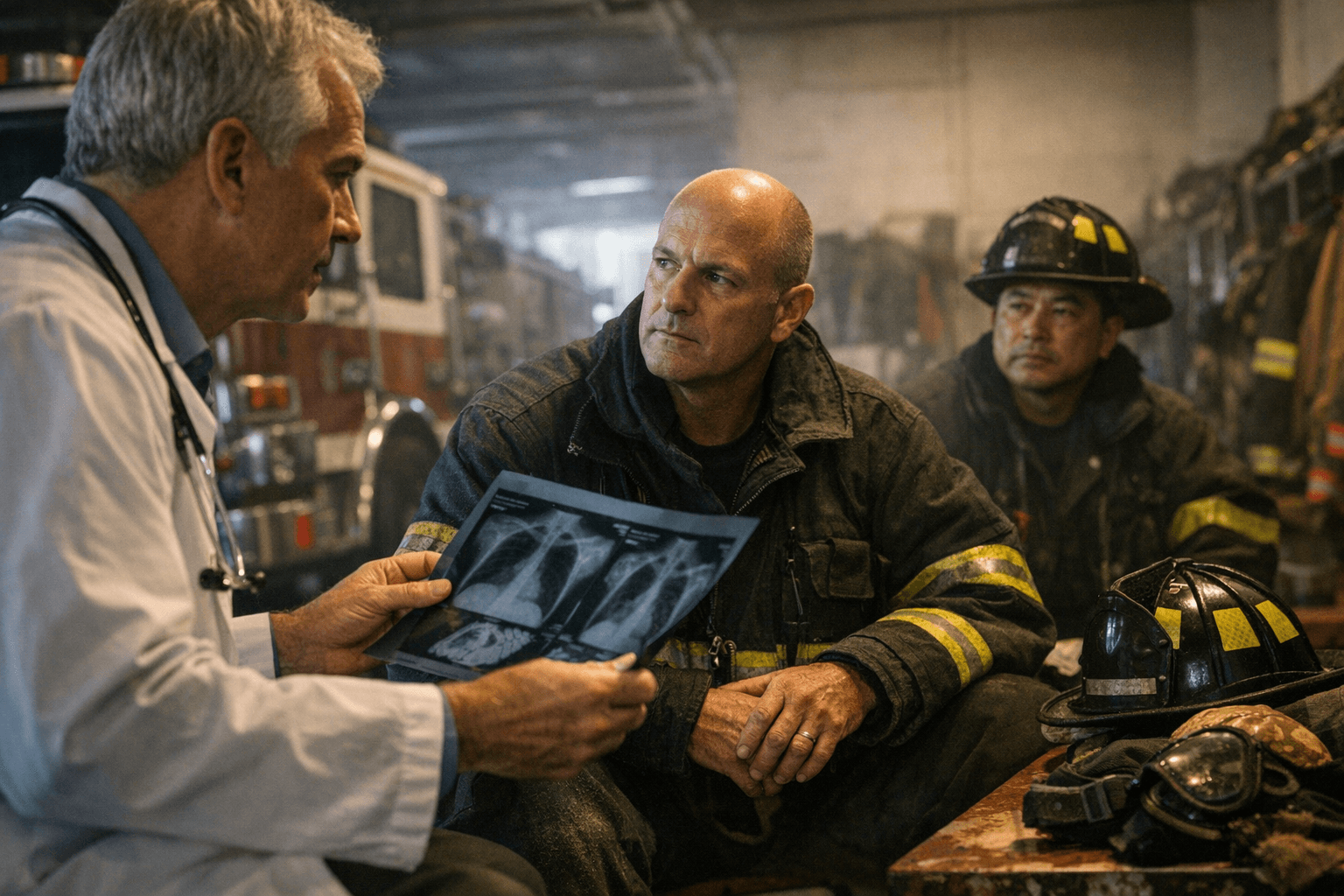
At Rescue 1, one of San Francisco's busiest fire stations, Tony Stefani thought he understood the risks of the job. Twenty-eight years of firefighting had introduced him to structural collapses, smoke-saturated air, and the physics of a flashover. But in 2001, it was his kidney that nearly killed him. Diagnosed with transitional cell carcinoma, a cancer so rare it strikes just one person in 100,000, he heard words from his UCSF surgeon that have since reframed how the city thinks about its firefighters: "So you do work in the chemical industry."
Within two years of that diagnosis, four more firefighters at the same station developed the same rare cancer. The cluster became the founding premise of the San Francisco Firefighters Cancer Prevention Foundation, which Stefani established in 2006. Two decades later, the foundation's Igniting Hope Gala at the Palace Hotel recognized the UCSF physicians whose clinical work transformed that alarm signal into citywide policy.
At the March 28 event, the foundation presented its White Helmet Award to UCSF urologic oncologists Sima Porten, MD, MPH, and Maxwell Meng, MD, in recognition of nearly 20 years of collaboration on firefighter cancer screening and research. Also honored was thoracic oncologist Matthew Gubens, MD, MS, FASCO, a lung cancer specialist whose patients have included SFFD members struck by a disease now understood to be elevated in the profession. The ceremony marked the foundation's 20th anniversary.
Porten and Meng were central to the landmark 2007 UCSF bladder cancer screening program, the first of its kind in the United States, which tested 1,286 active and retired SFFD firefighters. The findings were stark: significantly elevated rates of bladder, kidney, and prostate cancers, with multiple TCC cases mirroring the cluster that first appeared at Rescue 1. A peer-reviewed study presented at the American Urological Association's annual meeting that year put occupational toxic exposure and genitourinary cancer on a national stage.
The research had concrete consequences inside SF's firehouses. PFAS chemicals embedded in standard-issue turnout coats and pants, the moisture barriers firefighters wear into every structure fire, emerged as a primary exposure pathway. Firefighters absorbed these "forever chemicals" not only at fire scenes but in station houses where gear sat unwashed, in apparatus bays, and through daily contact with contaminated equipment. In 2024, San Francisco became the first city in the country to ban PFAS in firefighter protective clothing, setting a mid-2026 deadline for SFFD to complete the transition. Crews debuted their new PFAS-free turnout gear at a press conference in December 2025.
Serious gaps remain. Women in the SFFD develop breast cancer at a rate six times higher than pre-menopausal women in the general population, according to the foundation. The SFFCPF health navigation team is currently supporting 140 active patients, including firefighters and family members navigating diagnoses. Mayor Daniel Lurie's fiscal year 2025-26 budget proposal includes a $500,000 pilot program for advanced cancer screenings for active-duty SFFD members, pending final board approval.
For firefighters seeking screening, the foundation conducts urine-based bladder cancer tests at the SFFD Division of Training and offers mail-in kits for those unable to attend in person. FIT screenings for colorectal cancer are offered at intervals, and Galleri multi-cancer early detection screenings are also available. Retired firefighters are encouraged to participate at Bay Area luncheons and social events organized through the department.
Health navigators Jeff Malone, Judith Lynch, Nick Oxford, and Adam Wood provide one-on-one guidance for any SFFD member or family member facing a cancer diagnosis. Information on screenings, benefits navigation, and gear policies is available at sffcpf.org.
This article was produced by Prism’s automated news system from verified source data, official records, and press releases, then run through automated quality and moderation checks before publishing. The system is built and supervised by the people who set the standards it runs under. Read our full AI policy.
Did this article answer your question?