UCSF finds exercise-induced liver enzyme strengthens blood-brain barrier and memory
UCSF researchers found exercise raises a liver enzyme, GPLD1, that trims the endothelial protein TNAP to restore the blood-brain barrier and help preserve memory.

A University of California, San Francisco-led, peer-reviewed study published in Cell on February 18, 2024 reports that physical exercise prompts the liver to make the enzyme glycosylphosphatidylinositol-specific phospholipase D1, or GPLD1, which in turn helps restore blood-brain barrier integrity and preserve memory. The paper links hepatic GPLD1 to reduced neuroinflammation and preserved cognitive function through an action at the brain vasculature.
The enzyme at the center of the finding is GPLD1; Bioengineer summarized the paper with the line, “Central to this discovery is the enzyme glycosylphosphatidylinositol-specific phospholipase D1 (GPLD1), previously identified by UCSF researchers as a factor elevated in the liver following exercise.” UCSF researchers previously reported elevated GPLD1 in liver after exercise, and the new Cell paper traces downstream effects on the cerebral vasculature.
Mechanistically, the study reports that GPLD1 does not cross the blood-brain barrier (BBB) to enter brain tissue but acts at the vascular interface by targeting a brain endothelial cell surface protein called tissue-nonspecific alkaline phosphatase, or TNAP. As Bioengineer put it, “Despite GPLD1’s inability to directly cross the BBB and penetrate the brain parenchyma, the enzyme exerts a profound neuroprotective effect.” The paper describes GPLD1 enzymatically trimming or cleaving TNAP on brain endothelial cells as the proximal action.
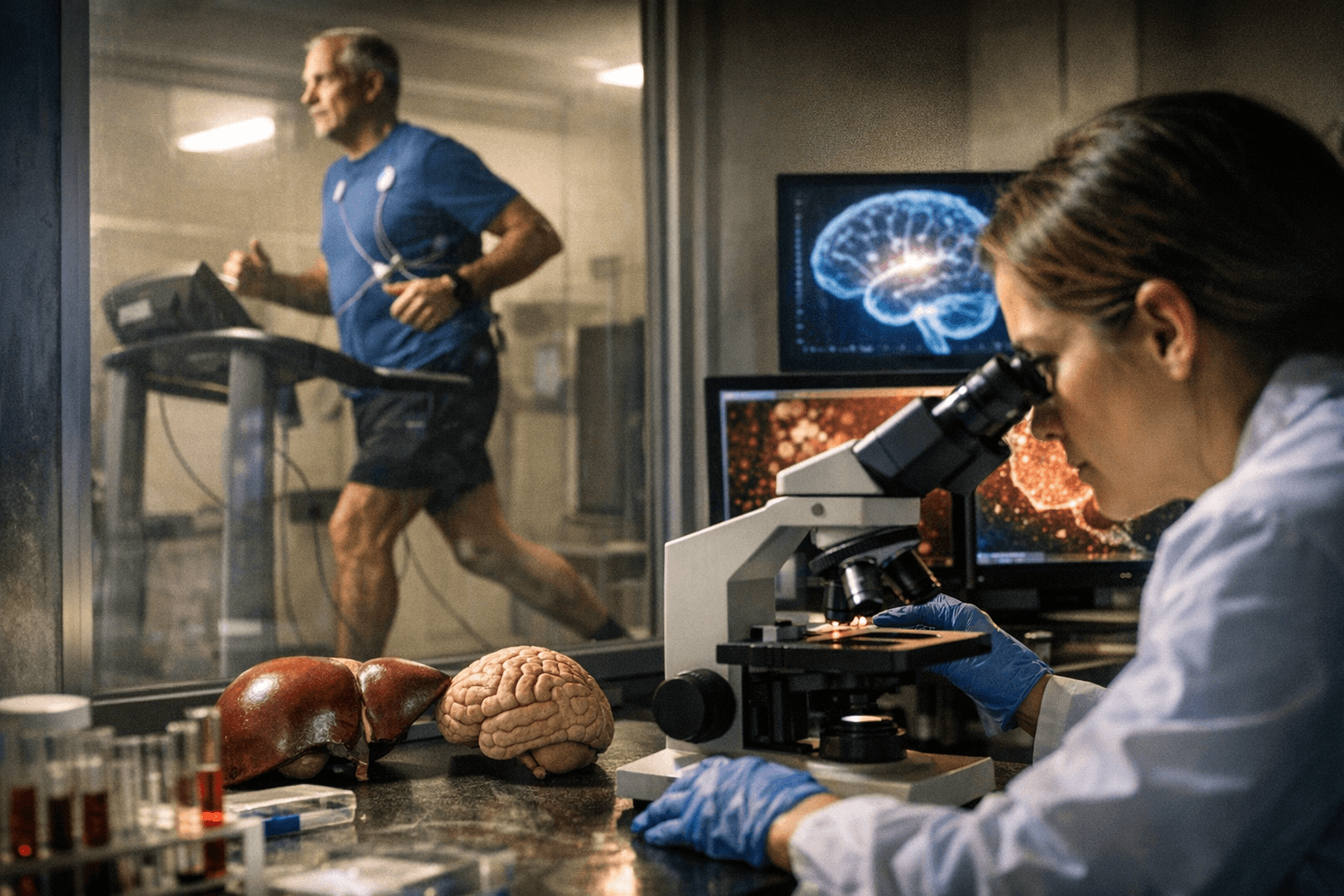
The reported cascade ends with restored BBB integrity, lower inflammation in the brain environment, and preservation of cognitive performance. In the authors’ framing quoted by Bioengineer, “exercise induces hepatic production of GPLD1, which enzymatically trims TNAP from brain endothelial cells, restoring BBB integrity, reducing inflammation, and ultimately preserving cognitive function.” The study appears aimed at explaining how a peripheral, exercise-induced signal from the liver can influence brain aging.
Outside assessments in the summary language emphasize the study’s potential implications. Bioengineer described it as “A groundbreaking study from the University of California, San Francisco (UCSF) [that] has unveiled a sophisticated molecular mechanism” and added that the work “ignites hope for novel, systemic interventions against some of the most devastating brain disorders of our time.” Those characterizations reflect the study’s translational promise but are distinct from the empirical details.
Key methodological and authorship details are not present in the supplied materials: the Cell paper’s full author list and institutional collaborators, DOI and citation metadata, the experimental models used (mouse, human, or cell systems), sample sizes and ages, specific cognitive tests or effect sizes, and full biochemical assay details are not provided here. For clinicians at UCSF Health and public health planners in San Francisco considering population-level prevention, the finding points to an actionable biological link between exercise and brain vascular health, but the Cell article itself must be consulted for the experimental evidence, limitations, and translational readiness.
This article was produced by Prism’s automated news system from verified source data, official records, and press releases, then run through automated quality and moderation checks before publishing. The system is built and supervised by the people who set the standards it runs under. Read our full AI policy.
Did this article answer your question?