UCSF Scientists Reprogram Cancer-Fighting T Cells Inside the Body
A single injection cleared detectable cancer in nearly every mouse within two weeks in a UCSF study that reprogrammed T cells without ever removing them from the body.
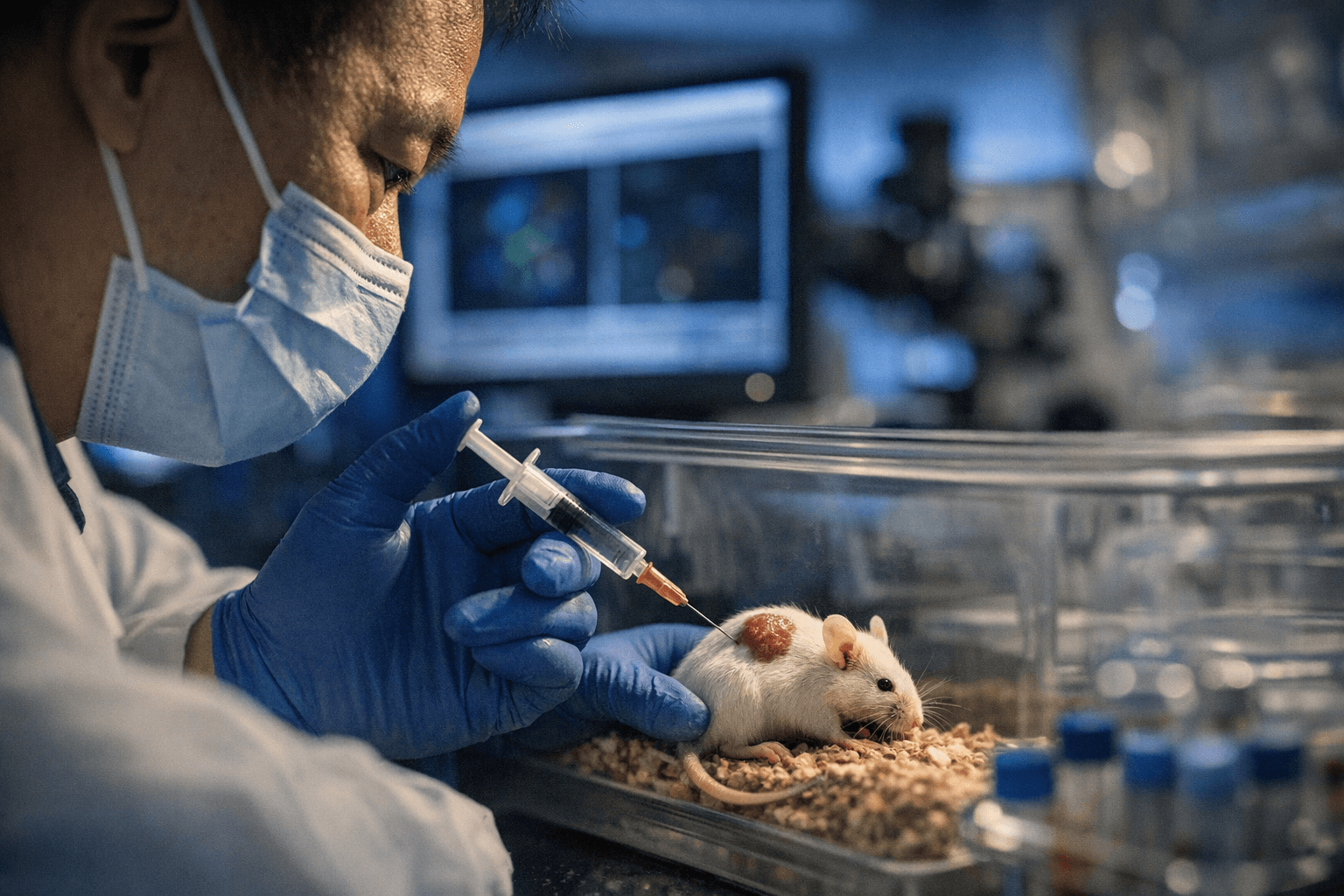
A single injection of genetically reprogrammed immune cells wiped out detectable cancer in nearly every mouse within two weeks, UCSF researchers reported March 18 in Nature, marking what scientists described as the first time a large DNA sequence has been inserted into a precise location within human T cells without ever removing those cells from the body.
The technique, called in vivo engineering, bypasses the elaborate and expensive process that has defined CAR-T therapy for years: extracting a patient's immune cells, shipping them to a specialized manufacturing facility, reprogramming them to recognize and attack cancer, then shipping them back for infusion. That process has revolutionized treatment for certain blood cancers, but the cost and time involved put it out of reach for thousands of patients. "It's become a global access issue; many patients who would benefit from CAR-T cells either can't afford them or can't get them fast enough," said Justin Eyquem, PhD, an associate professor of medicine at UCSF and senior author of the study.
The new method uses two delivery tools injected directly into the body. One carries CRISPR-Cas9, the gene-editing tool often described as molecular scissors. The second carries the new DNA sequence needed to produce cancer-fighting CAR-T cells at the targeted site. That precision distinguishes the approach from the conventional method, which uses viruses to insert DNA randomly into the genome.
Co-first authors William Nyberg, PhD, and Pierre-Louis Bernard, PhD, both UCSF postdoctoral fellows, led experiments in mice engineered to carry human-like immune systems. In aggressive leukemia models, the single injection cleared cancer in nearly every animal within two weeks. In some organs, the in vivo-produced CAR-T cells made up as much as 40% of all immune cells, clearing cancer from both the bone marrow and spleen. The method also proved effective against multiple myeloma and a solid sarcoma tumor, a result researchers called especially significant because solid tumors have historically resisted CAR-T therapy.
The cells produced inside the body did not merely match their lab-manufactured counterparts. "What was especially remarkable was that the cells we're generating in vivo actually look better than what we make in the lab," Eyquem said. The immune response in treated mice started earlier and grew stronger than with older methods, and in some cases the number of cancer-fighting cells expanded many times faster. When researchers reintroduced cancer into mice that had already been treated, the immune system recognized and controlled it again, demonstrating immunological memory.
The research involved collaborators from the Gladstone-UCSF Institute of Genomic Immunology, the Innovative Genomics Institute, including Jennifer A. Doudna, PhD, and Jennifer R. Hamilton, PhD, and Duke University. The full UCSF author list spans more than two dozen researchers across the institution.
Scientists said they hope the approach will eventually yield an off-the-shelf therapy, delivered like a vaccine, that could be administered to any patient with the same condition without requiring personalized manufacturing. "I think this is just the beginning of a big wave of new therapies that will be truly transformational and save a lot of lives," Eyquem said. The study remains preclinical; all reported results come from mouse models, and no human clinical trial data were included in the published findings.
This article was produced by Prism’s automated news system from verified source data, official records, and press releases, then run through automated quality and moderation checks before publishing. The system is built and supervised by the people who set the standards it runs under. Read our full AI policy.
Did this article answer your question?