About 20 Protesters in Orchard Park, San Juan County Decry Authoritarian Drift
About 20 people gathered in Orchard Park to protest what they called an authoritarian drift, raising local concerns about civil liberties and government accountability.
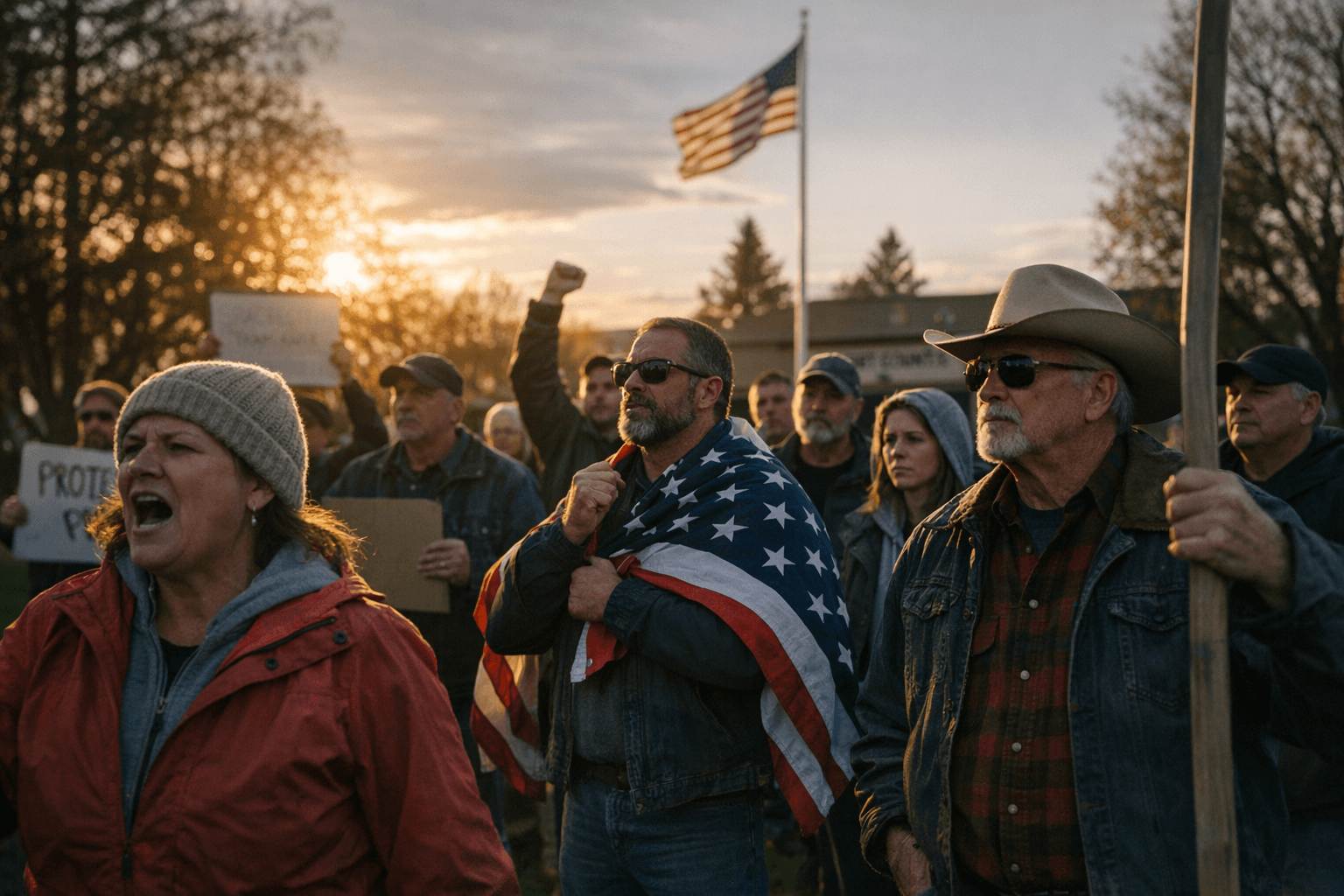
Cold January breezes whipped through Orchard Park as about 20 protesters assembled with signs denouncing what they described as the Trump administration’s slide toward authoritarianism. The rally, held on Jan. 20, drew residents who framed the gathering as an exercise of constitutional rights and a call for accountability and protection of civil liberties.
Participants clustered on the park lawn with placards reading “Stop Martial Law” and “No More ICE Raids,” and one sign saying “Know Justice, Know Peace.” John Carlson, carrying that sign, said he represented “free and rational Americans” and criticized actions he described as unconstitutional and in violation of international law. Several speakers cited national incidents to explain their distrust of federal reviews, including the Jan. 7 shooting of Renee Nicole Good in Minneapolis by an ICE agent.
Voices at the protest emphasized the perceived stakes for local families and civic life. Martha Bradley said she was “frightened for our loss of democracy” and worried about “our children, the future of our children.” Marvin McIntyre said he planned to keep protesting and aimed to see President Trump “impeached and removed from office.” Organizers and participants repeatedly framed their presence as text-book First Amendment activity rather than a partisan spectacle.
For San Juan County residents, the demonstration underscored how national policy and law-enforcement actions filter down into small communities. Even with modest turnout, the protest signals a portion of the county that is engaged and anxious about federal immigration enforcement and emergency powers rhetoric. Local consequences could include heightened mistrust of authorities among immigrant households, which research elsewhere suggests can reduce cooperation with public safety efforts and strain community-police relations.
From a policy perspective, the protesters voiced concerns that intersect with legal and oversight mechanisms. Claims about martial law and expanded removal operations point toward debates over executive authority, the role of congressional oversight, and how administrative actions are reviewed in courts and watchdog offices. Those debates can shape local funding priorities, legal counsel needs for county services, and the demand for community legal assistance.
Small protests like this also have economic and civic implications. They can prompt local officials to allocate staff time for public safety planning, influence voter mobilization ahead of elections, and affect perceptions of the county among potential visitors or new residents. For now, organizers say they will continue pressing elected officials for transparency and accountability, and residents can expect ongoing civic activity tied to these issues.
Sources:
Know something we missed? Have a correction or additional information?
Submit a Tip