Aztec Ruins National Monument sustains local tourism, anchors cultural education
Aztec Ruins National Monument near Aztec preserves ancestral Pueblo structures and continues to draw visitors through its reconstructed great house, museum, and interpretive trails. For San Juan County residents the site is both a cultural touchstone and an economic asset, with seasonal operations, educational programming, and tribal partnerships shaping visitation and local planning.

Aztec Ruins National Monument sits just outside the city of Aztec and protects a complex of ancestral Pueblo structures, including a partially reconstructed great house, museum galleries, and interpretive trails. Park staff and partner tribes provide talks and ranger led programs that interpret Ancestral Puebloan life for tourists, students, and community groups. The monument is open seasonally, and visitors are asked to consult the NPS webpage for current hours, fees, and any temporary closures or special events.
The monument functions as a significant cultural resource for San Juan County. Local schools and community organizations use park educational materials to support curriculum and outreach, while the site draws heritage travelers whose spending supports lodging, restaurants, and retail across the county. Because the monument requires permits and enforces rules to protect archaeological resources, managers balance public access with conservation, limiting impacts to fragile structures and archaeological deposits.
From an economic perspective, the monument's seasonal schedule and programming cadence shape tourism flows. Peak visitation linked to guided programming concentrates demand into parts of the year, which can create revenue opportunities for local businesses but also places pressure on county services such as road maintenance and visitor amenities. Partnering with tribal governments on interpretation and programming enhances cultural authenticity and can broaden audiences, while also raising questions about revenue sharing and long term stewardship responsibilities.
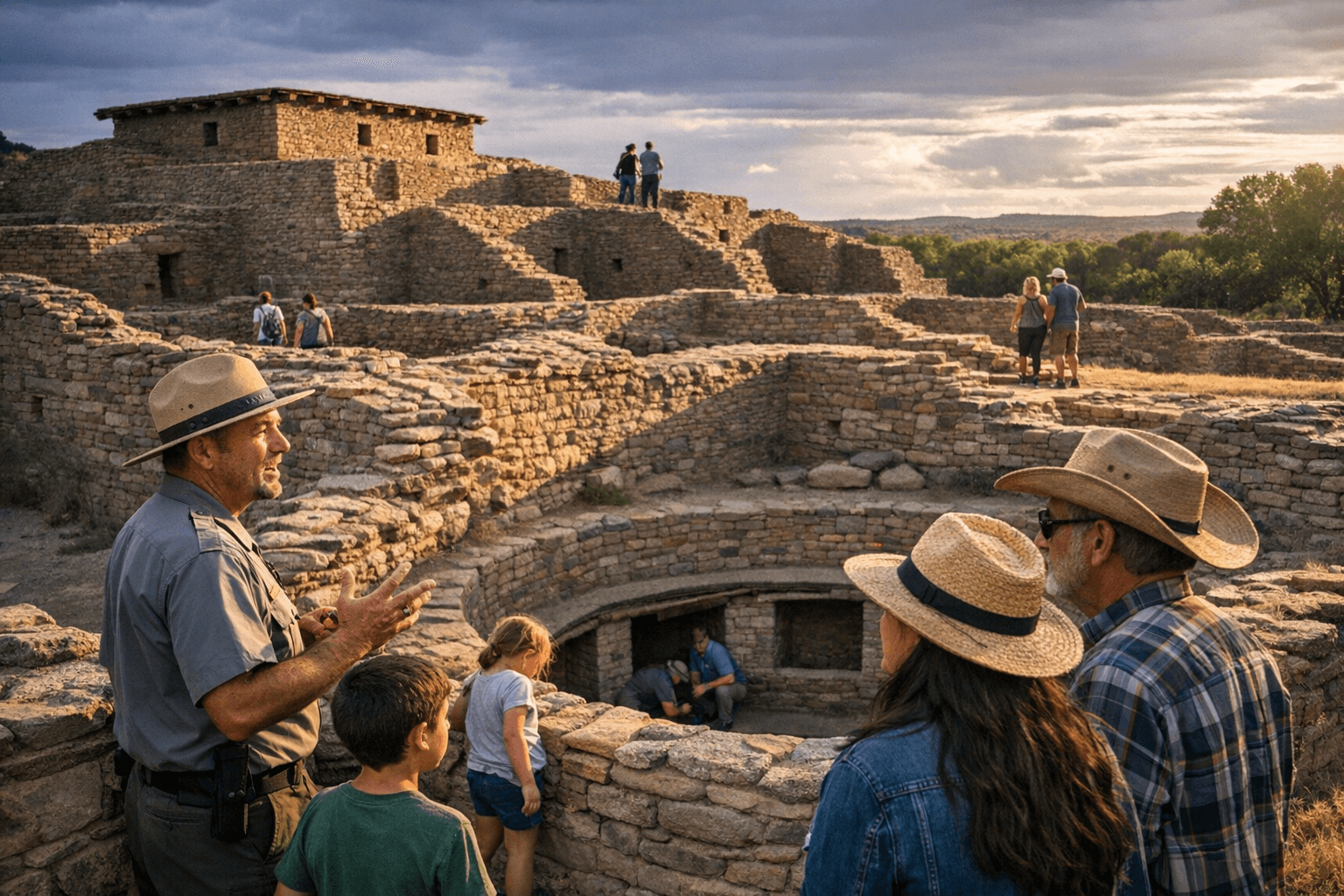
Policy choices at the monument and county level will influence how benefits are distributed. Investment in interpretive infrastructure and outreach to school districts can expand educational value, while targeted funding for conservation ensures the site remains a sustainable tourism asset. Conversely, inadequate planning for seasonal spikes in visitation can strain local services and diminish the visitor experience.
For residents planning visits or organizing school trips, the monument offers a concentrated opportunity to connect with ancestral Pueblo heritage. Check the NPS webpage before traveling for up to date hours, fee information, permit rules, and special event announcements to ensure a smooth and sustainable visit.
Know something we missed? Have a correction or additional information?
Submit a Tip