Chaco Culture National Historical Park Visit Guide for San Juan County Travelers
Pueblo Bonito, the largest prehistoric structure in North America, anchors a UNESCO World Heritage Site just hours from San Juan County — but all roads in are dirt.

At the same time medieval Europe was emerging from the Dark Ages, a New World civilization was flourishing under the desert sun in the San Juan Basin of New Mexico. That opening line, from a National Park Service visitor leaflet, captures why Chaco Culture National Historical Park commands such reverence: the ancestral Pueblo people built a regional center of remarkable sophistication here between roughly AD 850 and 1250, and nearly a thousand years later, the protected sites mutely attest to that spectacular civilization and its human spirit. For San Juan County residents, this UNESCO World Heritage Site and International Dark Sky Park sits within driving distance — but reaching it, and making the most of it, requires real preparation.
What Chaco Is and Why It Matters
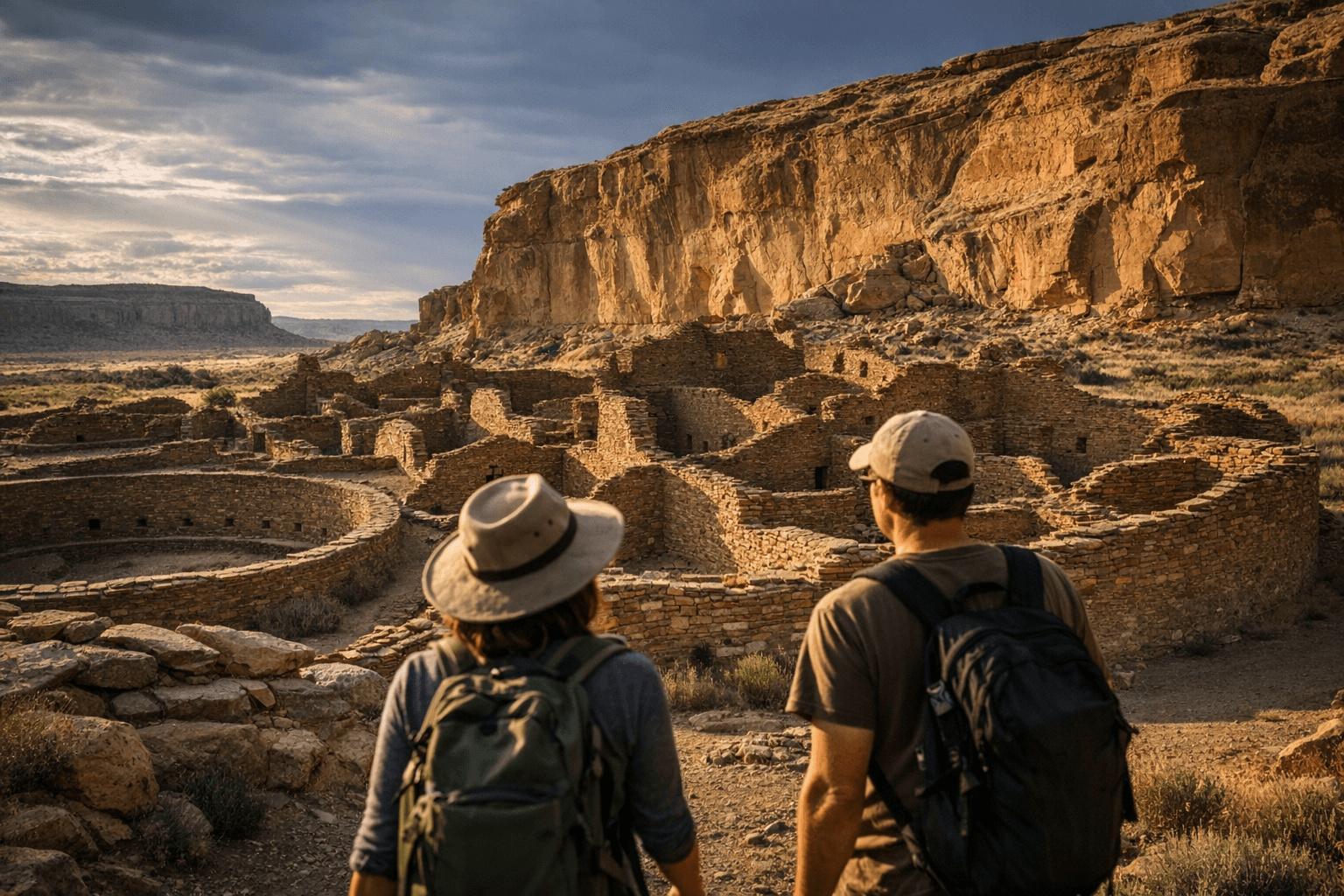
Chaco Culture National Historical Park preserves the ruins of a major ancestral Puebloan cultural center, one of 23 UNESCO World Heritage Sites in the United States. The park's crown jewel, Pueblo Bonito, is the most famous of Chaco's great houses and holds the distinction of being the largest prehistoric structure in North America. These multistory buildings, called great houses, were the architectural and cultural anchors of a civilization that stretched far beyond the canyon's walls. As the NPS puts it, Chaco Canyon is "a sacred and deeply personal place for many Indigenous peoples throughout the Southwest. Please visit with respect."
Getting There: Roads, Routes, and Realistic Expectations
The single most important thing to know before leaving San Juan County: all roads leading to Chaco are dirt. One documented approach from State Highway 44 begins at Nageezi Trading Post, where drivers follow San Juan County Road 7800 for eleven miles to State Highway 57, then turn left to continue toward the park. Confirm current road conditions and complete directions with the park before departing, as access routes can change seasonally. The superintendent's office can be reached by mail at Star Route 4, Box 6500, Bloomfield, New Mexico 87413, or by phone at (505) 988-6716 or (505) 988-6727.
Once inside the park, a one-way road circles Chaco Canyon, and the paved 9-mile Canyon Loop Drive connects the major sites. Pick up a map and visitor leaflet at the visitor center upon arrival — they include a full site map and interpretive information that will orient your entire visit.
The Visitor Center and Arrival Essentials
The visitor center is your first stop and a critical one. It offers a clean restroom (the advice from experienced visitors is blunt: "When you see a restroom make sure to use it!"), a drinking water tap, trail guides and maps, and a Western National Parks Association (WNPA)-operated park store stocked with park-approved trail guides covering the park's architecture, archaeology, and the Indigenous communities who once inhabited these sites. The WNPA trail guides are also available online if you want to review them before leaving home.
The Six Main Sites
Six great houses and ceremonial sites line the canyon and can be accessed directly by car along the loop road:
- Una Vida
- Hungo Pavi
- Chetro Ketl
- Pueblo Bonito
- Pueblo del Arroyo
- Casa Rinconada
Each carries its own architectural and cultural character. Pueblo Bonito's scale alone justifies the drive. Chetro Ketl, Una Vida, and Casa Rinconada each offer distinct kiva configurations and masonry styles that ranger-guided tours illuminate in ways that self-guided walks alone cannot match.
Pueblo del Arroyo deserves specific attention for a structural curiosity: it is one of only a few Puebloan buildings known to have had a tri-walled kiva, though it is not known whether that design carried any particular cultural significance. The trail looping around Pueblo del Arroyo's great house and back to the parking lot covers just 0.25 miles round trip, making it one of the more accessible stops on the loop.
Outlier Sites and Hiking Trails
Beyond the six main sites, several outlier locations are reachable only on foot. The trailheads for both the Peñasco Blanco trail and the Pueblo Alto trail begin at the Pueblo del Arroyo parking lot. The full list of outlier sites accessible by trail includes:
- Pueblo Alto Complex
- Casa Chiquita
- Kin Kletso
- Peñasco Blanco
- Tsin Kletsin
- Wijiji
Pets are not permitted on the trails around the historic sites but are allowed on these hiking trails. Plan trail distances and sun exposure carefully, particularly in summer.
Ranger Programs and Guided Tours
Begin any visit by checking the ranger-guided tour schedule at the visitor center. These tours cover the history, architecture, and cultural significance of the ruins in ways that deepen the experience considerably. As WNPA notes, understanding the intricate design and engineering of structures like Pueblo Bonito, Chetro Ketl, Una Vida, and Casa Rinconada makes the entire visit more meaningful.
Night Sky programs are also offered periodically throughout the year. Chaco holds the designation of International Dark Sky Park, and it earned that status emphatically: over 99% of the park is a natural darkness zone with no permanent outdoor lighting. It was the 4th National Park Service site to receive the Dark Sky Park designation. On a clear night, the sky above Chaco Canyon is among the darkest accessible from San Juan County.
Biking the Canyon Loop
The 9-mile paved Canyon Loop Drive is open to cyclists as well as cars, offering a full tour of the main sites under your own power. Bike racks are available at the visitor center and at Hungo Pavi, Pueblo Bonito and Chetro Ketl, Pueblo del Arroyo, and Casa Rinconada, allowing cyclists to lock up and explore each site on foot before continuing the loop.
Fees and Passes
Current entrance fees are as follows:
- Vehicle entrance: $25.00, valid for seven days for all occupants of a private vehicle
- Motorcycle entrance: $20.00, valid for seven days
- Individual entrance (on foot or bicycle): $15.00
Confirm current rates with the NPS before visiting, as fees are subject to change. America the Beautiful passes and other federal land passes may be accepted; check with the park directly.
Wildlife and the Natural Environment
The desert and scrubland surrounding the great houses supports a range of wildlife worth watching for, including the Eastern Collared Lizard, Mexican Spadefoot Toad, Tiger Salamander, Western Rattlesnake, Sagebrush Lizard, Plateau Whiptail Lizard, and Night Snake. The rattlesnake presence is a practical reminder to watch where you step, particularly around rock formations and shaded crevices.
What to Pack and Safety
No grocery stores exist near the park. Bring all food and significantly more water than you think you need. The NPS leaflet advice is direct: wear appropriate clothing and carry ample water to prevent heat exposure. In cold weather, be aware of hypothermia. The canyon's elevation and open exposure make weather conditions more variable than the drive from Bloomfield might suggest.
A pre-trip checklist for San Juan County travelers:
- Sufficient water for every person in your group, plus reserve
- All food for the day, including snacks
- Sun protection: hat, sunscreen, long sleeves
- Layered clothing if visiting in shoulder seasons or winter
- Confirmed road conditions called in to the park beforehand
- Camera or binoculars for wildlife and architecture
- Pets welcome on hiking trails but not on historic site trails; plan accordingly
Chaco Canyon rewards travelers who arrive informed and unhurried. The ruins have stood for nearly a thousand years; give them the time they deserve.
Know something we missed? Have a correction or additional information?
Submit a Tip