Documentary Spotlights Oil and Gas Harms Near San Juan Communities
On December 15 filmmaker Annie Ersinghaus screened The Land of Sacrifice, a documentary that examines the human and environmental costs of oil and gas development in the Permian and San Juan basins. The film is tied to advocacy by New Mexico Land, Air, Water and the Sacred and the ongoing litigation Atencio v. State of New Mexico, and it raises questions about public health, equity, and policy choices that matter to San Juan County residents.
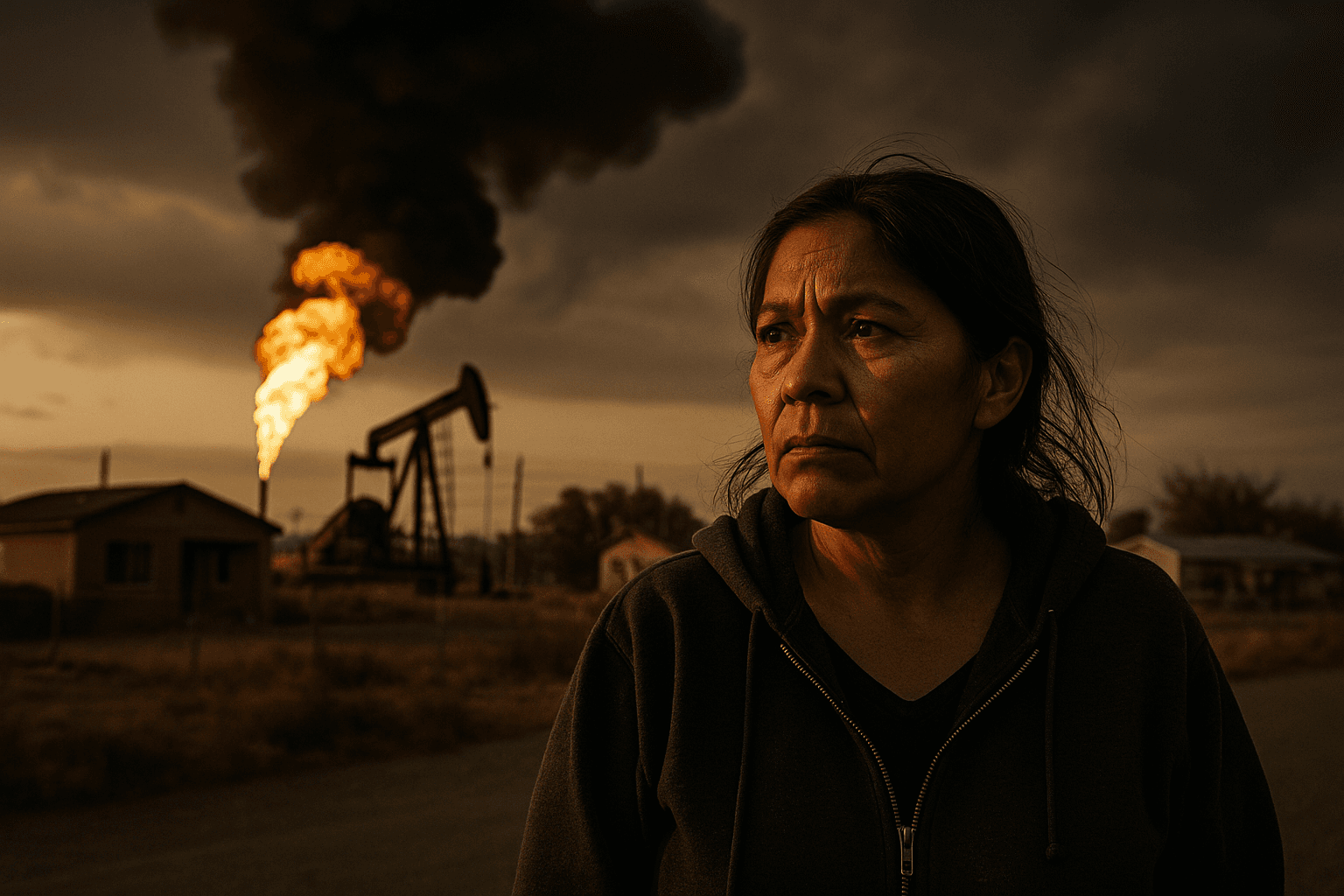
Annie Ersinghaus brought attention to communities living next to extraction operations with her documentary The Land of Sacrifice on December 15. The film weaves personal stories from residents with interviews of environmental advocates and an overview of the legal context, linking local experiences in the San Juan Basin to broader patterns of oil and gas development in the Permian Basin. Organizers noted the documentary is being used in advocacy efforts by New Mexico Land, Air, Water and the Sacred, and it is connected to the ongoing litigation Atencio v. State of New Mexico.
The film frames impacts in human terms, showing how proximity to wells, compressor stations and infrastructure intersects with everyday life. Screenings drew strong audience reactions, as attendees reflected on health worries, environmental change and the stress of living near industrial operations. For San Juan County, where schools and neighborhoods sit near production sites, those reactions translate to immediate policy concerns about how to protect children, remove exposures and ensure fair access to health care.
Public health experts point to several pathways by which oil and gas operations can affect communities. Air quality can be degraded by volatile organic compounds and particulate matter, water supplies can be threatened by spills and waste, and chronic stress and economic disruption can exacerbate health inequities. The documentary amplifies these issues for local residents who must weigh the economic benefits of extraction against documented and perceived health risks.
Policy debates highlighted by the film include setbacks between production sites and homes or schools, requirements for monitoring and emissions controls, and the allocation of public health resources for affected communities. The connection to Atencio v. State of New Mexico underscores how litigation and legislation are both avenues for communities seeking systemic change.
By centering lived experience alongside legal and scientific context, The Land of Sacrifice aims to move conversations in the Capitol and in county meetings from abstract regulation to concrete protections. For San Juan County residents, the film is a call to consider not only the environmental footprint of extraction, but the social and health equity implications that shape daily life and long term community well being.
Sources:
Know something we missed? Have a correction or additional information?
Submit a Tip