Nygren highlights water, housing, and energy partnerships at county event
Nygren said 76 manufactured homes are already reaching families, but the long-delayed water project still needs years of work and more money.
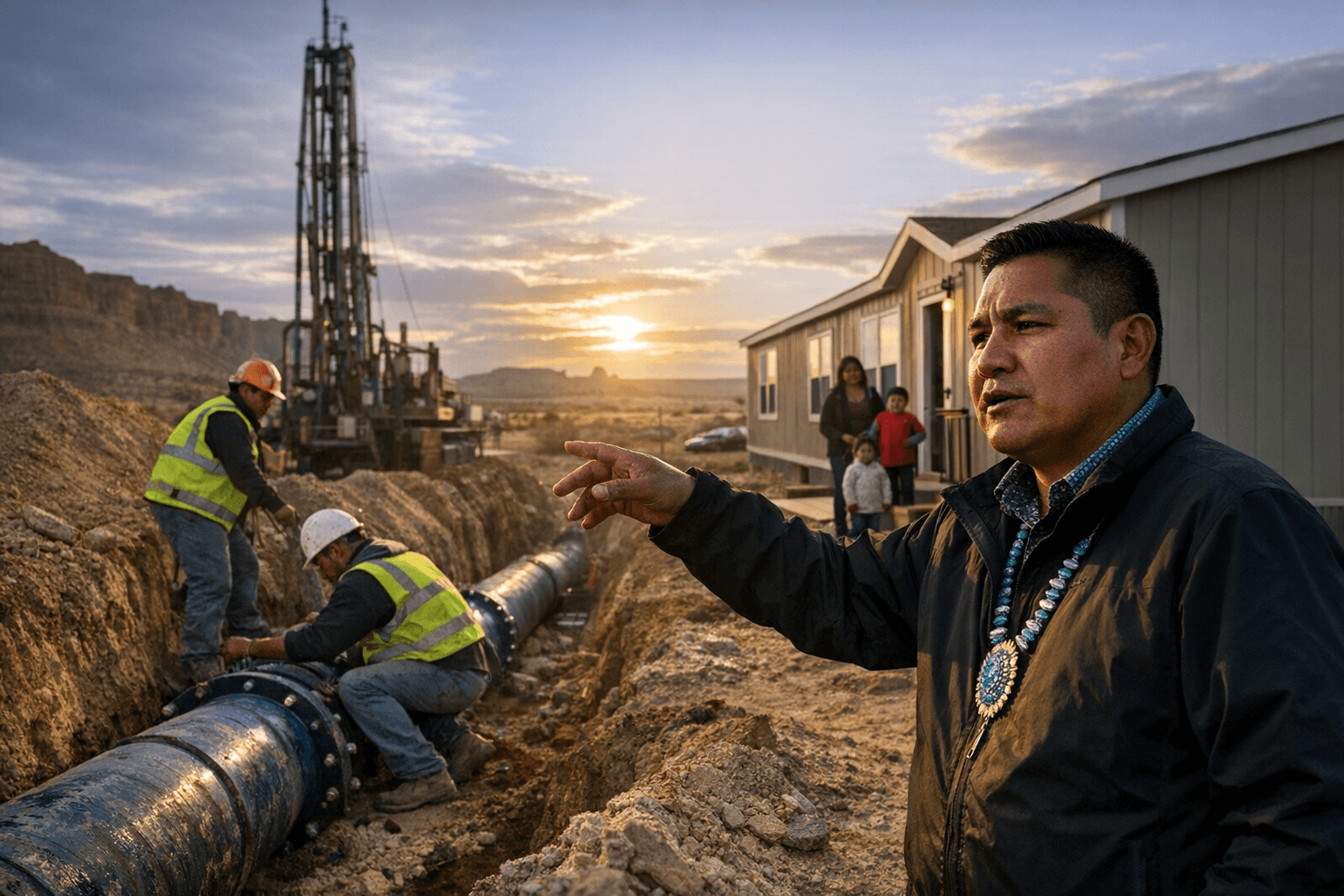
The clearest payoff from Buu Nygren’s county appearance was housing: 76 newly built manufactured homes have already been delivered to Navajo families through the 1,000 Home Initiative, and seven contracts signed in 2024 left the Navajo Nation about 300 homes closer to the goal. Nygren’s office has said the push is aimed at elders and other vulnerable residents, and the nation’s $79.9 million 2026 Indian Housing Plan, which Nygren signed on June 19, 2025, gave the effort a larger financial base.
That housing progress, however, still sits inside a much larger shortage. The 1,000 Home Initiative was launched to confront long-standing overcrowding and housing gaps across the Navajo Nation, including communities in and around Shiprock, Thoreau, Pinedale, Lupton, Nahata Dziil, Houck and Sweetwater. For San Juan County families who have spent years waiting for new units, the number that matters most is still how many homes can be delivered in the next construction cycle, not just how many contracts have been signed.
Water remains the hardest promise to close. Congress authorized the Navajo-Gallup Water Supply Project in 2009 to bring San Juan River water to more than 200,000 people, including roughly 43 Navajo Nation chapters, the Jicarilla Apache Nation and the city of Gallup. Nygren has said about one-third of Navajo people still do not have access to clean water, and many families continue to haul water to chapter houses or watering points. The project was expected to be finished in 2024, but completion has slipped, and Nygren has pressed for five more years of work and a larger budget as costs have climbed from an initial $870 million to more than $2 billion.
The latest construction milestone came in April 2025, when leaders broke ground on the San Juan Lateral Water Treatment Plant, described as the largest and most crucial piece of the project. That work is tied to a reported $267 million price tag, and the pumping plant and related facilities have been discussed as running toward 2028 or 2029. Nygren has said the completed system could move 37,000 acre-feet of water a year, but the gap between that promise and today’s shortages remains wide.
Nygren also connected the county event to renewable energy and economic opportunity, framing both as part of the same infrastructure agenda. Since his election in November 2022 and swearing-in on January 10, 2023, his administration has placed water, electricity, roads, housing and government systems at the center of its work, while continuing to press Washington for the money and time needed to finish the region’s biggest projects. On March 11, 2026, his office said he and other tribal leaders met with Sen. Mark Kelly to push the Northeastern Arizona Indian Water Rights Settlement and related infrastructure funding, a sign that water access across the region remains unresolved even as local projects move ahead.
This article was produced by Prism’s automated news system from verified source data, official records, and press releases, then run through automated quality and moderation checks before publishing. The system is built and supervised by the people who set the standards it runs under. Read our full AI policy.
Did this article answer your question?