San Juan County assessor values property, treasurer collects tax bills
The assessor values your property, the treasurer collects the bill, and San Juan County gives you 30 days from a Notice of Value to protest a bad valuation.
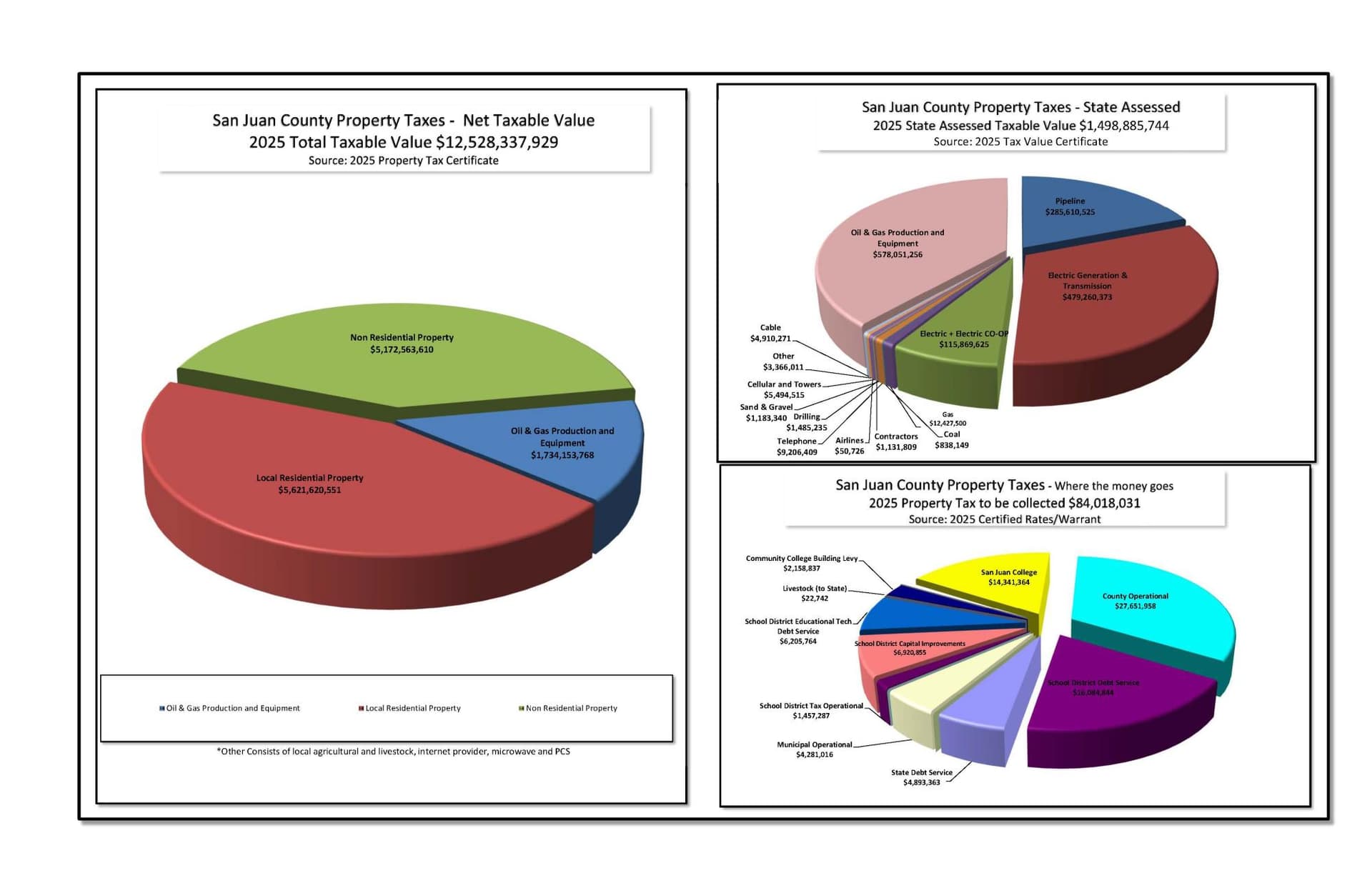
The first thing to know about a San Juan County property tax bill is that the assessor does not set the tax. The San Juan County Assessor’s Office is required by New Mexico law to discover, list and value property in the county, while the tax bill itself moves through the broader property-tax system and the Treasurer’s Office handles collection.
Who does what on a San Juan County tax bill
If the number on your Notice of Value looks too high, that is an assessor issue. The assessor’s job is valuation, not billing, and the office’s own guidance says it does not determine taxes. The treasurer, by contrast, is responsible for collecting, keeping accounts and distributing taxpayers’ funds to the appropriate county sectors, so payment questions and account balances belong there.
That split matters because homeowners often call the wrong office first. A valuation dispute starts with the assessor, while a bill that has already been issued, paid, or marked delinquent belongs with Treasurer Carol Taulbee’s office in Aztec. San Juan County’s online treasurer system lists Taulbee and Chief Deputy Treasurer Bryan Myers, with office hours Monday through Thursday, 7 a.m. to 5:30 p.m., at 100 S. Oliver Drive, Suite 300, Aztec, NM 87410.
The dates that matter most
Property tax timing in New Mexico starts with the valuation date. The New Mexico Taxation and Revenue Department’s Property Tax Division uses January 1 as the valuation date for taxable situs in New Mexico, which is the point at which property is measured for tax purposes.
San Juan County’s own tax pages then move the process into fall. The county says tax notices are mailed the first week of November, and the Treasurer’s Office says property tax bills are released once a year on November 1 unless unusual circumstances arise, such as a new state law. The county’s general tax information page says the full amount or the first half of the property tax is due by December 10.
Those deadlines are the ones that trigger trouble. The treasurer’s notifications page says the first-half and full installment become subject to penalty and interest on December 11 if they are not paid on time. Once that penalty clock starts, the bill gets more expensive even if the underlying valuation was correct.
How to challenge a valuation
A property owner who thinks the assessed value is wrong has a short window to act. San Juan County’s FAQ says you have thirty days from the date the Notice of Value is mailed to file a protest with the County Valuation Protest Board through the assessor.
That deadline is tied to the mailing date, not to the day the envelope reaches your mailbox. If the notice arrives late, the countdown does not restart, so the safe move is to open and review the notice as soon as it comes in and mark the protest deadline immediately.
San Juan County also makes the protest process more practical than many residents realize. The county’s forms page says protest paperwork can be mailed, faxed to (505) 334-1669, or hand-carried to the office. The Assessor’s Office can be reached at (505) 334-6157, which is the best number to call if the issue is the value itself rather than the payment status.
How to check your parcel before you file
Before filing a protest, the county gives residents two public lookup tools: an EagleWeb property database and an assessor parcel map. Those tools let you review parcel information and valuation records before deciding whether the Notice of Value reflects the property you own.
The parcel map comes with an important warning. San Juan County says the map is for visual representation only and does not show actual property boundary lines. If the question is exactly where one lot ends and another begins, the county recommends a professional survey rather than relying on the online map.
That distinction can save time in a protest. The map can help you confirm a parcel number, but it should not be treated as a legal boundary document. In a dispute about acreage, encroachment or lot lines, the survey matters more than the screen.
Why county dates can shift from year to year
San Juan County’s dates are the ones residents need to follow, but New Mexico’s broader property-tax calendar explains why people should never rely on memory alone. State reporting calendars show county assessors normally mail notices around April 1, and other counties have received approval to move their mail-outs later in some years. Santa Fe County has extended its notice mail-out to May 1, and Taos County has also announced a later notice schedule in a separate cycle.
That flexibility is one reason the county’s own notice and billing pages deserve a fresh look each year. Even when the underlying law stays the same, mailing windows, release dates and penalty triggers can shift with state approval or a change in the law.
For San Juan County property owners, the accountability line is simple: the assessor values the property, the treasurer collects the money, and the Valuation Protest Board hears the challenge if the value is wrong. The fastest way to avoid a bigger tax problem is to match the right office to the right problem before the mailing deadline or the December payment deadline passes.
This article was produced by Prism’s automated news system from verified source data, official records, and press releases, then run through automated quality and moderation checks before publishing. The system is built and supervised by the people who set the standards it runs under. Read our full AI policy.
Did this article answer your question?