San Juan County explains landfill life span and transfer station network
San Juan County’s trash network runs from a 160-acre landfill to 12 transfer stations, with free dump days, posted fees, and a $1,000 illegal-dumping penalty.
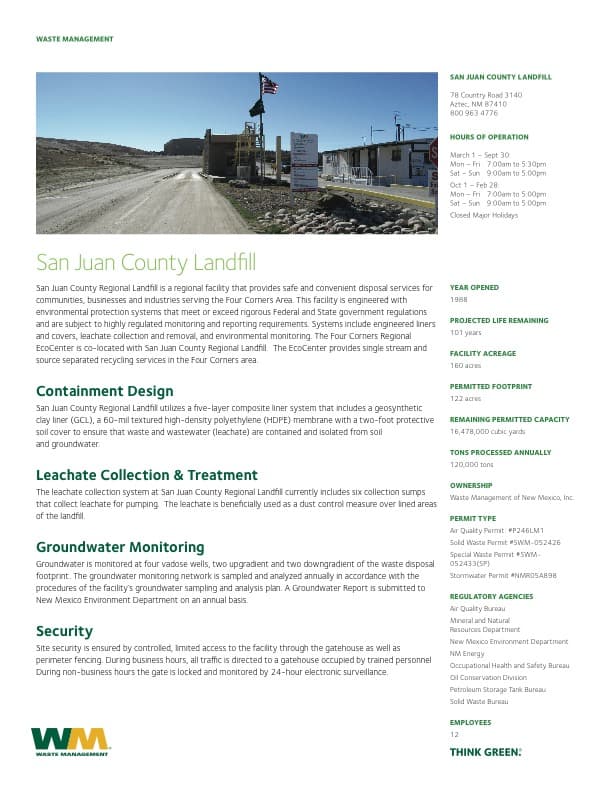
San Juan County’s trash system starts with a simple question: where should residents take a load, and what will it cost? The answer runs through a 160-acre regional landfill with an estimated 50-year life span, 12 transfer stations across the county, and a reporting system that can turn an illegal dump site into a $1,000 ordinance violation.
How the county’s system is built
The San Juan County Regional Landfill sits on 160 acres, and county solid-waste officials say it has about 50 years of remaining life. The county contracts with Waste Management to operate the landfill, and it pays the company on a per-ton basis for waste collected at county-operated convenience stations. That arrangement matters because every bag or load that moves through a local station is part of a larger flow of material, and it carries budget consequences for the county as well as for the hauler.
The solid-waste division also uses trustee labor from the San Juan County Detention Center for roadside litter pickup, roadside vegetation removal, and other community-service work. That work gives the system a public-safety and roadside-maintenance role, not just a disposal role, because trash left along county roads often becomes part of a wider cleanup problem.
Where to bring trash in San Juan County
Residents have 12 trash transfer stations to choose from, and the county’s station list stretches across the county from Blanco, Cedar Hill, and Hilltop to Huerfano, Kirtland, La Plata, Lake Valley, Lee Acres, Sand Springs, Shiprock, Upper Fruitland, and Waterflow. Regular hours vary by site, so the station closest to home may not operate on the same schedule as the one down the road.
The county also opens periodic free disposal days through its Fall Dumpster Days program. The calendar has listed free drop-off at Cedar Hill, Huerfano, Kirtland, Lake Valley, La Plata, Lee Acres, Sand Springs, Shiprock, Upper Fruitland, and Waterflow. Those events are the county’s clearest pressure-release valve for larger cleanouts, and they are also one of the main ways the county tries to steer waste toward legal disposal instead of roadside dumping.
For residents, the practical takeaway is straightforward: the county has built a countywide network, but the right site depends on where you live, what you are hauling, and whether a free dumping window is open at that location.
What it costs, and what does not
San Juan County’s pricing guide gives the system its clearest consumer rules. A single 33-gallon bag of trash costs $1 in-county and $9 out-of-county. Two 33-gallon bags cost $2 in-county and $9 out-of-county. Larger loads are priced by volume, and the county also publishes separate rates for pickup-bed loads.
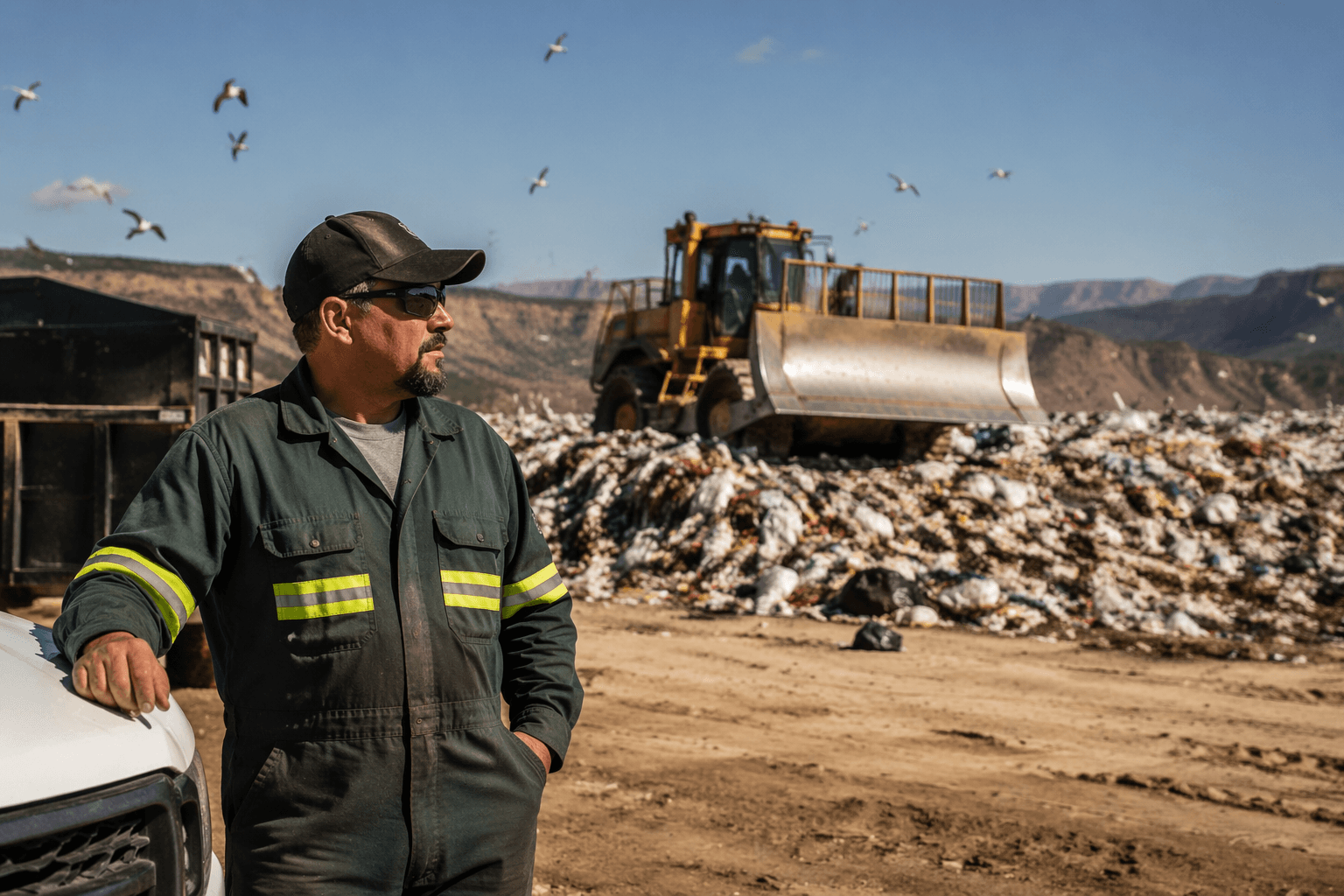
Not every item is charged the same way. Flattened cardboard, bagged aluminum cans, and large appliances are accepted for free, while tires are charged separately. That mix of paid and free items makes the stations more than simple dump points, since residents sorting a load correctly can save money before they ever leave home. The county says residents with questions can call 505-334-4519.
The fee schedule is also a window into county policy. Because waste from county-operated stations is paid for on a per-ton basis, the posted bag-and-load prices help move material into the system in a predictable way while limiting overflow from illegal dumping and unmanaged roadside trash.
What gets rejected, and what can trigger enforcement
The county’s Trash Reporter page is blunt about illegal dumping: dumping trash on public lands is illegal, and it carries a $1,000 fine under county ordinance. Residents can report a dump site by marking coordinates, uploading a photo, and optionally leaving contact information. The current online instructions also say the Clean Up San Juan app is being redesigned.
That reporting tool is built to gather more than one kind of evidence. The county says the app can collect GPS coordinates and allow uploads of photos, videos, audio, and other files for investigation. The county also says those records may be used for investigation, prosecution, and cleanup purposes under New Mexico public-records rules.
The reporting effort has an origin story tied to local concern. San Juan County GIS manager Sherice Snell developed Clean Up San Juan after residents raised illegal-dumping concerns at an outdoor recreation forum. The National Association of Counties has said the project has had more than 550 downloads, more than 430 reported dumping sites, and more than 130,000 pounds of trash removed from public lands. Those numbers show a public tool with real use, not just a website link sitting unused on a county page.
The budget, the history, and the accountability question
San Juan County traces its government back to 1887, and the solid-waste system reflects a county that has had to stretch service across a large and varied landscape for generations. A county news post says solid waste still receives about $280,000 in annual general-fund subsidy even after schedule changes aimed at efficiency. County officials have described the transfer-station network as one of the most robust in New Mexico and the service as among the lowest-cost in the region.
That is the tension at the center of the system. The county has built a broad network, posted a fee guide, opened free dump days, and created a reporting app to target illegal sites. At the same time, residents still have to move between separate pages to find station locations, hours, prices, special events, and reporting instructions. The network works best when people know the rules before they load the truck, because the county has made clear that public-land dumping is not a harmless shortcut.
This article was produced by Prism’s automated news system from verified source data, official records, and press releases, then run through automated quality and moderation checks before publishing. The system is built and supervised by the people who set the standards it runs under. Read our full AI policy.
Did this article answer your question?