San Juan Fuel Prices Rise While Benchmark Wholesale Costs Fall
A reader's letter published Dec. 22 raised concerns after pump prices in San Juan County jumped almost 30 cents per gallon even as regional wholesale benchmarks declined. The discrepancy matters to local residents because it raises household fuel costs and heightens calls for clearer retail pricing and consumer protections.
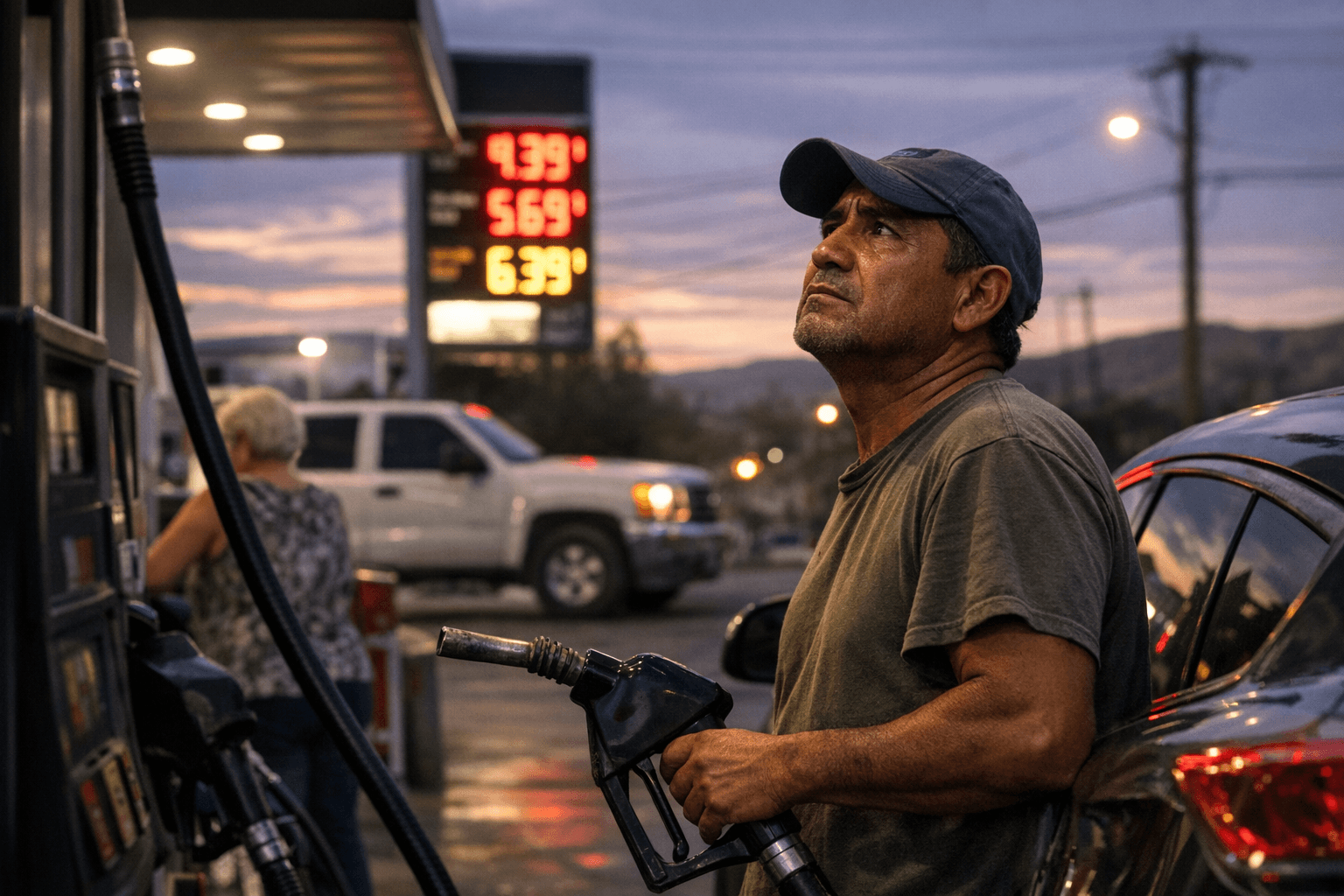
A letter from a local resident dated Dec. 22 said motorists in San Juan County saw retail gasoline prices increase by nearly 30 cents per gallon while regional wholesale prices moved lower. The writer noted the gap between what drivers pay at the pump and the benchmark NYMEX futures price, and compared local retail levels unfavorably with other markets in New Mexico. The letter urged consumers to monitor local prices and called for greater transparency in supply and retail pricing.
The core complaint is a divergence between wholesale and retail signals. NYMEX futures serve as a national benchmark for wholesale gasoline and often lead retail price movements. When futures fall, retailers typically have room to reduce pump prices unless offset by distribution costs, taxes, inventory bought at earlier, higher prices, or changes in local competition. The reader reported that those offsets did not appear to justify the recent nearly 30 cent increase in San Juan County.

For typical drivers the effect can be immediate. On a 15 gallon fill up a 30 cent per gallon increase adds about 4 dollars and 50 cents to a single purchase. Over a month and across households these increments add up, increasing the cost of commuting, school runs, and deliveries for local businesses.
Local economic implications include higher operating costs for small businesses that rely on vehicle travel, and a real impact on household budgets in a county where fuel is often a necessary expense. The letter also highlighted the role of market structure, pointing to limited station density in some parts of the county and variation in retail margins across neighboring New Mexico towns.
Policy responses could include calls for greater price transparency from retailers, public monitoring of local pump margins, and consumer reporting of suspected irregularities to state consumer protection authorities. For residents the practical step is to compare posted prices before fueling and to track short term trends. Longer term, sustained divergence between falling wholesale benchmarks and rising pump prices would merit scrutiny by regulators and local officials because it affects affordability and economic resilience in San Juan County.
Sources:
Know something we missed? Have a correction or additional information?
Submit a Tip