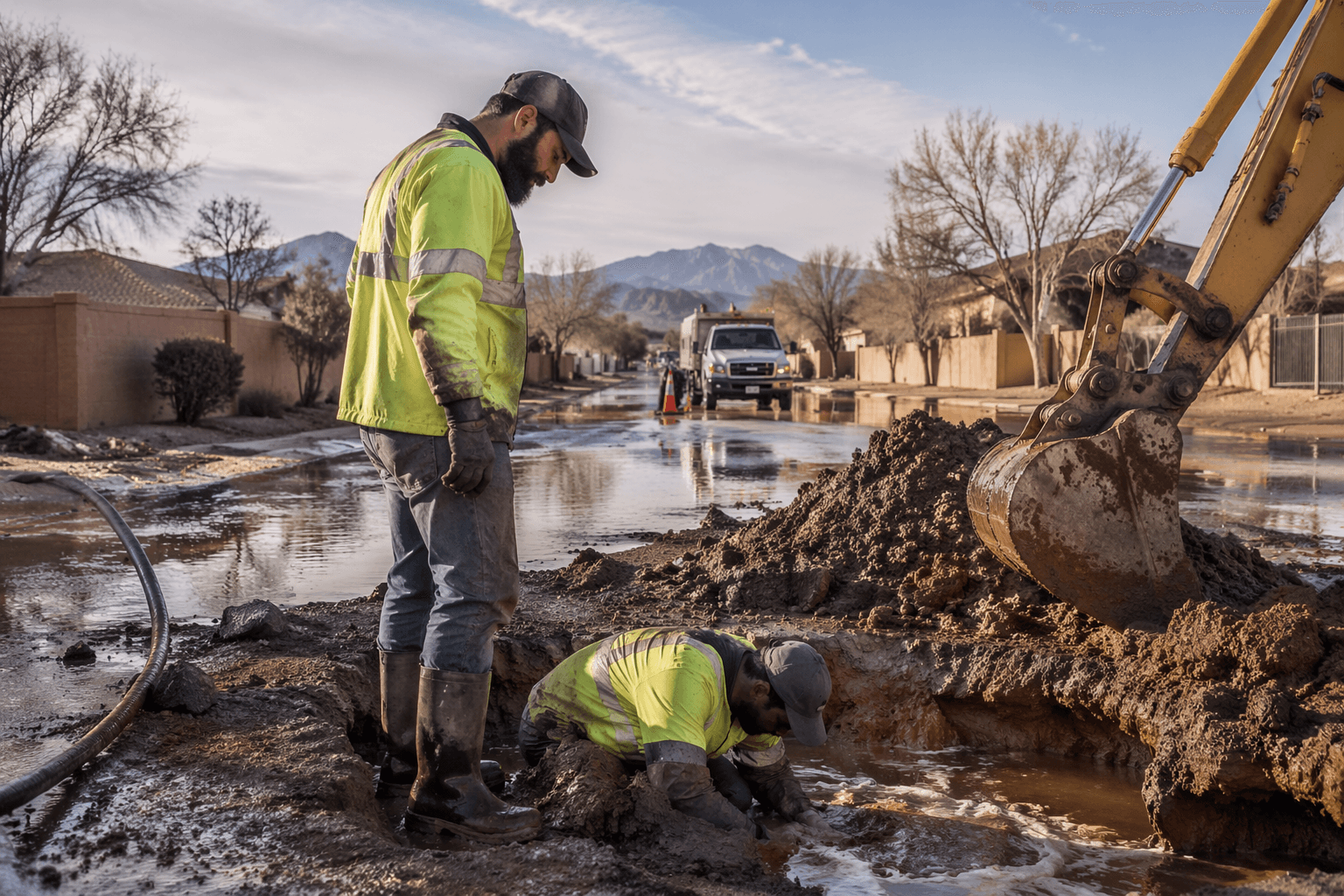
Corrales adopts new road policy, adds clearer ranking and petition rules
Corrales now has a written road-ranking system, a 60-signature petition rule and an annual public priority list for paving decisions.
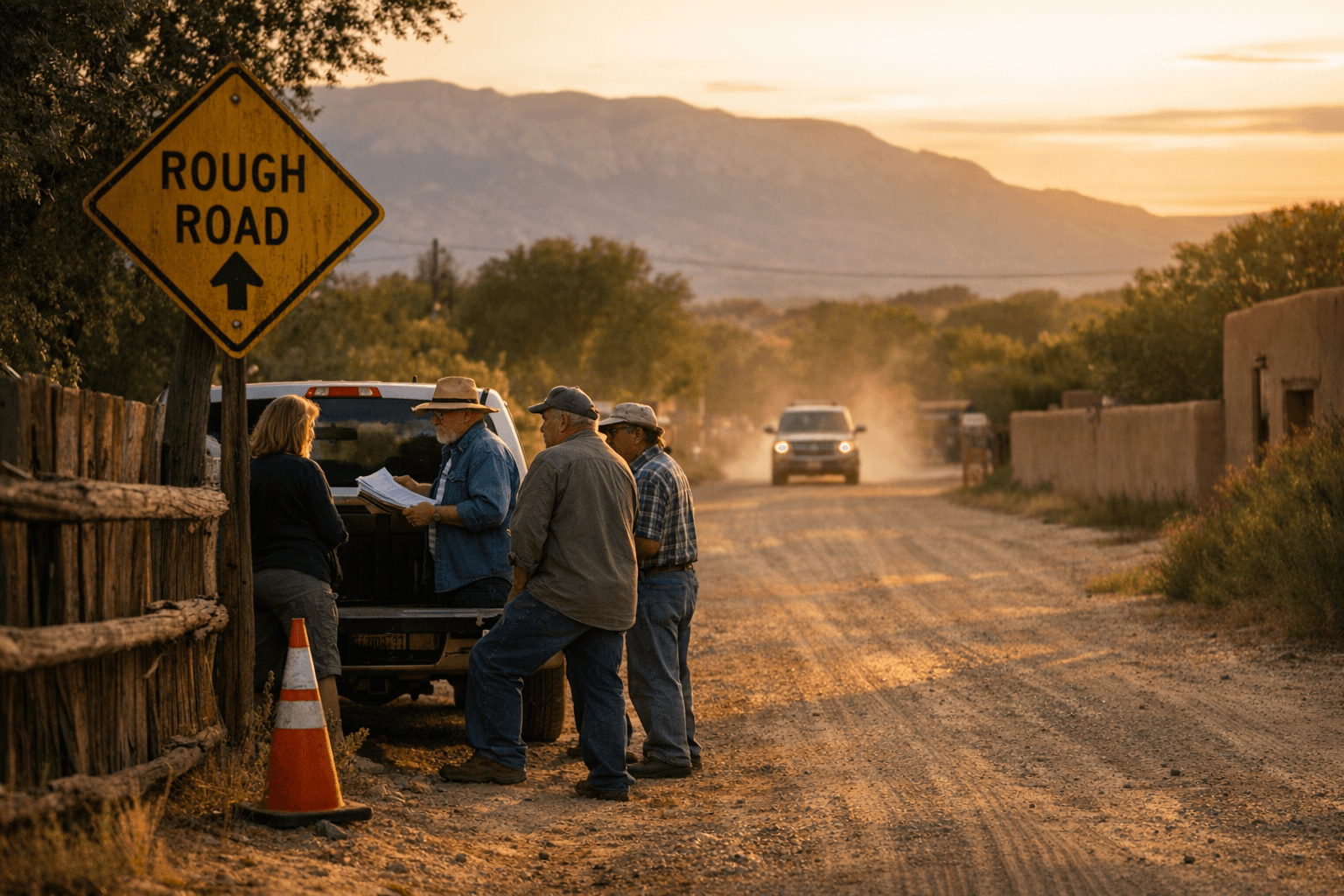
A 60-signature petition, a published scoring system and an annual road list are now the rules Corrales will use to decide which streets get paved first.
The Corrales Village Council adopted Resolution 26-16 on April 14, putting a formal process around road repairs that residents have long argued was too vague. Under the new policy, the Public Works Director will assess paved roads each year using a pavement condition index and a point system that gives the most weight to health and safety, which carries 10 points. Traffic volume and the number of homes served count for 5 points, while road location, maintenance-versus-resurfacing cost, overall design-and-construction cost and planned utility improvements are also built into the ranking.
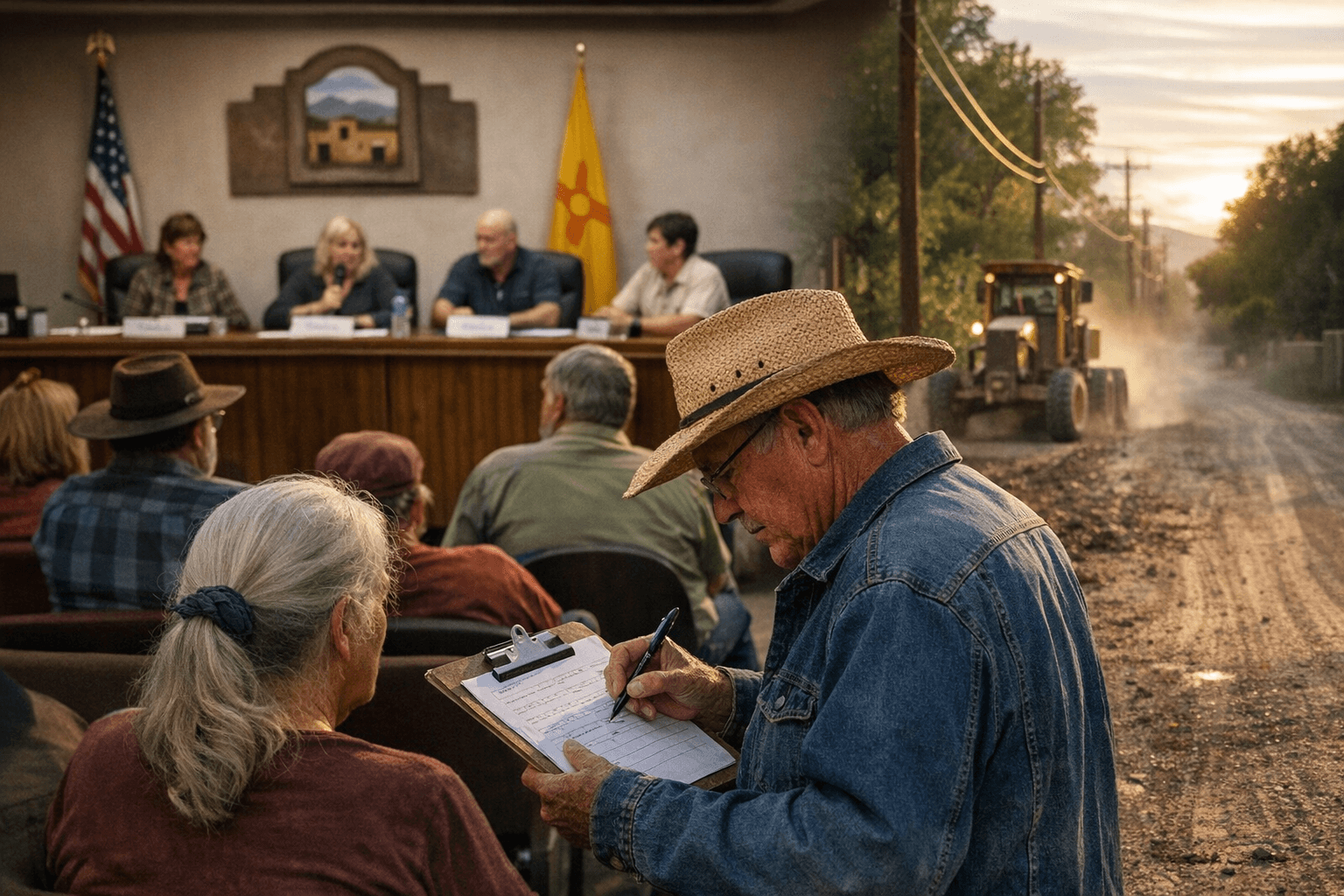
The village says the priority list will be prepared annually and sent to the council as part of the Infrastructure Capital Improvement Plan process. For dirt roads, residents must submit a written request backed by petitions signed by at least 60% of the residents with a driveway off the road before paving will even be considered. That is a tighter standard than the earlier 50-signature approach and is meant to show a clearer majority while still giving attention to residents who do not live directly on a road.
The policy lands in a village where road decisions have drawn close scrutiny since February, when Perea Road residents objected to paving on the street where Councilor Mel Knight lives. Knight said she had waited eight years for Perea Road to make the village ICIP list, while critics questioned whether Corrales had been relying too much on custom instead of a documented process. Village messaging in March and April said the new guidelines were intended to clarify how choices were made, after past decisions relied on factors such as flooding damage, emergency vehicle access, location and cost without always being laid out in a public framework.
Corrales officials said the new approach also fits the village’s limited capacity. Public Works has four full-time employees responsible for 62 miles of roadway, both paved and dirt-gravel, and road work still depends on weather and the village’s contracted paving company. Administrator Melanie Romero said the officials making the ranking calls have the expertise to do so, while councilors said the road list needs to stay tied to the ICIP. Stuart Murray also pressed for maintenance on roads that do not make the paving list, arguing that crack sealing and other upkeep can keep streets from falling apart and becoming far more expensive to fix later.
Speed bumps remain another point of tension. Zack Burkett raised concerns about how they affect first responders, and Fire Chief Anthony Martinez said the fire department is reviewing existing bumps and possible warning markers so heavy fire trucks are not caught by surprise. That debate sits alongside other Corrales road pressures, including work on Corrales Road with the New Mexico Department of Transportation and the recent closure of Siphon Road for River Mile 199 work through April 15.
This article was produced by Prism’s automated news system from verified source data, official records, and press releases, then run through automated quality and moderation checks before publishing. The system is built and supervised by the people who set the standards it runs under. Read our full AI policy.
Did this article answer your question?