Extreme drought returns to Sandoval County, Drought Monitor shows
Sandoval County is back in extreme drought, putting wells, ranching, irrigation and fire risk under pressure as state and federal responses stay active.
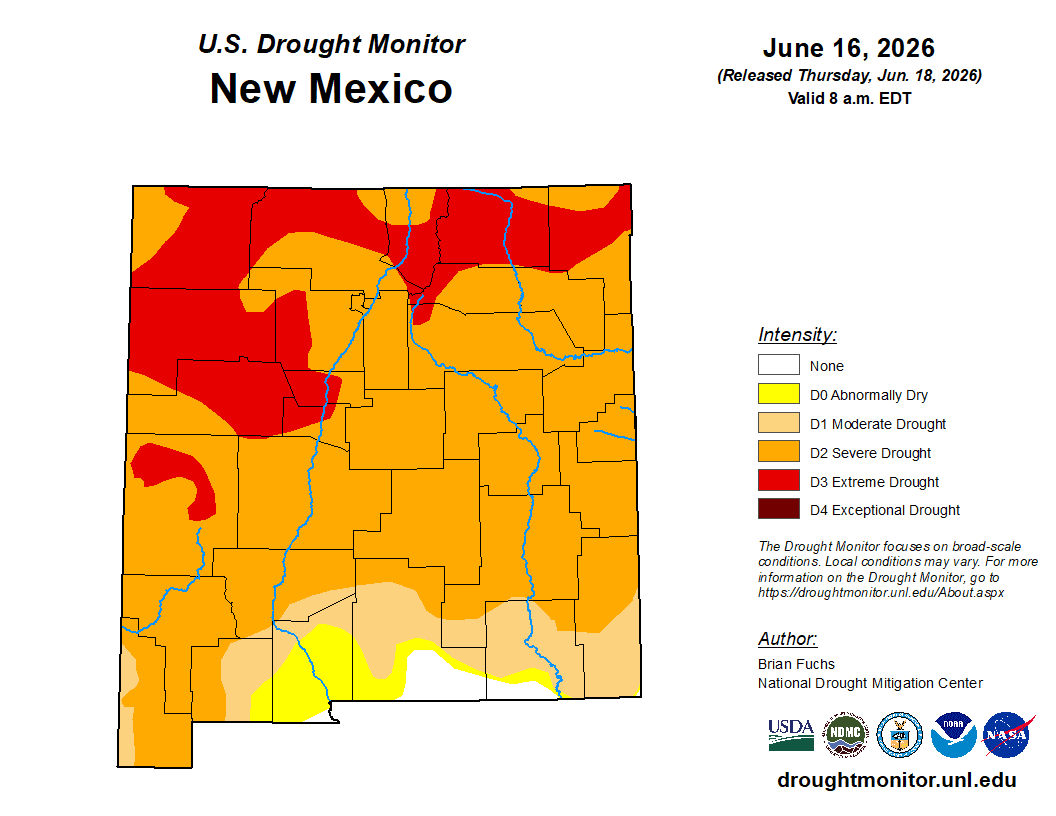
Sandoval County is back in extreme drought, and that shift carries immediate consequences for wells, ranching, irrigation and wildfire danger across the county. The latest U.S. Drought Monitor, released Thursday, June 18, placed Sandoval County in D3 conditions, alongside Bernalillo and Valencia counties, with the map valid for conditions as of June 16 at 8 a.m. EDT.
For Sandoval County, the return of D3 matters because drought here is not just a map label. It can tighten pressure on rural water supplies, make ranchers worry more about forage and stock water, raise demand on irrigation systems and push households to use water more carefully as summer heat builds. The monitor said several weeks of wetter-than-normal conditions improved extreme drought in northeastern and southern New Mexico, and recent rains helped erase drought in far southern New Mexico, but northern areas saw slight expansion.

That uneven pattern leaves north-central counties exposed first. The Albuquerque metropolitan area sits near the center of that stress, and Sandoval County’s mix of growing neighborhoods, rural land and agricultural use makes it sensitive to dry stretches that can strain both public systems and private supplies. The monitor’s broad-scale assessment also means local conditions may vary from one community to the next, but the county’s return to extreme drought signals a renewed risk across the region.
The timing also matters because federal and state agencies use the drought monitor as a trigger for response and aid. The United States Department of Agriculture’s Farm Service Agency has already designated multiple New Mexico counties as natural disaster areas in 2026, allowing producers to seek emergency loans. USDA said counties qualified because they had D2 severe drought for eight or more consecutive weeks, or D3 extreme or D4 exceptional drought during the growing season.
In late May, Gov. Michelle Lujan Grisham declared statewide drought and severe fire conditions, pointing to historic low snowpack and record spring temperatures. Those warnings now frame what renewed extreme drought means for Sandoval County: higher fire danger, more pressure on water use and greater strain on ranching and agriculture if dry weather returns. USDA has already issued drought disaster designations in March, April and May 2025, underscoring how long New Mexico has been living with recurring drought stress.
This article was produced by Prism’s automated news system from verified source data, official records, and press releases, then run through automated quality and moderation checks before publishing. The system is built and supervised by the people who set the standards it runs under. Read our full AI policy.
Did this article answer your question?