Rio Grande Near Albuquerque May Run Dry, Threatening Farms and Food Prices
Rio Grande flows near Albuquerque have collapsed to 30% of early March levels, setting up a third river dry-up since 2022 that threatens Sandoval County farms and food prices.
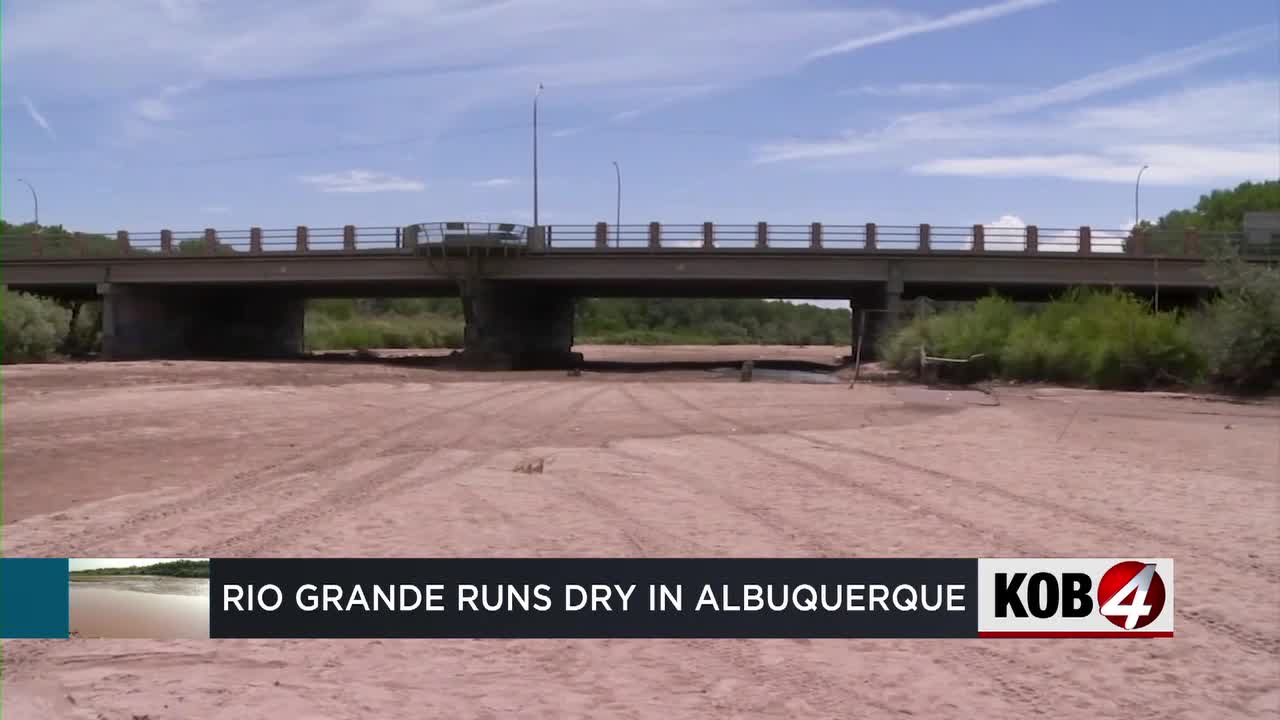
Water levels in the Rio Grande near Albuquerque have dropped so sharply that the river is on track to run dry for the third time since 2022, a streak without precedent in at least four decades that stands to cut irrigation deliveries to farms in Corrales and Bernalillo and push the price of locally grown produce higher at grocery stores and markets across the region.
The Middle Rio Grande Conservancy District, which manages irrigation infrastructure across Sandoval, Bernalillo, Valencia, and Socorro counties, warned this week that river conditions have deteriorated dramatically since early spring. Flows have fallen to roughly 30% of what the district recorded in early March. At the USGS gauge in Albuquerque, the critical number to watch is 50 cubic feet per second. "That 50 CFS at the Albuquerque gauge is about the threshold at which we start to see river channel drying downstream of there," MRGCD's Anne Marken said.
The driver is a below-average snowpack that generated an unusually early runoff pulse, leaving little moisture in reserve as temperatures climb and irrigation demand accelerates. Under normal conditions, the district would release stored water to bridge the gap between river supply and farm demand. That option is largely off the table in 2026 because of New Mexico's obligations under the 1938 Rio Grande Compact, which requires the state to deliver a share of water to Texas and restricts upstream storage during low-flow periods.
MRGCD CEO Jason Casuga said the weak snowpack is "showing up in the amount of water that's making it to the river" and that current projections point toward a very difficult season. Spokesperson Amanda Molina added that it remains uncertain whether a recent storm system will produce a secondary runoff pulse capable of meaningfully replenishing flows. If rain does not arrive in volume, Casuga warned, "I expect this year to be one we look back on and compare to and say, 'Hey, at least future years are not like 2026.'"
For Sandoval County farmers relying on MRGCD delivery channels, including the Corrales Main Drain, curtailed irrigation directly limits what can be grown and harvested. The district has shifted to "prior and paramount" operations, a legal water-priority framework that directs remaining flows first to a subset of the valley's six Native American Pueblos, including Sandia, Santa Ana, and Zia. Non-Pueblo irrigators face reduced or suspended deliveries.
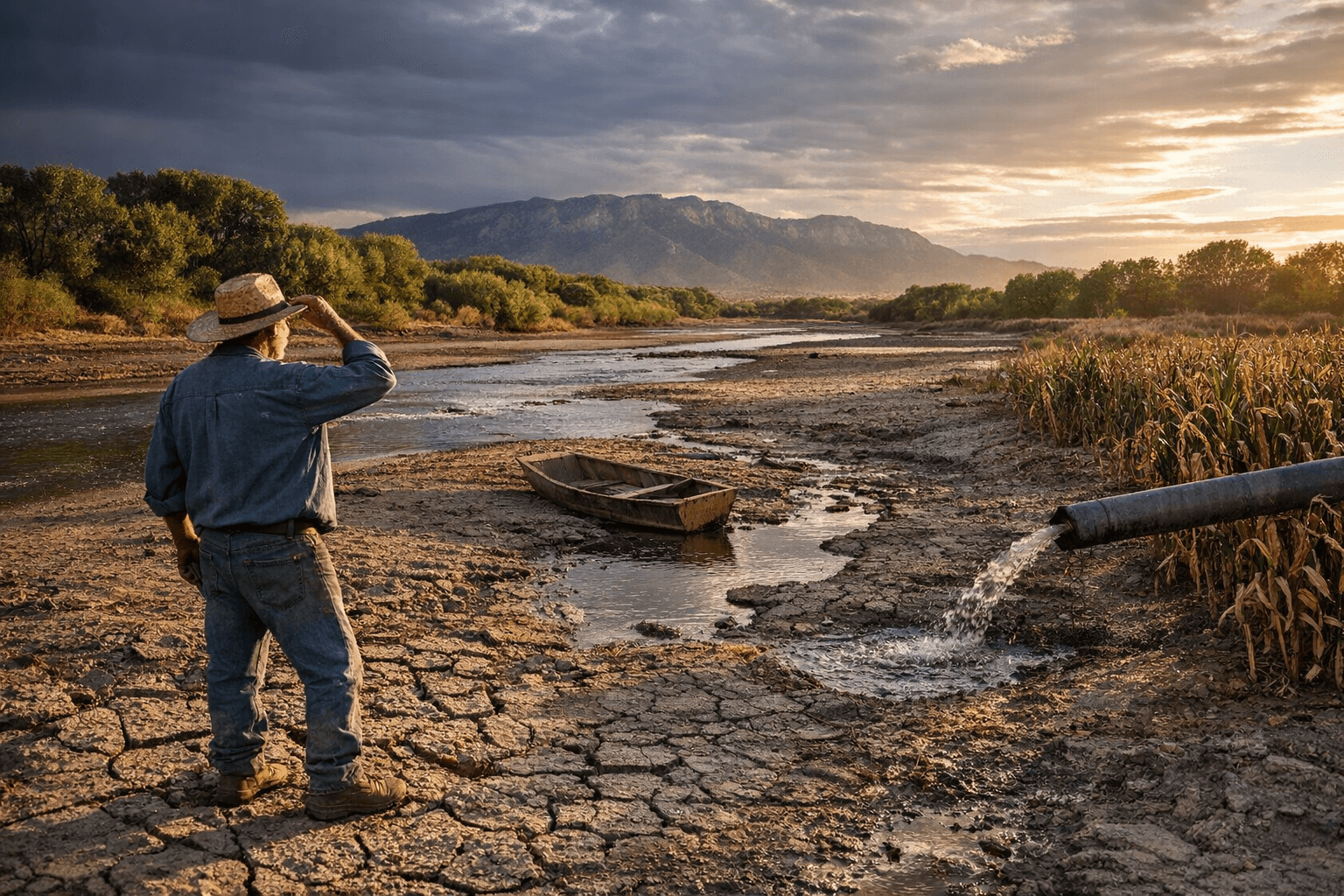
The ripple reaches grocery shelves. John Gonzales, general manager of The Fruit Basket ABQ, said farmers he works with have already been planting early to compensate for the anticipated shortfall. When supply contracts, prices follow. "Sometimes we can eat it as a business, but sometimes we do have to pass it down," Gonzales said.
A river dry-up also carries consequences that extend well beyond agriculture. The Rio Grande silvery minnow, a federally endangered species found only in the middle Rio Grande between Cochiti Dam and the upper reaches of Elephant Butte Reservoir, cannot survive in a dry channel. Previous dry-up events have triggered emergency interventions by the U.S. Fish and Wildlife Service, and federal involvement becomes increasingly likely as flows approach the 50 CFS threshold.
Alfalfa and hay crops cover more than 59% of irrigated farmland in the Middle Rio Grande Basin, making forage the most exposed sector if deliveries are cut. But vegetable and fruit growers, whose operations support local food economies in Corrales and Bernalillo, face the sharpest price pressure because their crops are less tolerant of irregular water and harder to replace quickly from outside supply chains. How much rain falls before summer, and whether mountain snowpack can generate any late pulse into the river, will determine whether this season joins 2022 and 2025 as a milestone the valley would rather forget.
This article was produced by Prism’s automated news system from verified source data, official records, and press releases, then run through automated quality and moderation checks before publishing. The system is built and supervised by the people who set the standards it runs under. Read our full AI policy.
Know something we missed? Have a correction or additional information?
Submit a Tip