Rio Rancho police roundup lists DWI, domestic violence and property damage arrests
Impaired driving, household violence and property damage dominate the latest RRPD roundup, with cases reaching from Rio Rancho to Albuquerque and Corrales.

What stands out in the RRPD roundup
Rio Rancho police’s latest arrest-record roundup is less a string of isolated incidents than a snapshot of the city’s recurring public-safety load. Over the span covered by the records, officers dealt with impaired driving, domestic-violence allegations, disorderly conduct, property damage and restraining-order violations, a mix that says as much about neighborhood pressure points as it does about individual arrests.

The list also stretches beyond city limits. People named in the roundup came from Rio Rancho, Bernalillo, Corrales, Albuquerque, Roswell and Edgewood, a reminder that Sandoval County sits inside a wider metro corridor where traffic, work, family ties and police calls routinely cross municipal lines.
Roadway safety keeps showing up
Driving offenses form one of the clearest patterns in the roundup. Among the entries were an Albuquerque driver accused of aggravated DWI, resisting arrest, careless driving and failure to register a vehicle, along with a Corrales resident arrested for DUI and careless driving. The records also include unlawful use of a license, display of current registration issues and failure to stop after striking an unattended vehicle.
That mix matters because it shows the enforcement picture is not limited to one dramatic crash or one headline-grabbing stop. It includes the routine but consequential business of checking licenses, registrations and sobriety, the kind of work that often reveals how closely roadway safety, documentation and intoxication are connected on busy Rio Rancho streets.
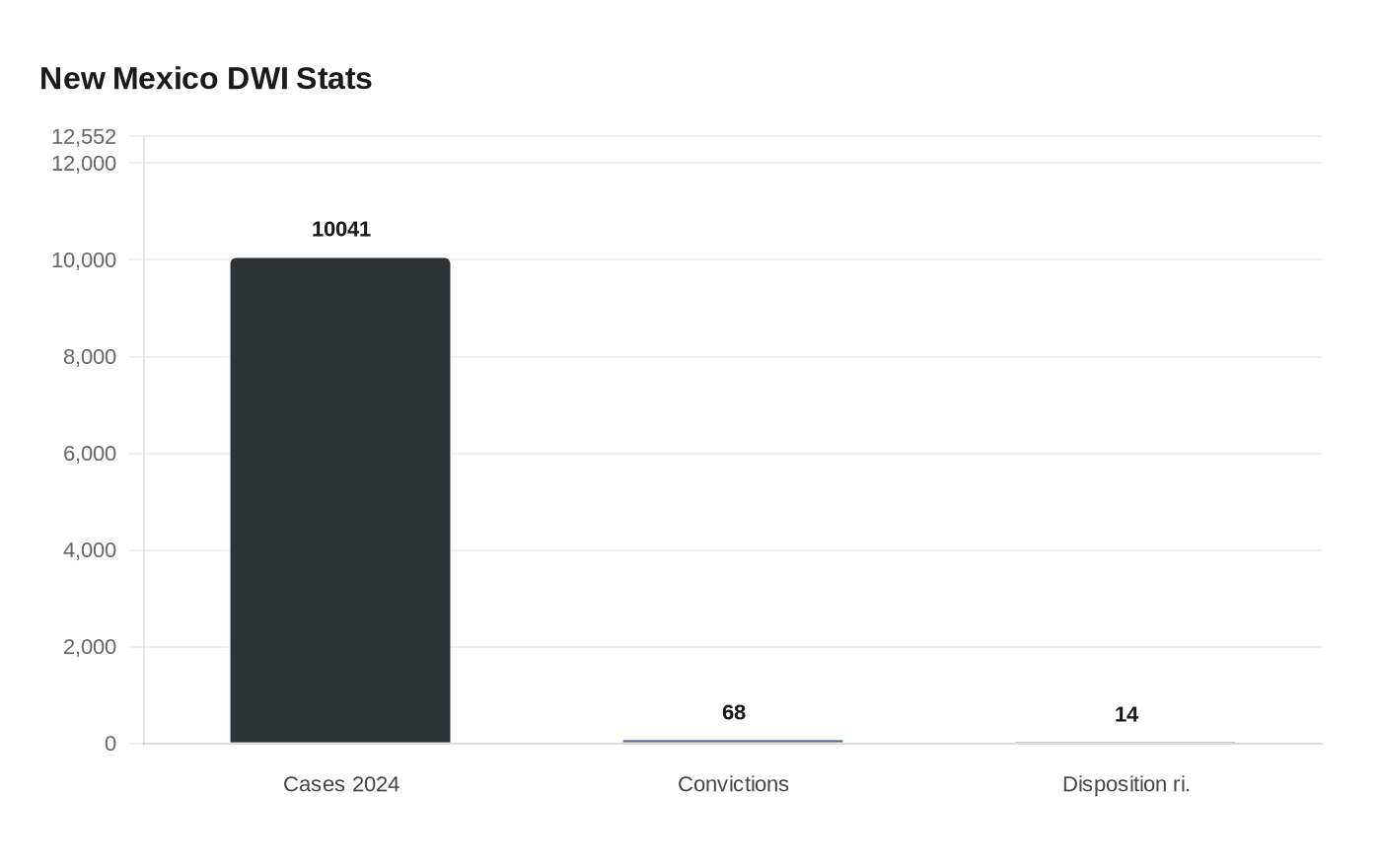
The state context reinforces that point. New Mexico courts said they adjudicated 10,041 felony and misdemeanor DWI cases in 2024, with 68 percent ending in convictions and total DWI dispositions rising 14 percent from 2023. In a state still struggling with impaired driving, even a short Rio Rancho roundup fits into a much larger public-safety problem.
Domestic violence allegations carry the heaviest weight
The most serious entries in the roundup involve alleged violence inside households. The records include assault and battery against a household member for a Rio Rancho woman, aggravated assault against a household member, making a shooting threat, resisting arrest and battery against a household member for a Rio Rancho man, a restraining-order violation for a second Rio Rancho woman, and aggravated battery against a household member for another Rio Rancho resident.
Those allegations are significant not just because of the charges themselves, but because they cluster around the same kind of danger: disputes that have already moved past argument and into threats, physical confrontation and court-ordered boundaries. In practical terms, that means officers are not only responding to public disturbances, they are also stepping into high-risk domestic situations where escalation can happen quickly.
The state treats those cases as part of a serious safety infrastructure. The New Mexico Intimate Partner Violence Death Review Team is a statutory body created under state law to review domestic- and sexual-violence-related deaths, underscoring how closely household-member assaults and restraining-order violations are watched in New Mexico. The roundup’s domestic cases sit squarely in that broader framework.
Property damage, trespass and disorder add to the workload
Another pattern in the records is property damage and disruptive conduct, the kind of offenses that may not always make headlines but still create friction in a growing city. One Rio Rancho man was arrested for criminal damage to property at a construction site on Legacy Parkway, while other entries note criminal damage to property of a household member, criminal trespass and disorderly conduct.
The roundup also includes disorderly conduct at an assisted-living facility, a reminder that police calls can land in places where staff and residents need quick help keeping order. When those types of calls stack up with domestic disputes and traffic offenses, the picture becomes less about one-off incidents and more about the constant maintenance of public order in neighborhoods, commercial corridors and care facilities.
The location spread adds to that impression. The records reference places including Legacy Parkway, Southern Boulevard, Perma Drive, NM 528, Meadowlark Lane, Northern Meadows, Fairwinds Assisted Living and Globe Court. Taken together, the names suggest officers are moving across residential streets, major roads, business areas and care settings rather than concentrating on one isolated trouble spot.
The names in the roundup
The compiled records include James Jackson, Angeniue Anaya, Margaret Matta, Adler Garcia, Adrianna Rivera, David Costales, Denis Largent, Matthew Leib, Isidoro Manzanares, Virginia Montoya, Joaquin Torrez, Romel Clerverseau, Angelina Ulibarri, Oscar Legarda, Monica Chmura, Tristan Brito, Matthew Hoskins, Jose Olivera, Brisa Heacox, Gilbert Baca and Reyna Pereyra.
Because the roundup is a public-record compilation rather than a single incident report, those names sit alongside a range of charges and summonses rather than one unified case narrative. That format can feel sprawling, but it is exactly what makes these records useful: they show the variety of calls that keep RRPD busy across a two-week window.
Why this roundup matters in a fast-growing city
Rio Rancho’s scale gives these records extra weight. The city’s population estimate was 112,524 as of July 1, 2024, about 8.1 percent higher than the April 1, 2020 census base, which means the police department is serving a city that has been expanding quickly and steadily. In a place growing that fast, recurring lower-level offenses can become the clearest sign of where pressure is building.
The city’s records process also shapes how these roundups are assembled. The Police Records Division handles public-record requests under New Mexico’s Inspection of Public Records Act, and if records are unavailable, the city says it must send a written denial within 15 calendar days. That structure helps explain why roundup stories like this one are built from compiled arrest and summons records rather than from live incident reports.
The larger takeaway is straightforward. Rio Rancho officers are spending time on the same categories that challenge many growing Southwestern cities: impaired driving, household violence, property damage and public disorder. The details change from one roundup to the next, but the pattern is steady, and that steady pattern is often the best indicator of where the city’s public-safety burdens actually lie.
This article was produced by Prism’s automated news system from verified source data, official records, and press releases, then run through automated quality and moderation checks before publishing. The system is built and supervised by the people who set the standards it runs under. Read our full AI policy.
Did this article answer your question?