Sandoval County pueblos welcome visitors with respect and advance planning
A wrong photo, a parked car in the wrong place, or an unannounced visit can cross a line in Pueblo country. Sandoval County’s pueblos set their own rules, and visitors need to plan ahead.
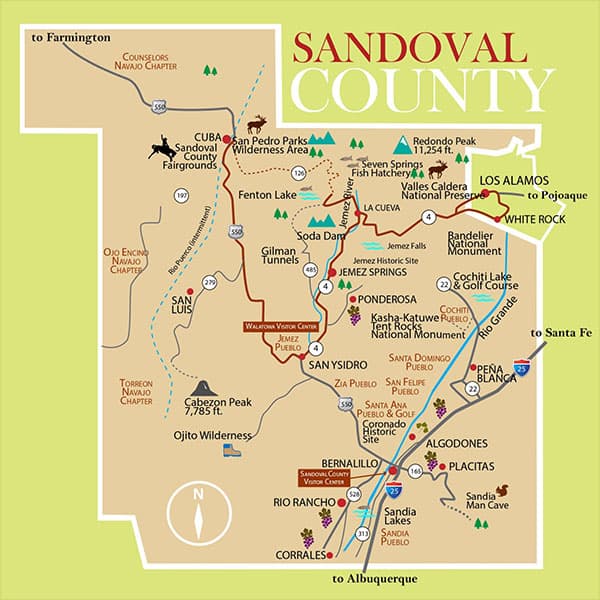
Sandoval Tourism lists 10 Pueblos and two Nations in the county, each with its own language, art traditions and access rules. One pueblo may welcome daytime traffic, another may close for a private ceremony, and a feast-day crowd may come with rules on cameras, phones, drones, parking and even bicycles. The safest approach is simple: call first, learn the boundaries, and treat every village as a living community, not a sightseeing stop.
Why access is never automatic
New Mexico Tourism & Travel advises visitors to tribal communities to confirm event dates and access before showing up, because tribal leaders can restrict entry for private ceremonies and other reasons. Many pueblos are open in daylight hours while homes remain private. A visitor who assumes a public plaza means public access to everything can end up on sacred ground, in a residential area, or in the middle of a ceremony that should have been left alone.
Feast days and ceremonial calendars need more than a quick look online. Photography and other image-making can be restricted, and each community controls its own access. In a county where outdoor travel, cultural stops and arts shopping often overlap, the mistake many visitors make is treating the pueblos like fixed attractions with universal hours. The rules change by pueblo, by event and sometimes by hour.
Start with the basics, then adjust to the pueblo
Sandoval County tourism bills the county as the Heart of New Mexico, shaped by Pueblo Indians, Spanish explorers and Mexican traders, which helps explain why visitors often move from hiking or road-tripping into cultural stops in the same day. The county’s pueblos also span a wide geography and a long history, with distinct artistic styles in pottery, weaving and jewelry.
Santa Ana Pueblo offers a useful example of how specific the local geography can be. The tribe’s Tribal Historic Preservation Office places the Tamaya reservation in Sandoval County about 20 miles north of Albuquerque, covering roughly 79,000 acres and including the villages of Rebahene, Ranchitos and Chicale. The pueblo formally established that preservation office in 2011 to protect cultural resources, and it placed the old pueblo of Tamaya on the National Register of Historic Places.
Feast days come with their own rules
San Felipe Pueblo’s Annual Feast Day is May 1 each year, and visitors are directed to park at Black Mesa Casino and take a shuttle into the village. The rules are unusually direct: no photography, no cell phone use, no drugs or alcohol, no drone use, and no hunting, fishing or bicycling without permission. San Felipe lists about 4,054 enrolled tribal members and roughly 68,000 acres.
Zia Pueblo is different again. The community has occupied its mesa site since the 13th century, has two plazas with kivas, and holds its principal festival, the Corn Dance, on the feast day of Our Lady of the Assumption in August. The pueblo is open during daylight hours only, schedules can change, and Zia is listed in the National Register of Historic Places. A visitor who plans around generic “summer hours” instead of the pueblo’s actual calendar risks arriving on the wrong day or at the wrong time.
Jemez shows how history and visitation overlap
Jemez Pueblo, or Walatowa, is about 50 miles northwest of Albuquerque and sits along State Road 4. Jemez Pueblo lists more than 3,400 tribal members and over 89,000 acres, and its visitor center includes a museum and guided tours. Walatowa means “this is the place.”
At the San José de los Jémez Mission and Gíusewa Pueblo Site in Sandoval County, the National Park Service dates the mission to around 1621, the Franciscans’ abandonment to around 1639, and Jémez occupation to about 1680. It was designated a National Historic Landmark on October 16, 2012.
Cultural centers are not open-ended invitations
The Poeh Cultural Center in Pojoaque was founded in 1988 by the Pueblo of Pojoaque. It calls itself the first permanent tribally owned and operated mechanism for cultural preservation and revitalization in the northern Rio Grande Valley. It focuses on the Tewa-speaking Pueblos of Pojoaque, San Ildefonso, San Juan, Santa Clara, Tesuque and Nambe, and its museum and galleries are open weekdays with a request that visitors call to confirm hours.
Arts centers, museums and gift shops can be welcoming entry points, but they do not erase community rules about sacred spaces, residential areas or ceremony days. Separate the commercial stop from the ceremonial one and ask before assuming a plaza, trail or building is open to casual photography or entry.

A practical etiquette checklist
- Call ahead to confirm the date, hours and access rules before you go.
- Assume private homes are private, even if the road through the pueblo is open.
- Park only where directed, especially on feast days when shuttles are part of the plan.
- Put cameras, phones and drones away unless the community clearly allows them.
- Stay out of hunting, fishing, biking or trail areas unless permission is explicitly given.
- Treat museums, visitor centers and cultural shops as separate from sacred spaces.
This article was produced by Prism’s automated news system from verified source data, official records, and press releases, then run through automated quality and moderation checks before publishing. The system is built and supervised by the people who set the standards it runs under. Read our full AI policy.
Did this article answer your question?