What Sandoval County Visitors Need to Know About Kasha-Katuwe Tent Rocks
Plan ahead: Tent Rocks requires a Recreation.gov BLM ticket plus a separate Cochiti Pueblo Tribal Access Pass, entry is 8 a.m.–1 p.m., and day hikes are foot‑only on fragile, ancestral lands.
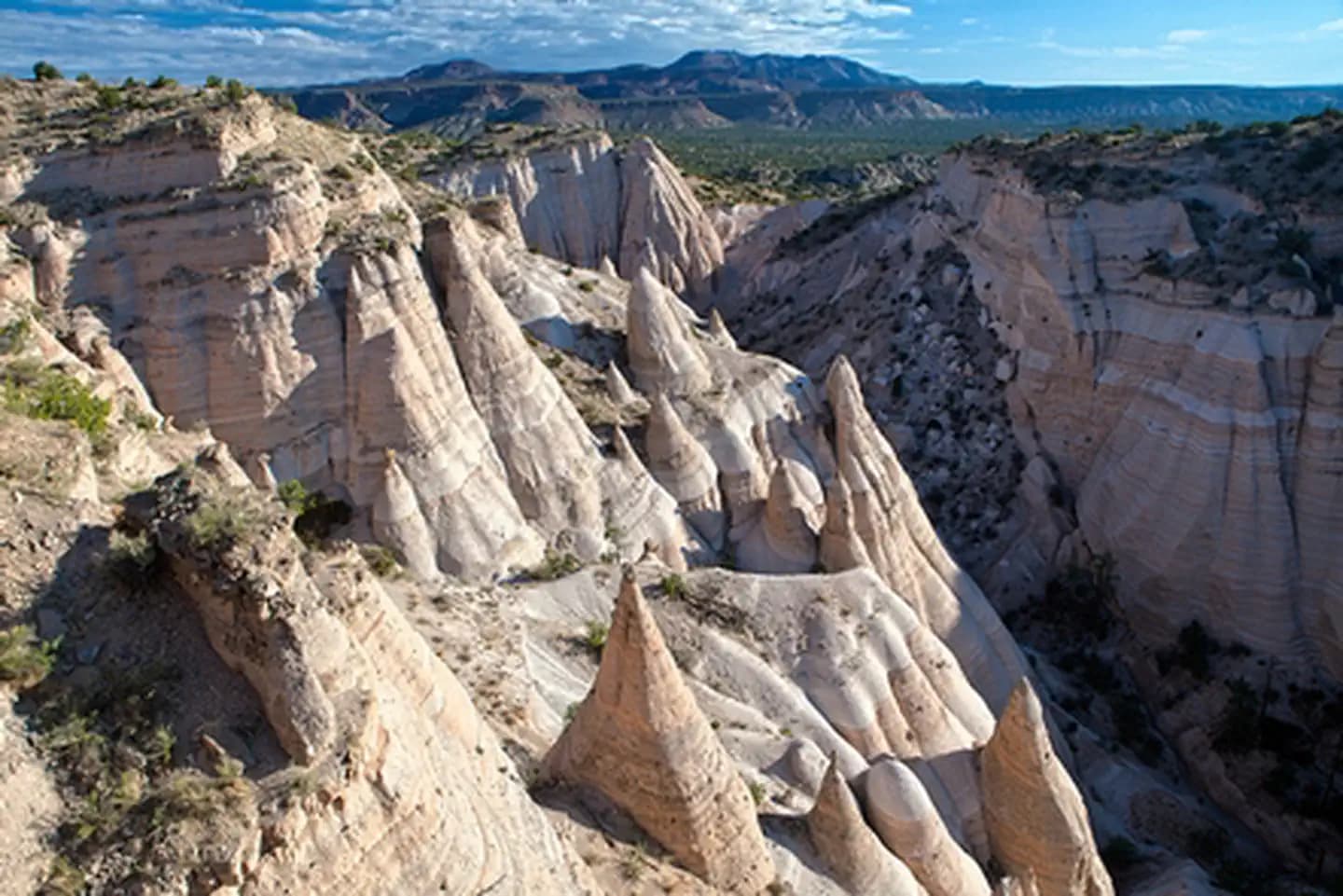
Sandoval County neighbors from Rio Rancho, Bernalillo and Albuquerque travel to Kasha‑Katuwe Tent Rocks National Monument for its surreal cone‑shaped hoodoos, and they must plan precisely to protect the landscape and respect Cochiti Pueblo stewardship while keeping themselves safe.
1. Reservations and the two‑step admission you must complete
Visitors must complete two separate transactions before arrival: reserve a Bureau of Land Management (BLM) Ticket Reservation via Recreation.gov for every person in your party, and also obtain a Cochiti Pueblo Tribal Access Pass from the Cochiti Pueblo website. BLM guidance is clear: “Visitation by reservation only through Recreation.gov.” Recreation emphasizes the dual requirement: “All visitors must have obtained both to access the Monument.” Note that the Cochiti Pueblo Tribal Access Pass “is not eligible to be waived by the Interagency Pass,” so federal interagency passes do not replace the tribal pass.
2. Entry window, pilot cars and daily hours to plan around
Reservations allow entry only within a narrow window, between 8:00 a.m. and 1:00 p.m., and visitors are asked to leave the monument by 4:00 p.m. The site’s operational note: “Entry into the monument is by reservation only, Thursdays through Mondays between 8:00 a.m. and 1:00 p.m. Visitors are asked to exit the monument by 4:00 p.m.” Recreation also warns that “The last pilot car will leave the Cochiti Visitor Center at 1:00 p.m.,” so late arrivals can be turned away.
3. Seasonality, closures and tribal authority you need to respect
The monument observes a seasonal closure and can be temporarily closed by tribal order: Recreation lists a seasonal closure (Dec. 15–Jan. 31) and BLM adds a governance caveat: “Access to the Monument may be closed by order of the Cochiti Tribal Governor. Closures will be posted at the gate.” Because closures and ticket release schedules change, BLM advises checking the monument webpage for future ticket releases; at the time of notice, reservations were available for dates between Feb. 1 and March 31, 2026.
4. Where it sits and how far you’ll drive from Albuquerque or Santa Fe
Kasha‑Katuwe sits on the Pajarito Plateau in north‑central New Mexico within Sandoval County, a manageable day trip for many locals: it’s about 52 miles north of Albuquerque and 35 miles south of Santa Fe. From Albuquerque take I‑25 to Exit 259 (Santo Domingo/Cochiti Lake Recreation Area) onto NM‑22; follow NM‑22 about 1.7 miles then turn onto Indian Service Rte 92 and drive 4.7 miles to the monument, the paved, straight approach described in driving notes.
5. Trail system and what your hike will be like
The monument includes a designated national recreation trail made of two linked trail segments that are foot‑travel only; the Slot Canyon Trail is the steep, narrow highlight and is described as “challenging.” Expect short but steep hiking, opportunities for birdwatching and plant identification, and scenic overlooks such as the Veterans’ Memorial Overlook. Given the trail profile, bring sturdy footwear and water, Outdoorsy and other guides emphasize photography and observation but the terrain rewards caution.
6. Rules that protect visitors, the landscape and tribal property
A long list of prohibitions is enforced to protect safety and cultural resources: “For the health and safety of all visitors, please leave dogs and drones at home. Identifiable service animals are welcome.” Other clear BLM rules include “Day Use Only,” “No open fires, shooting, alcoholic beverages, glass containers, or climbing on the ‘tent rocks,’” and “Please stay on designated roads and trails.” Collecting natural objects is banned: “No collecting of plants, rocks, obsidian ‘Apache tears,’ or wildlife,” geocaching is forbidden, and cutting live trees/firewood requires a permit.
7. Geology and why the tent rocks are fragile
The cone‑shaped tent rocks, hoodoos, are the result of volcanic eruptions 6 to 7 million years ago that left pumice, ash and tuff over 1,000 feet thick. Many hoodoos carry protective boulder caps; as the monument guide explains, “The boulder ‘cap’ protects the fragile tent‑shaped formation beneath it.” Hoodoos vary from a few feet to dramatic spires, some up to 90 feet tall, so trampling or climbing can quickly destroy formations that took millions of years to form.

8. Plants you’ll see and their cultural notes
Plant life ranges from hardy shrubs in the canyons to piñon‑juniper and ponderosa pine at higher elevations between 5,570 and 6,760 feet. Manzanita is a distinctive plant here, “the vibrant green leaves and red bark of the manzanita shrub stand in sharp contrast to the muted colors of the rocks” and sources note manzanita was “used for medicinal purposes by Native Americans.” You will also encounter Indian paintbrush, Apache plume, rabbitbrush and desert marigold.
9. Wildlife to spot, and rules that keep both you and animals safe
Birdwatchers can look for red‑tailed hawks, Ruby‑crowned Kinglets, violet‑green swallows, Hepatic Tanagers and the common House Finch, “The House Finch is commonly seen at the monument, the male has a bright red chest while the female is brown with bold streaks.” Mammals include elk and mule deer at higher elevations, plus coyotes, chipmunks, rabbits and ground squirrels; BLM cautions visitors to “Do not feed the wildlife.”
10. Cultural stewardship, sovereignty and local community impact
This land is the ancestral homeland of the Cochiti Pueblo and is “managed today in close cooperation with the Pueblo.” The dual‑pass system and authority to close access are expressions of tribal sovereignty and stewardship over cultural and environmental resources. For Sandoval County residents, that partnership shapes who gets access, when, and under what rules, an important reminder that public recreation occurs on Native lands with active governance and cultural priorities.
11. Public health, equity and logistical barriers to access
The reservation system, tribal pass requirement, and limited daily entry window create real access barriers for low‑income or digitally marginalized residents who may lack reliable online access or flexible schedules to secure fast‑selling reservations. From a public‑health standpoint, the monument’s day‑use model reduces overnight exposure risks but raises other concerns: hikers face altitude between 5,570 and 6,760 feet, steep “challenging” trail sections, and afternoon heat risk, so hydration, footwear and awareness of personal health limits are essential. Local agencies and health advocates should consider outreach and school partnerships, the monument “serves as an outdoor laboratory for students of all ages”, to broaden equitable educational access while respecting tribal rules.
- Reserve a BLM Ticket Reservation on Recreation.gov for every visitor, and obtain a Cochiti Pueblo Tribal Access Pass on the Cochiti Pueblo website; remember both are required.
- Verify dates/times: entries are allowed 8:00 a.m.–1:00 p.m.; exit by 4:00 p.m.; the last pilot car departs at 1:00 p.m.
- Check seasonal closures (Recreation lists Dec. 15–Jan. 31) and any emergency closures posted at the gate by tribal authority.
- Bring water, sturdy footwear, sun protection and a plan for the return drive; leave dogs and drones at home, “For the health and safety of all visitors, please leave dogs and drones at home. Identifiable service animals are welcome.”
12. Practical checklist and items to verify before you go
13. Nearby stops and photo/usage notes for journalists and visitors
If you’re building a day trip, Coronado Historic Site in Bernalillo is roughly 50 minutes away and offers Pueblo ruins and museum exhibits from the Kuaua pueblo excavated in the 1930s. Photographers are encouraged, Outdoorsy reminds visitors “don’t forget your camera, the vibrant colored formations are always popular to photograph!”, but media users should respect image rules: Visit Albuquerque explicitly states it “prohibits users from downloading images from our website,” and photographers must follow Cochiti Pueblo and BLM rules regarding commercial use.
14. Final takeaway: plan early, respect tribal authority, and protect public health
Kasha‑Katuwe Tent Rocks is a short drive for many Sandoval County residents but requires intentional planning: the dual reservation system, tight entry windows, and strict resource protections are designed to preserve fragile geology and respect Cochiti Pueblo stewardship. Follow official rules, pack for foot travel and elevation, and verify reservation dates, fees and pilot‑car schedules before you drive, doing so protects the landscape, honors community governance, and keeps visitors safe.
Know something we missed? Have a correction or additional information?
Submit a Tip