Casselberry history stretches back to St. Johns people and Fort Concord
St. Johns habitation, Fort Concord, and Concord Cemetery show Casselberry’s map is older than its 1940 incorporation. The city’s history is still visible in its lakes and place names.
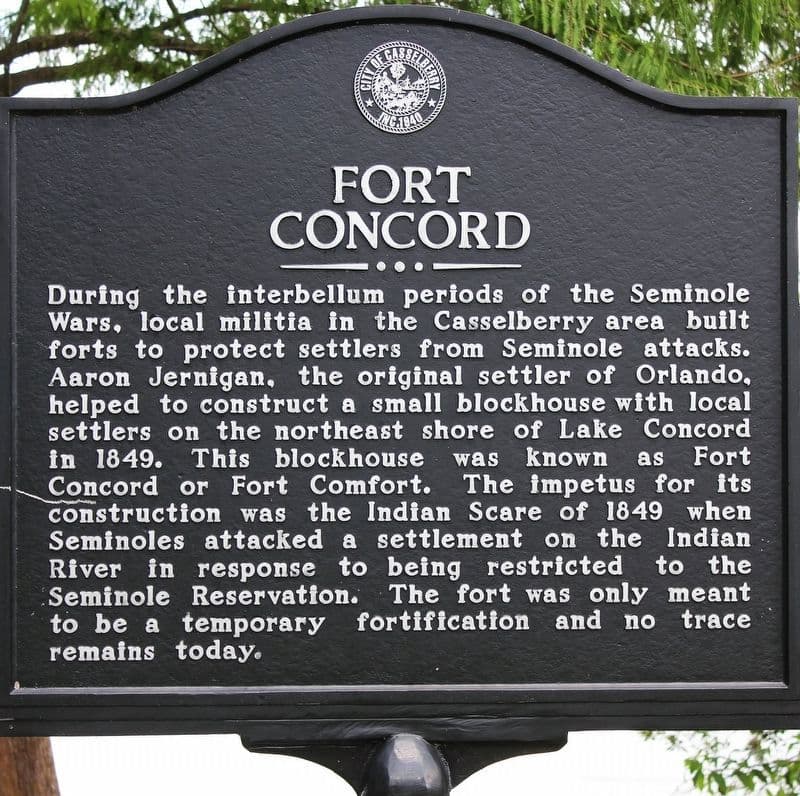
Drive past Lake Concord, Concord Cemetery, and the modern commercial strips around Casselberry, and the city’s map starts to read like an archive. Archaeological evidence places the St. Johns people in the area between about 800 and 1565 CE, and Fort Concord stood on the shore of Lake Concord in 1849 to protect settlers. Those layers still shape the city’s identity, from the names people use to the places they pass every day.
A city built on older ground
Casselberry sits about 10 miles north of downtown Orlando, but its footprint is much smaller and more intimate than the regional traffic map suggests. The city covers approximately eight square miles, a compact area that has absorbed generations of change, from frontier camps to suburban growth. The city’s own timeline shows how fast that change came: 407 residents in 1950 became 29,778 in 2018, while Florida History Blog lists the 2020 population at 28,794.
That growth can obscure the deeper timeline. The City of Casselberry history page says archaeological evidence suggests Native Americans known as the St. Johns people lived in the Casselberry area between about 800 and 1565 CE. That places the city inside Florida’s long pre-colonial history, far beyond the date most people associate with modern Casselberry, its 1940 incorporation.
Fort Concord and the frontier line
The next layer of the story begins at Lake Concord. The city history page says a blockhouse called Fort Concord was constructed on the shores of the lake in 1849 to protect local settlers. Florida History Blog adds that oral tradition places the fort on the northern shore of Lake Concord, essentially in today’s Home Depot parking lot, a reminder of how little visible evidence remains of a site that once mattered for defense.
That detail matters because Fort Concord was not an isolated curiosity. Florida History Blog says the written history of the region begins during the Second Seminole War, from 1835 to 1842, when small resting forts were built along the frontier. Fort Concord fits that military pattern, showing how central Florida communities were shaped by insecurity, movement, and the need for protection before they became neighborhoods, shopping centers, and civic spaces.
From Concord settlement to modern Casselberry
Historic Casselberry traces the city’s roots to the Concord settlement of the Third Seminole War period of the 1850s. The same local history source says Concord Cemetery is all that remains of that settlement today, and identifies Concord as the oldest settlement in south Seminole County. That is a small but powerful clue to how the modern city map evolved: a cemetery, a lake, and a few surviving names carry forward what once was a much larger landscape of settlement.
The Concord name links the frontier years to later development in a way many local streets and landmarks do not. Stephen J. L. Hooker appears in local history as one of the pioneer names tied to that period, giving the story a human thread between military outposts and later permanent settlement. In Casselberry, place names do a lot of the historical work that buildings no longer can.
How incorporation changed the scale, not the memory
Florida History Blog describes Casselberry as having a history richer than its 1940 incorporation might suggest, and that framing fits the city’s rapid postwar rise. The city timeline says Casselberry began as a vision in Hibbard Casselberry’s mind, then expanded into a municipality that now occupies about eight square miles. By 2018, the city had grown to 29,778 residents, a sharp jump from 1950’s 407, showing how fully the area shifted from frontier and rural settlement to suburban city.
Even so, growth did not erase the older geography. Lake Concord still marks the center of one of the city’s most important historical sites, and Concord Cemetery still anchors the memory of the settlement that preceded modern development. The result is a city where daily life unfolds across layers of land use: Indigenous habitation, wartime fortification, pioneer settlement, and the post-1940 suburban buildout that now defines most of Seminole County’s movement patterns.
Why the past still matters in Casselberry
Casselberry’s history is not confined to plaques or archive boxes. The Society for Historic Casselberry was founded in January 2021 as a nonprofit 501(c)(3), a sign that local preservation is an active civic effort rather than a passive memory project. That kind of organization helps keep Concord, Fort Concord, and the St. Johns timeline visible in a city whose present is often defined by roads, retail corridors, and proximity to Orlando.
For Casselberry, the most revealing map is not the one that shows where the city is going next. It is the one that shows what sits beneath the pavement already: St. Johns habitation, a fort on Lake Concord, the Concord settlement, and the cemetery that remains when the rest is gone.
This article was produced by Prism’s automated news system from verified source data, official records, and press releases, then run through automated quality and moderation checks before publishing. The system is built and supervised by the people who set the standards it runs under. Read our full AI policy.
Did this article answer your question?