Central Florida Zoo in Sanford quarantines 13 sloths amid controversy
Central Florida Zoo is quarantining 13 sloths in Sanford after taking in animals tied to the Sloth World case, with staff watching for medical problems.
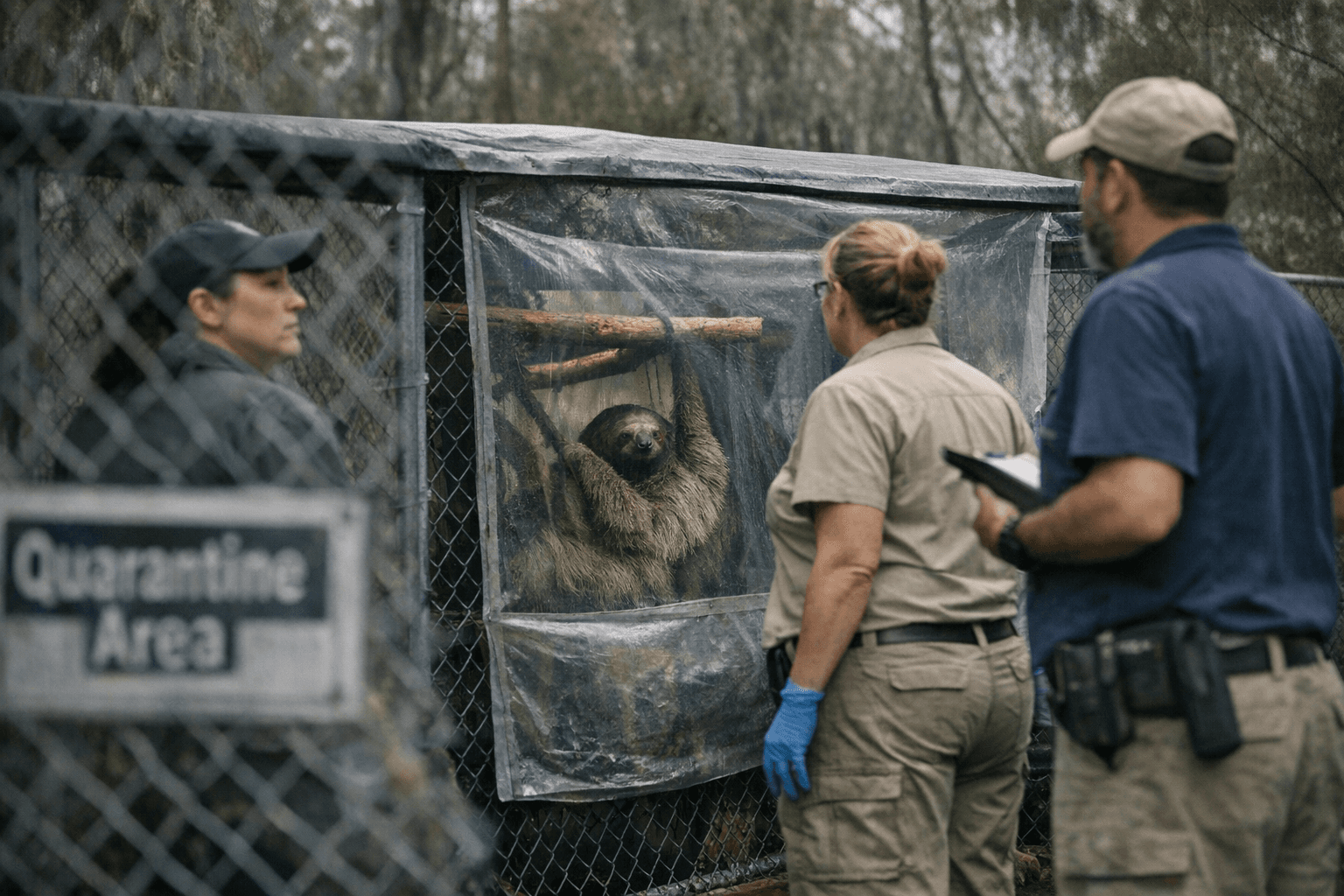
The Central Florida Zoo has become an unexpected holding center in the Sloth World fallout, taking in 13 two-toed sloths now sealed off in quarantine behind the scenes in Sanford.
Zoo staff said the animals will remain in quarantine for at least 30 days while veterinary teams monitor their health, nutrition and any pre-existing medical problems. Officials said several of the sloths may need long-term human assistance and specialized care, underscoring that this is not a simple transfer but a hands-on rehabilitation effort with uncertain outcomes.
The group includes a mix of Hoffmann’s two-toed sloths and Linnaeus’s two-toed sloths. Zoo officials said all 13 have already been in human care since arriving in the United States, and that the long-term plan will be guided with the Association of Zoos and Aquariums Species Survival Plan so the animals can eventually be placed at accredited facilities when appropriate.
For Sanford, the episode puts one of Seminole County’s best-known attractions at the center of a statewide animal-welfare controversy. Earlier Florida Fish and Wildlife Conservation Commission reporting said 31 sloths intended for the planned Sloth World attraction died under preventable conditions, a grim backdrop that explains why the surviving animals needed urgent placement. The Zoo’s role is now part rescue operation, part medical triage, and part test of how quickly the broader system can respond when exotic-animal plans collapse.
The financial strain is already visible. The zoo said it is asking for donations because food, medication, lab testing, quarantine space and extra staffing are adding unexpected costs. That list shows how quickly the burden can fall on a local institution when animals arrive needing specialized attention rather than routine exhibit care.
What happens next remains unresolved. Some of the sloths could stay in Sanford, while others could be transferred elsewhere once staff determine which animals can safely move and which need longer recovery. For now, the zoo’s quarantine area has become the local front line of a controversy that stretches far beyond Seminole County, with the fate of 13 sloths still being sorted behind the scenes.
This article was produced by Prism’s automated news system from verified source data, official records, and press releases, then run through automated quality and moderation checks before publishing. The system is built and supervised by the people who set the standards it runs under. Read our full AI policy.
Did this article answer your question?


