Chuluota Veteran Jerry Vaughan Reconstructs Uniforms to Honor Fallen Soldiers' Last Wishes
A Chuluota veteran hand-rebuilds military uniforms so fallen soldiers can be buried in their earned regalia — and he hopes a federal bill makes his work obsolete.
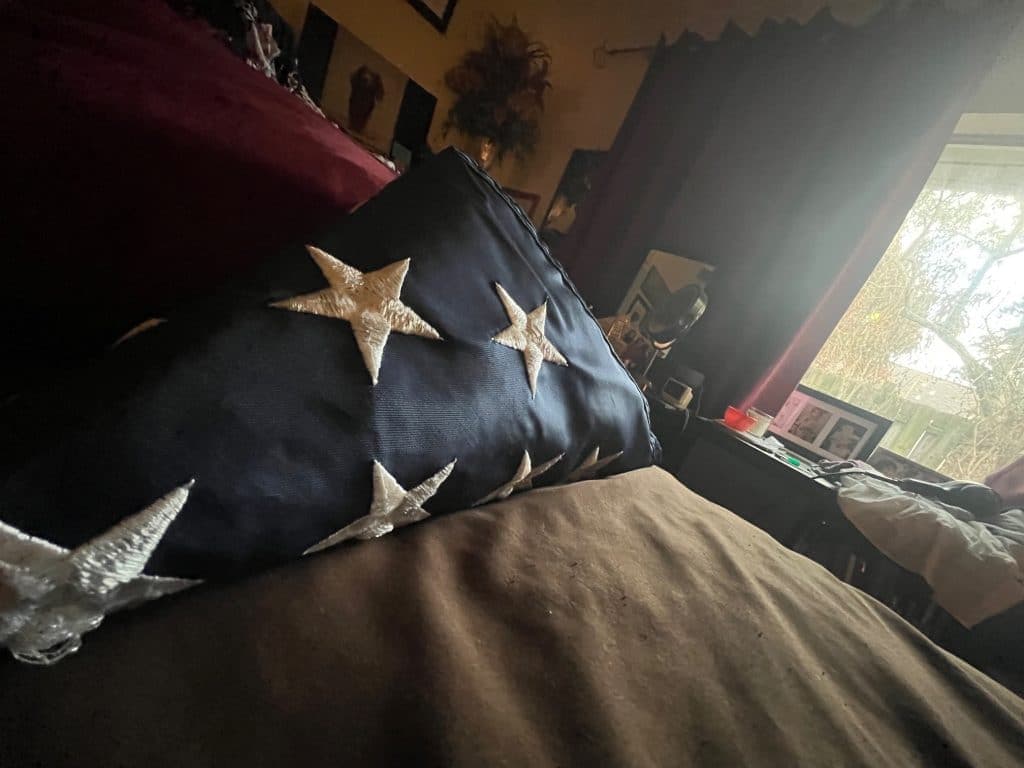
When a veteran dies with one final wish — to be buried in the uniform that defined their service — the details matter: the correct branch insignia, the right rank insignia, the decorations earned over years of duty. For families navigating grief, tracking down a complete, properly configured military uniform can feel impossible. Jerry Vaughan, a veteran from Chuluota, has made it his mission to close that gap, one uniform at a time.
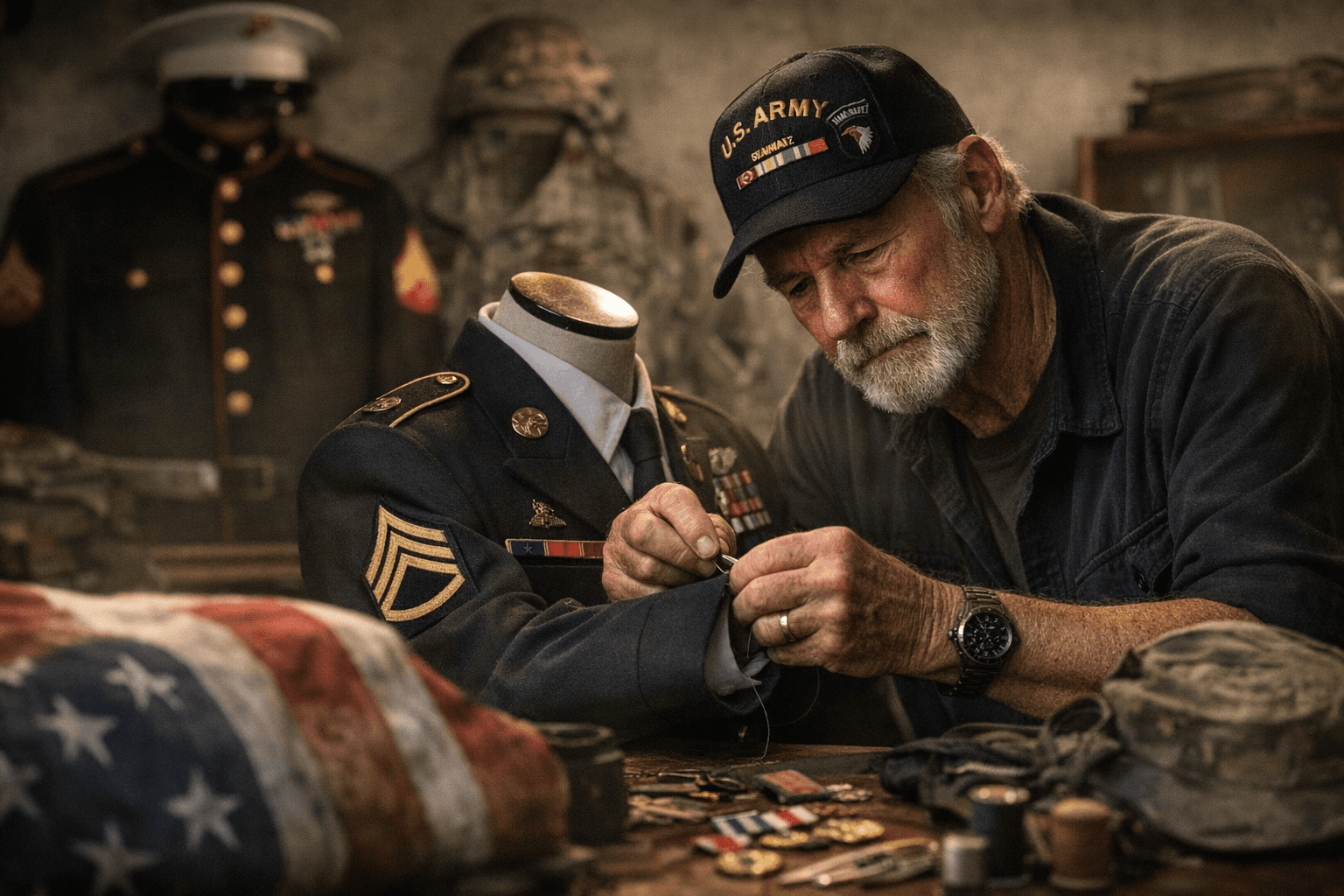
Vaughan specializes in reconstructing and restoring military uniforms for use at funerals and memorials, working to ensure that deceased veterans receive what he and others in this space call a dignified final salute. Oviedo Community News profiled his work in a feature by reporter Demetrius Montero, published March 11, 2026, describing a craftsman driven not by profit or recognition but by a sense of obligation to those who served.
A one-shot deal
The phrase Vaughan uses to describe this work captures the weight of it precisely: a one-shot deal. There is no second chance to get a burial uniform right. A memorial happens once. The photographs taken at a graveside service or funeral home endure for generations in family albums. If the uniform is incomplete, inaccurate, or missing the insignia a veteran earned, that record is permanent.
This awareness shapes everything about how Vaughan approaches his craft. According to the Oviedo Community News feature, the story details his hands-on work and methodology, describing the technical and personal care he brings to each reconstruction and restoration. The work is not simple alteration or casual tailoring. Rebuilding a military uniform to the correct specifications for a specific veteran's rank, branch, unit, and era requires sourcing the right components, understanding uniform regulations across decades of military history, and executing the reconstruction with precision that a grieving family may never fully see but will always feel.
Nationwide reach from Chuluota
What makes Vaughan's story notable beyond Seminole County is its scope. Though he lives in Chuluota, a small, semi-rural community tucked in the eastern corner of Seminole County near the Brevard border, his work reaches veterans' families across the country. The Montero feature positions Vaughan not merely as a local craftsman but as someone whose services are sought on a national scale, honoring veterans' last wishes nationwide.
Chuluota is a community where many retired military families have settled, drawn by its quiet pace and proximity to Central Florida's broader amenities. That Vaughan has built a practice with national reach from this address speaks to both the depth of the need and the scarcity of people doing this kind of highly specialized work.
The case for a federal solution
Despite the clear value of what Vaughan does, he has expressed an unusual aspiration for his own work: he hopes to make it unnecessary. As Oviedo Community News reported, his hope is that with a new federal bill, he could put himself out of a job.
That framing is striking. Most craftsmen and service providers want their skills to remain in demand. Vaughan's willingness to advocate for a policy solution that would eliminate the need for his own labor reflects the core motivation behind his work. He is not trying to build a business. He is trying to solve a problem, and he understands that the most durable solution would come not from a single veteran in Chuluota but from federal policy that ensures every veteran's family has access to proper burial attire as a matter of right.
The specific bill Vaughan references has not been identified by name or number in available reporting. What is clear is that he envisions a federal framework under which the government would take responsibility for providing accurately configured burial uniforms to veterans' families, removing the gap that his reconstruction work currently fills. Until that legislation passes, or until a broader institutional solution emerges, families across the country will continue to rely on people like Vaughan.
What this means for Seminole County veterans and families
Seminole County has a substantial veteran population. The communities of Oviedo, Chuluota, Casselberry, and Sanford are home to thousands of veterans and their families, many of whom will eventually face the practical and emotional task of arranging a burial that honors a lifetime of service. Vaughan's work exists precisely because the military's formal support structure for burial uniforms has gaps that families, funeral directors, and veterans' organizations cannot always fill on their own.
For local families who find themselves in this situation, the existence of someone like Vaughan — with both the skills and the personal understanding of military service that comes from being a veteran himself — represents a resource that is genuinely rare. The uniform worn at a funeral or displayed at a memorial is not merely clothing. It is a statement of identity, a record of service, and in many cases the last visible representation of who that veteran was during the years they gave to their country.
A model of personal mission
There is something quietly radical about Vaughan's position. He has developed a specialized skill, built a national reputation for using it, and then publicly expressed hope that the conditions requiring that skill will be eliminated. That kind of selflessness is not common in any field.
The Oviedo Community News feature by Demetrius Montero brings this story to a local audience that is well-positioned to appreciate it. Chuluota and the surrounding Oviedo area have long valued both community service and military heritage. Vaughan's work embodies both, combining the hands-on dedication of a craftsman with the moral clarity of a veteran who knows exactly what a uniform means to the person who earned it.
As conversations about veterans' benefits and federal policy continue at the national level, Vaughan's perspective offers a ground-level view of where the current system falls short. He is not a lobbyist or a policy expert. He is a Chuluota veteran sitting down with a uniform and a set of tools, trying to make sure that the last wish of a fellow service member is honored with the dignity it deserves. And he is quietly, persistently, making the case that no one should have to do this alone.
This article was produced by Prism’s automated news system from verified source data, official records, and press releases, then run through automated quality and moderation checks before publishing. The system is built and supervised by the people who set the standards it runs under. Read our full AI policy.
Did this article answer your question?


