Cranes Roost Park anchors Altamonte Springs with lakefront plaza and tower
Altamonte Springs built Cranes Roost into Seminole County’s civic center, and more than 1 million annual visitors show how the lakefront became an economic anchor.
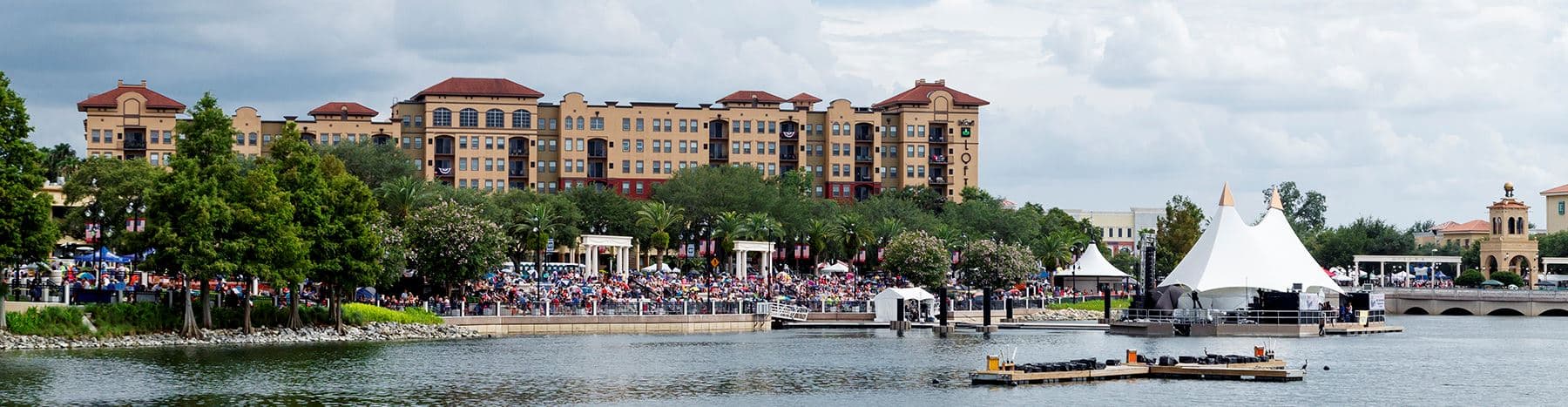
Cranes Roost Park is not just a place to walk around a lake. Altamonte Springs built it as the heart of Uptown Altamonte, and the design makes that obvious: 45 acres, one mile of continuous walkway, a European-style plaza, a choreographed fountain show, and a 62-foot tower clad in Minnesota limestone. That combination turned a former edge-of-town site into the city’s most visible public room, where daily recreation and major events now share the same address.
A park designed to work every day
The one-mile loop around Cranes Roost Lake is the feature that most clearly explains the park’s success. It is long enough to give joggers, walkers, and dog owners a real circuit, but compact enough to fit into an ordinary lunch break or an after-dinner stroll. Benches and covered seating areas give the lakefront a practical rhythm, while the plaza and tower give it a civic identity that stands apart from the usual suburban green space.
The City of Altamonte Springs describes the European-style plaza as a place for outdoor gatherings, family activities, weddings, and entertainment. That matters because the park was not built to sit idle between special occasions. It was built to absorb repeated use, from morning exercise to evening entertainment, and that daily activity is part of what makes Uptown Altamonte feel like a center rather than a side district.
The event strategy that turned green space into a civic stage
Cranes Roost Park’s biggest advantage is that it works as a venue, not just a park. The city says it is one of Central Florida’s premier outdoor park venues and draws more than one million guests each year. That scale gives the park regional weight and creates the kind of foot traffic that nearby civic and commercial spaces depend on.
The event calendar is built around repeatable anchors. Altamonte Springs’ Independence Day celebration is held there, and Red Hot & Boom, now in its 29th year, has become one of the park’s signature draws. The city also makes the space available for concerts, weddings, festivals, and fundraising walkathons, which means the lakefront plaza supports both city-run programming and private or civic events without losing its public character.
That mix is the key to why Cranes Roost functions as Seminole County’s civic living room. It is not a one-off festival field. It is a place with a built-in calendar and a built-in audience, so the same paths, plaza, and tower can support a weekday walk and a holiday crowd.
Why the rules matter as much as the scenery
Heavy use only works when the park is managed carefully. The city’s park rules say thousands of patrons visit each year for entertainment, exercise, and brief reprieves from hectic schedules, which is a reminder that Cranes Roost is active across the whole day, not just during headline events. The rules also help explain how the city keeps the space usable when crowds swell.
Pets are allowed only along the designated pet-walk path during regular operating hours, and service animals are allowed in all areas during all events. That kind of rule set may sound mundane, but it is part of the park’s operating model. The city is balancing open access, event crowds, and safety in a high-traffic public space that has to serve runners, families, concertgoers, and festival organizers at once.
From marshy bog to the city’s center
Cranes Roost did not begin as a polished civic landmark. An Orlando Sentinel article from 1985 said the site was once a marshy bog excavated to provide fill for road projects, and local history coverage notes that Altamonte Springs lacked a real center after its namesake hotel burned in 1954. Those two facts explain the park’s deeper role: it was an answer to a civic gap, not just a landscaping project.
The city’s decision to build a destination lakefront in the middle of Uptown Altamonte gave Altamonte Springs a center it had been missing for decades. Instead of letting the site remain a leftover piece of land, the city turned it into a place where people would gather on purpose. That shift from discarded ground to intentional public core is what made Cranes Roost more than a park.
The upgrades that kept it relevant
Altamonte Springs did not freeze the park in place after opening it. In 2014, the Orlando Sentinel reported the city planned a multimillion-dollar makeover for Cranes Roost Park. By 2016, the city had begun extensive renovations to elevate the park’s amenities and strengthen its role as a cultural hub, according to Haddonstone.
Haddonstone’s account says the project replaced stonework damaged during a storm and added new custom elements, which shows that the city treated upkeep as part of the park’s long-term economic strategy. A destination that draws more than a million guests annually cannot be allowed to age out of relevance. The upgrades helped keep the plaza, tower, and waterfront setting working as a regional draw instead of a one-time civic project.
Why other gathering spaces have not matched it
Other places in Seminole County can host a crowd, but Cranes Roost combines several advantages that are hard to duplicate at once: a walkable lakefront, a signature tower, a flexible plaza, major annual festivals, and daily public use. The Pokémon Go craze made that plain when WFTV reported that thousands of players came to the park, filling it with an unexpected wave of foot traffic that it was able to absorb.
That ability to handle planned festivals and spontaneous surges is what makes Cranes Roost different. It is a park that acts like infrastructure for downtown life, supporting Uptown Altamonte’s identity, steady visitor flow, and the city’s biggest shared moments. In Altamonte Springs, the lakefront is not the backdrop to the center. It is the center.
This article was produced by Prism’s automated news system from verified source data, official records, and press releases, then run through automated quality and moderation checks before publishing. The system is built and supervised by the people who set the standards it runs under. Read our full AI policy.
Did this article answer your question?