Man Found Dead in Lake Mary Strip Mall Elevator Prompts Concern
A homeless man was found dead inside an elevator at Lake Mary Centre plaza on December 26, emergency crews confirmed after a firefighter response around 10:30 a.m. The sheriff's office said the death did not appear suspicious, and the medical examiner's team responded, raising public health and social equity questions for Seminole County residents.
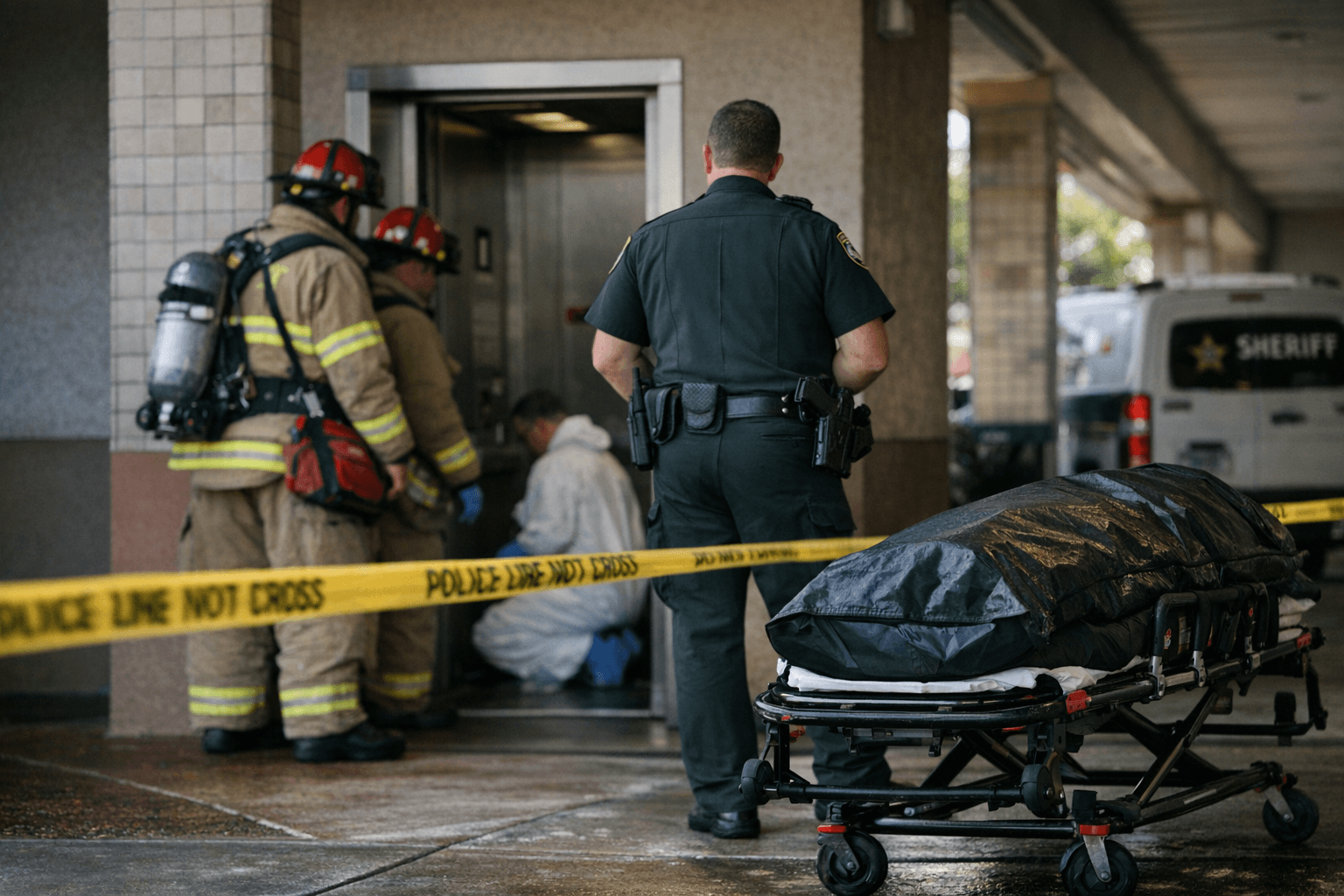
Emergency crews recovered a man's body from an elevator at Lake Mary Centre plaza on December 26 after a jewelry store owner entered her shop, noticed a foul smell, and alerted authorities. Firefighters accessed the elevator at about 10:30 a.m. and found the man inside. The Seminole County sheriff's office said the death did not appear to be suspicious, and the man was unhoused. Investigators did not release details about how long he had been in the elevator or the cause of death. The medical examiner's team was on scene to examine the body and determine next steps.
The discovery in a busy strip mall underlines both an immediate sanitary concern and deeper social challenges. When a body is found in a public enclosed space there are public health actions required to secure the scene, limit exposure to biological hazards, and complete professional cleanup before businesses reopen. For workers and customers at the plaza the incident may cause anxiety about safety and sanitation, and it may take time for normal operations to resume.
Beyond the immediate response, the death highlights persistent gaps in services for people experiencing homelessness in Seminole County. A person living without stable housing is more likely to face extreme weather, untreated medical conditions, and barriers to accessing routine care. When an unhoused resident dies in a public place it prompts questions about outreach, shelter capacity, mental health and medical services, and the coordination between social service agencies and law enforcement.
Public health officials and county leaders can use this incident to review protocols for rapid response, scene cleanup, and outreach to vulnerable populations. Strengthening low barrier shelter access, expanding mobile health and mental health services, and increasing coordinated outreach could reduce the likelihood that someone dies alone in a public space. Community based organizations and residents may also want clearer information about how the county conducts outreach to people living unhoused and how residents can report concerns safely.
The sheriff's office and the medical examiner will complete their work to determine the official cause of death. In the meantime the event serves as a reminder of the human costs of gaps in housing and health systems, and the role local policy and public health planning play in protecting the most vulnerable members of the community.
This article was produced by Prism’s automated news system from verified source data, official records, and press releases, then run through automated quality and moderation checks before publishing. The system is built and supervised by the people who set the standards it runs under. Read our full AI policy.
Did this article answer your question?