Oviedo Council Votes on Vehicle Barriers to Protect Outdoor Event Crowds
Oviedo's council voted Monday on a $194,000 barrier system crash-rated to stop a 16,500-pound vehicle, with the Police Foundation putting up $25,000.
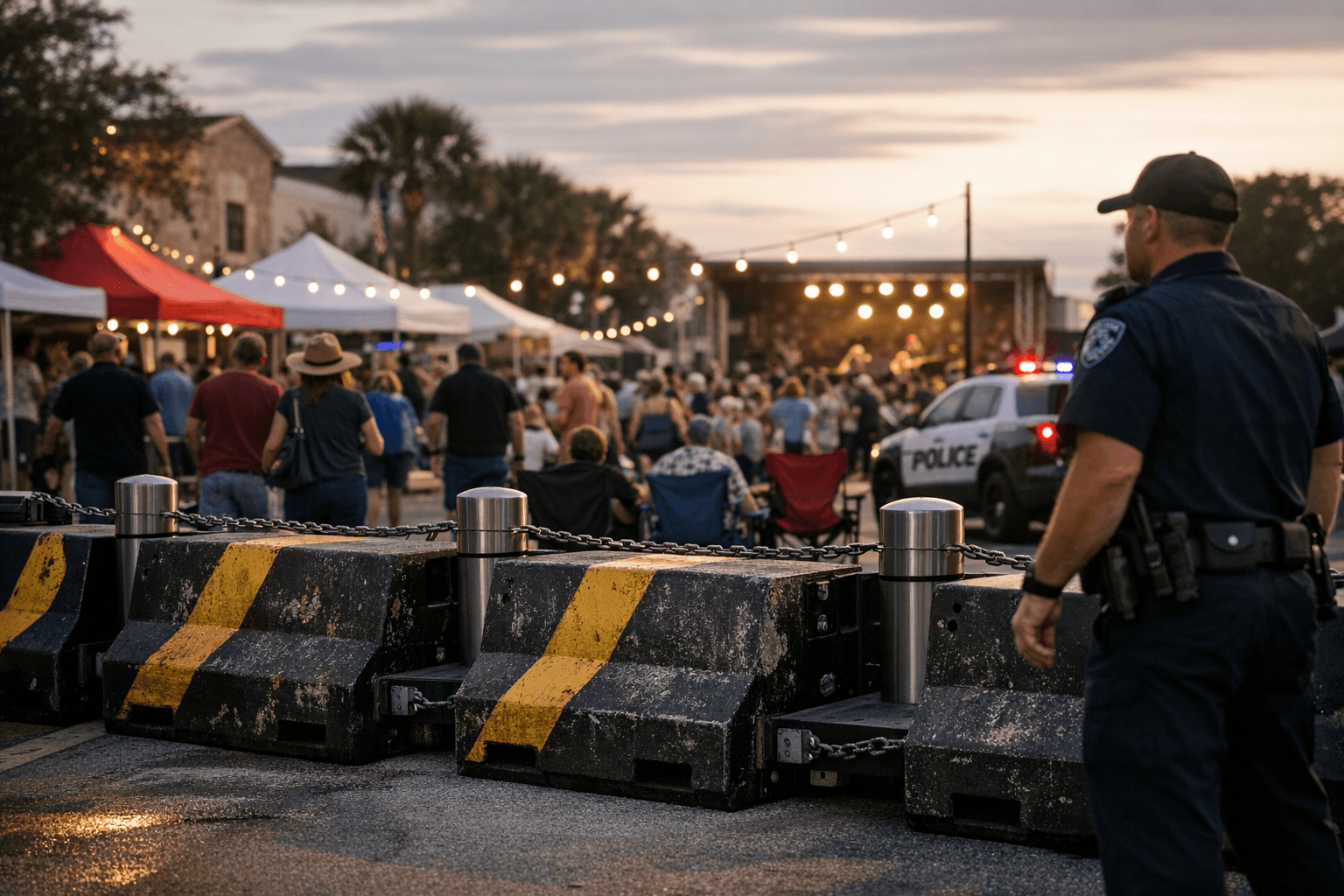
Oviedo Mayor Megan Sladek urged the city council Monday to commit $168,818 toward a crash-tested vehicle barrier system capable of stopping a 16,500-pound vehicle, framing the purchase as essential protection for the outdoor festivals and parades that fill the city's event calendar each year.
The council took up the proposal for a 72-unit modular barrier system manufactured by Advanced Security Technologies, marketed under the MVB3X product line. The system can close up to 10 lanes of traffic simultaneously and ships on a trailer package designed for rapid deployment and compact storage between events.
"People using vehicles in ways that could harm people. It makes some sense to just be proactive and say 'We're going to secure this perimeter,'" Sladek said.
The Oviedo Police Department has long sought a hostile vehicle mitigation solution for public events and parades, and the proposal came to a vote after city staff evaluated vendor capabilities, reliability, and cost-sharing alternatives. A partial donation from the Oviedo Police Foundation brought the city's required share down to approximately $168,818, with the foundation committing $25,000 toward the roughly $194,000 total purchase price.
The MVB3X units are modular, stackable, and deployable within minutes, capable of closing multiple traffic lanes while preserving gaps for emergency vehicle access. That flexibility makes the system well-suited for Oviedo's mix of downtown festivals, races, and other outdoor gatherings that route large pedestrian crowds through open street corridors.
The fiscal debate before the council centered on whether the one-time capital expenditure was proportionate to competing public-safety priorities and what ongoing storage and maintenance costs the city would absorb. Some observers questioned whether a regional cost-sharing arrangement with neighboring municipalities could reduce the per-city burden. Supporters countered that at roughly $168,000 in city funds, the investment was modest relative to the liability exposure of an unprotected crowd at a high-attendance outdoor event.
If the measure passed, city planners anticipated incorporating deployment protocols into event planning ahead of spring and summer gatherings, with training required for both police and public-works staff on setup, storage logistics, and maintaining emergency access lanes during active deployments. The Oviedo Police Foundation's $25,000 commitment, drawn from private philanthropic contributions rather than city coffers, helped reframe the purchase as a shared community investment rather than a purely municipal budget line.
This article was produced by Prism’s automated news system from verified source data, official records, and press releases, then run through automated quality and moderation checks before publishing. The system is built and supervised by the people who set the standards it runs under. Read our full AI policy.
Did this article answer your question?